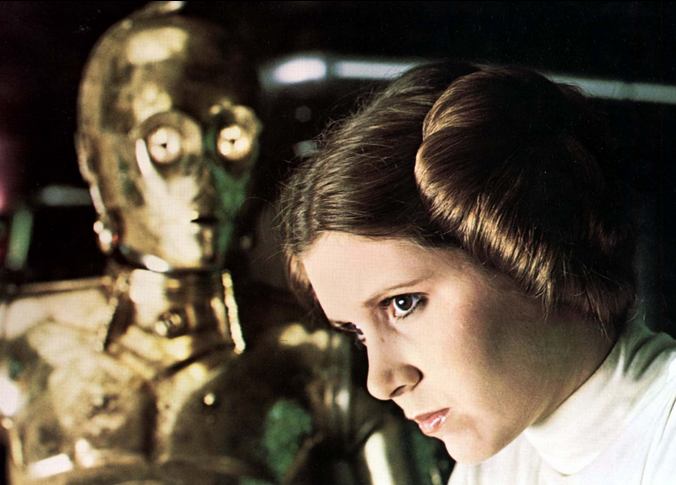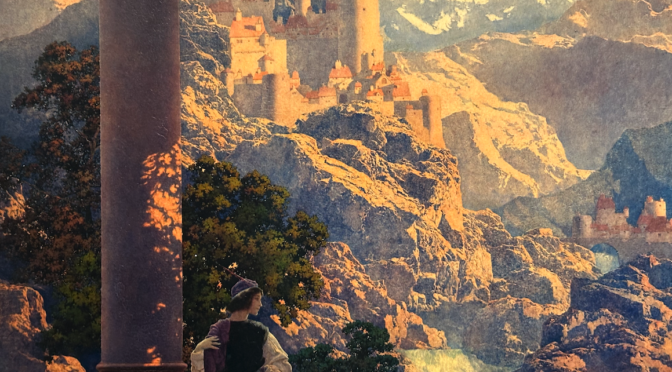
Last month I visited the newly opened Lucas Museum of Narrative Art. It was imagined and brought into being by film director and special effects innovator George Lucas and his wife, business leader Mellody Hobson, who has chaired Starbucks and DreamWorks Animation and is now co-CEO at Ariel Investments. Their collaboration has resulted in a massive, exciting, and innovative space with a fresh and original theme.
I’d expected (wrongly) that the museum would be an enlarged extension of the display spaces I saw during a 2024 visit to the San Francisco offices of Industrial Light & Magic, the subsidiary of Lucasfilm famous for its special effects work. Lucasfilm is the entertainment company George Lucas founded in 1971. At ILM I’d seen highlights of the visual storytelling world Lucas had built, thanks to an excellent private tour given by my partner Gary’s friend and former colleague, who works on exciting projects at Lucasfilm. (Gary spent many years designing visual effects software used in film, television, and music videos, so he and his friends are wonderful resources for movie-mad industry outsiders like me.) The displays at ILM headquarters have a strong emphasis on the world of Star Wars, but Lucasfilm / Industrial Light and Magic have also been the powerhouses behind endless other productions. Their reach goes far beyond Lucas’s franchises, as their offices show.
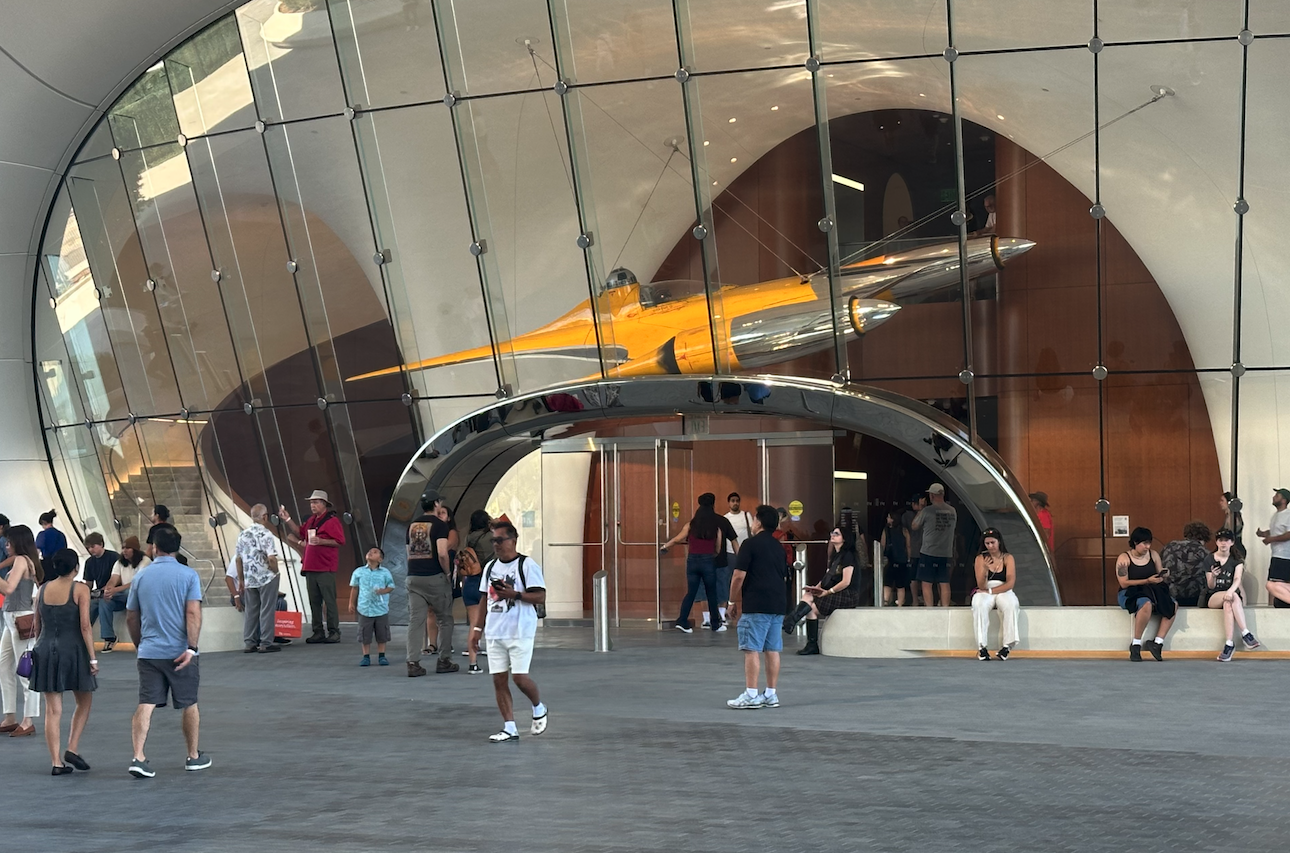
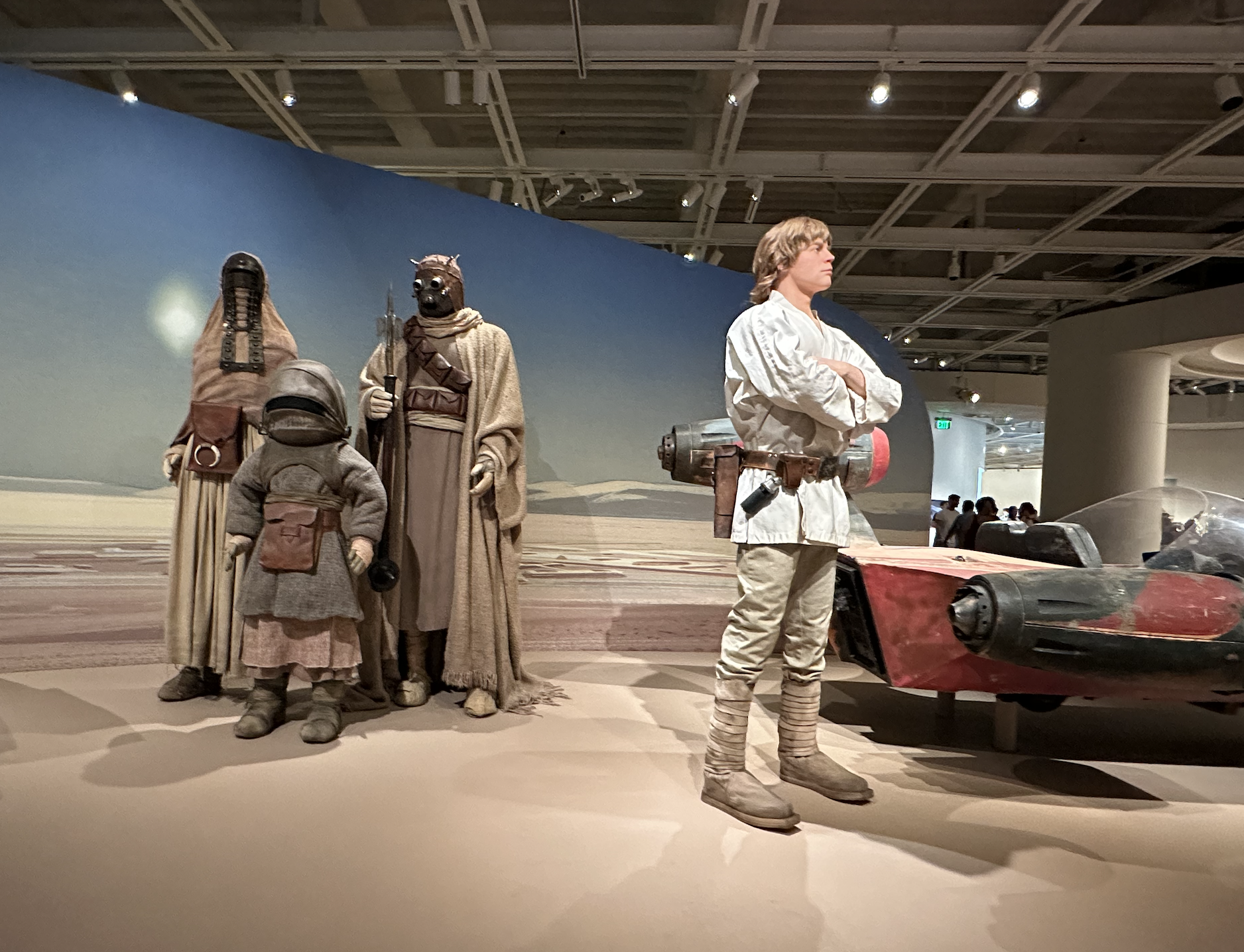
Left: The Lucas Museum’s science fiction-inspired entrance | Right: The museum’s central gallery features display cases and dioramas showing original artwork, models, and costumes from the Star Wars universe
The Lucas Museum’s central section does feature the work of Lucasfilm, primarily through costumes, props, stills, vehicles, statues, and images from Star Wars productions. (The museum also has a life-sized bronze sculpture of Harrison Ford dressed as Indiana Jones, a character dreamed up by George Lucas.) However, the museum space dedicated to Lucas’s productions is surprisingly small compared to the galleries celebrating and displaying narrative works by other visual artists.
The museum’s warren of galleries features mostly two-dimensional original artwork by visual artists with a particular gift for telling stories through art. They contain thousands of examples of narrative drawing, painting, comic strip art, manga, advertising illustration, original science fiction book and movie poster art, pulp fiction covers, and original children’s book illustrations. One enters the futuristic pod-shaped museum, reminiscent of a Star Wars space station, through a central gathering plaza open only during museum hours. Once inside the immense entry hall, visitors walk toward the back and ride curvy glass elevators up to the main gallery floor, whose many small rooms surround the central Star Wars-themed gallery.
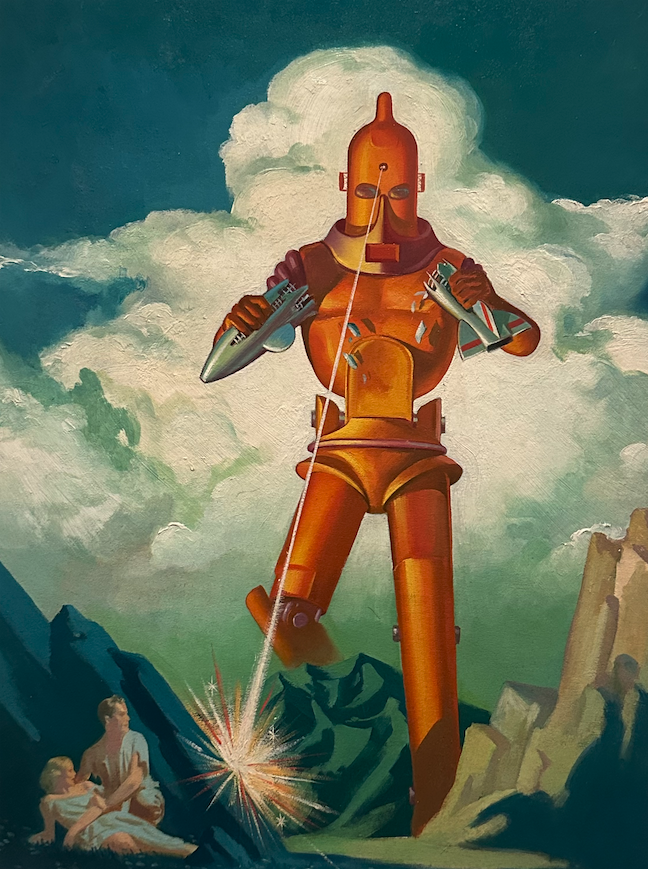
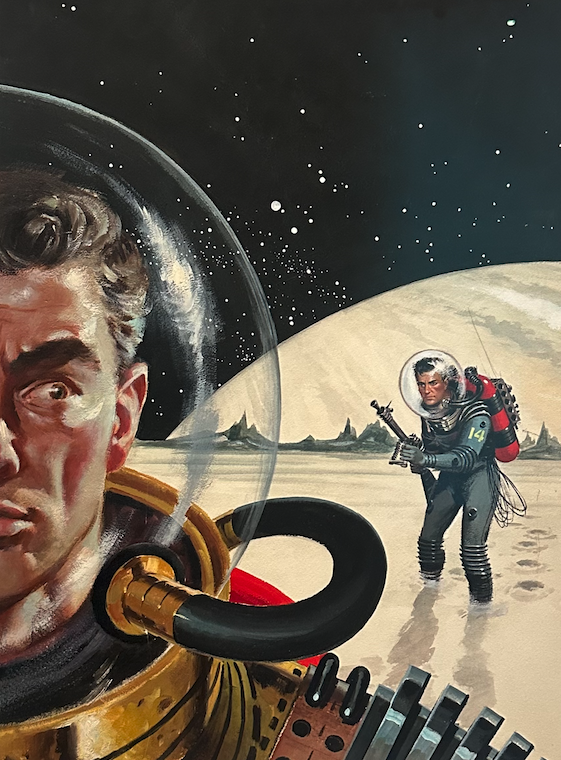
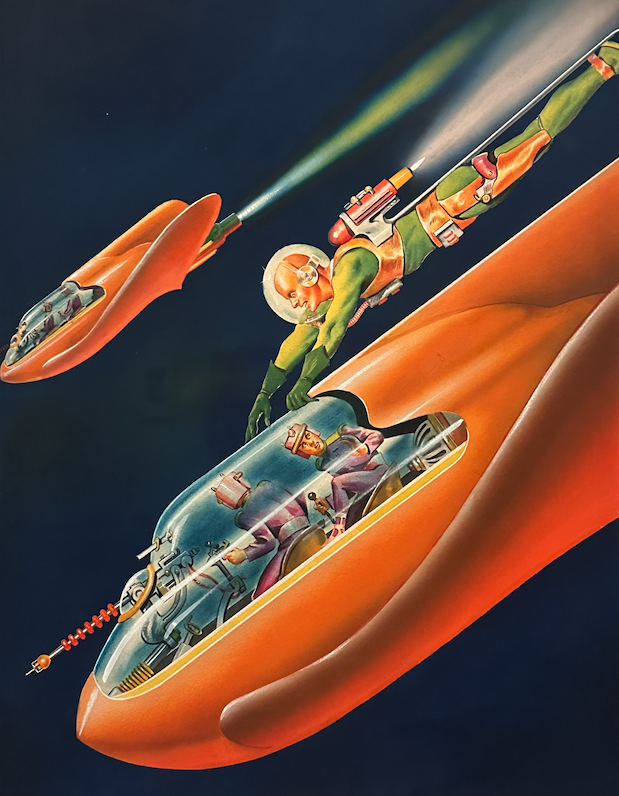
The Lucas Museum displays an extensive collection of classic science fiction pulp book covers and movie posters. At left: “The Weapon from Eternity” by Harold W. McCauley, 1952 (detail) | Center: Ed Valigursky’s cover painting for the pulp science fiction novel “The Snows of Ganymede,” 1958 | At right: Malcolm Smith’s “Crusade Across the Void,” 1962 (detail)
The museum’s focus is on art that tells stories, from the sublime (so many glorious Maxfield Parrish paintings) to the ridiculous (one of Cassius Marcellus Coolidge’s original kitschy paintings of dogs playing poker). The children’s book illustrations include original art by Ernest Shepard for the Winnie-the-Pooh books; Beatrix Potter’s watercolors of animals, including Peter Rabbit; paintings by Maurice Sendak; and drawings from the original Oz books, as well as work by contemporary illustrators like William Joyce, creator of Roly-Poly Olie. There’s even a full-length portrait by Hilary Knight, illustrator of Kay Thompson’s children’s books about Eloise, the precocious six-year-old who lives at the Plaza Hotel. Knight (who turned 100 years old this week) painted the portrait as a birthday gift for Thompson in 1956.
Like Norman Rockwell and Maxfield Parrish, early 20th century children’s book illustrators Jessie Wilcox Smith and N.C. Wyeth each have entire galleries devoted to them. The museum also has fine examples of illustrations by J.C. Leyendecker, the German-born illustrator whose elegant early 20th century advertising and magazine cover art inspired Rockwell’s style.
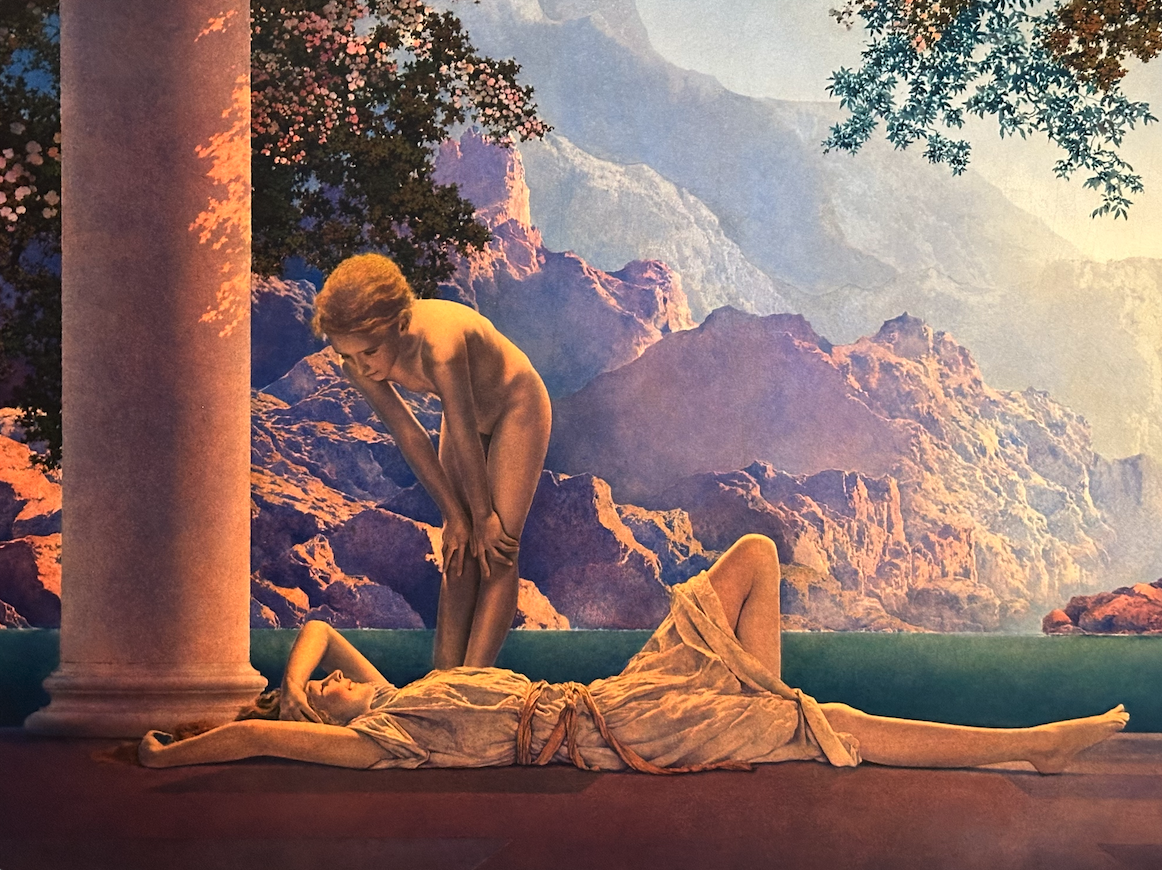
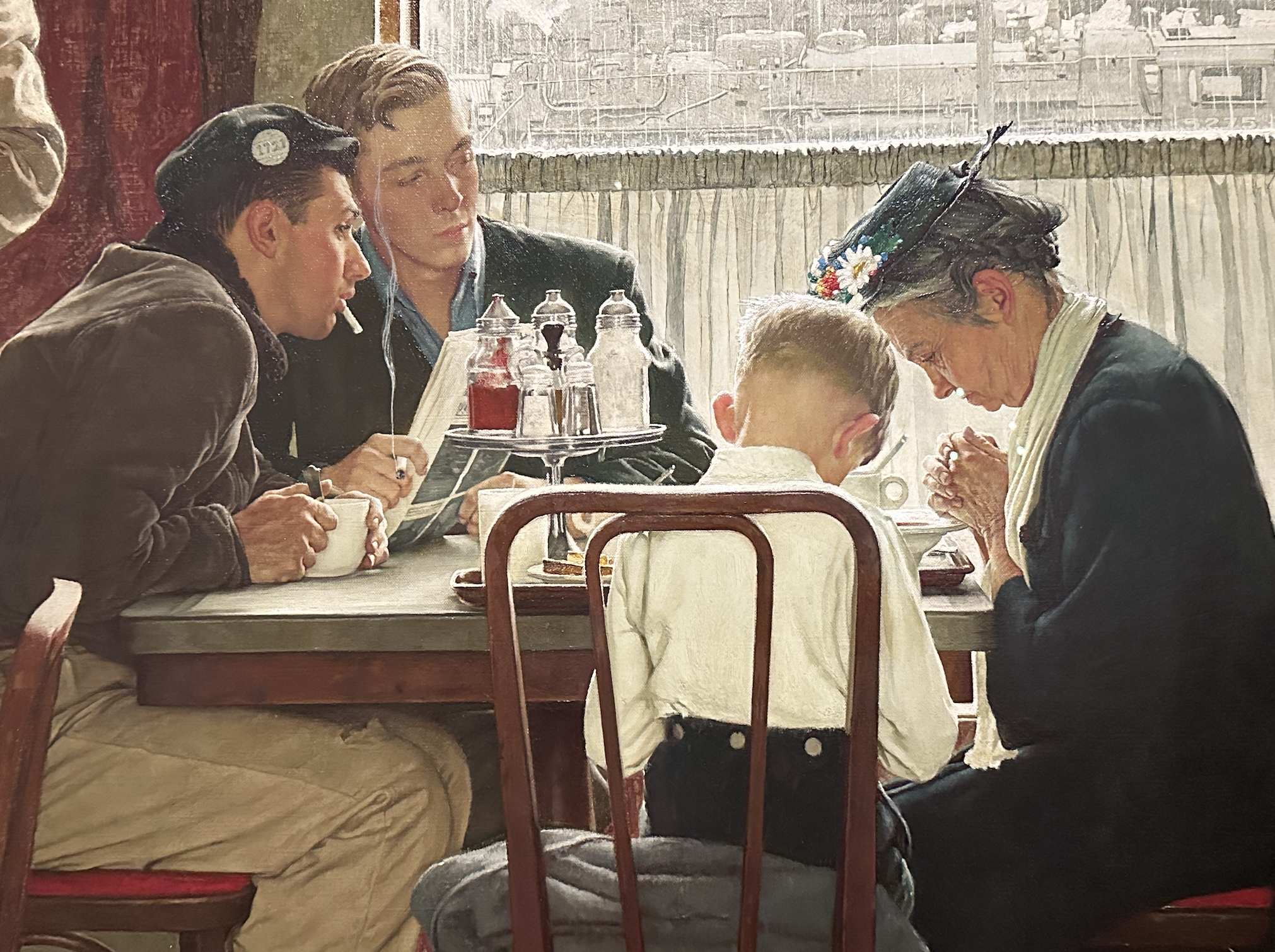
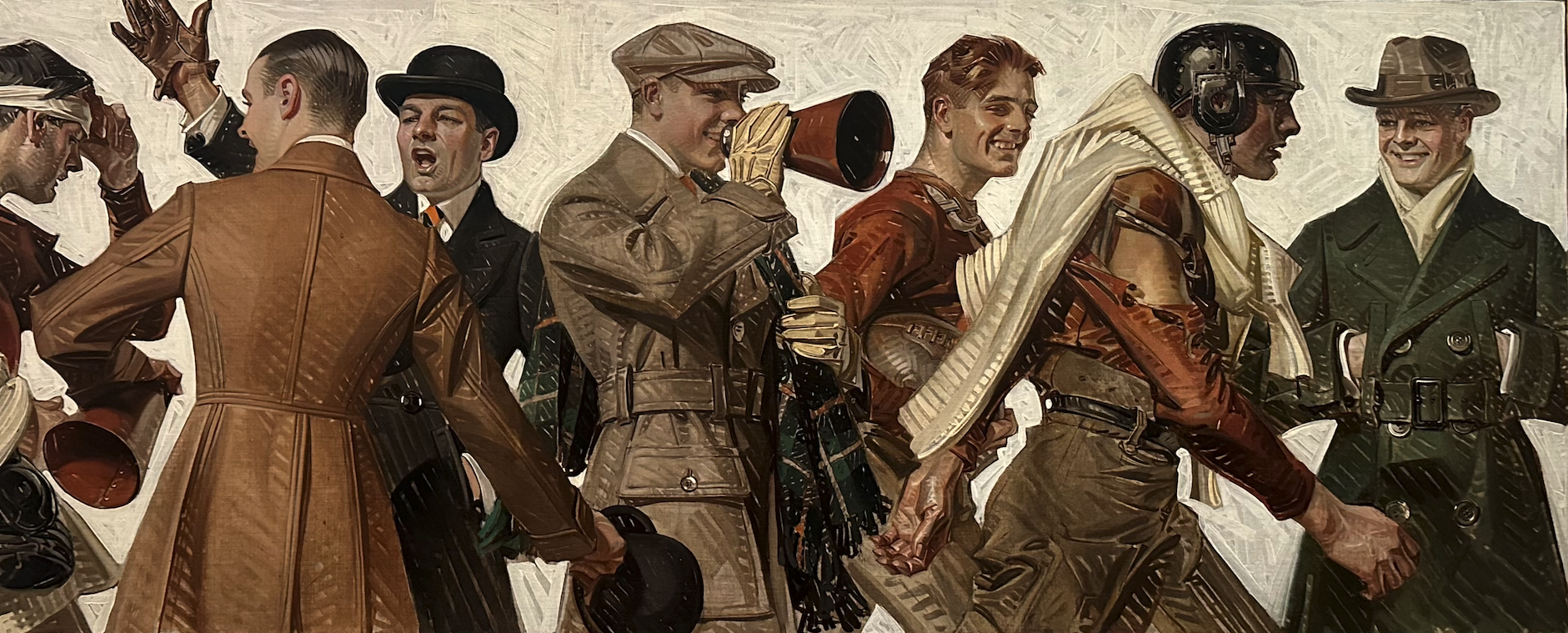
The museum displays one of the nation’s finest collections of original art by celebrated book, magazine, and poster illustrators. At left: “Daybreak” (detail) by Maxfield Parrish, 1922 | Center: “Saying Grace” by Norman Rockwell, 1951 | At right: “Football Players and Fans” by J.C. Leyendecker, 1920
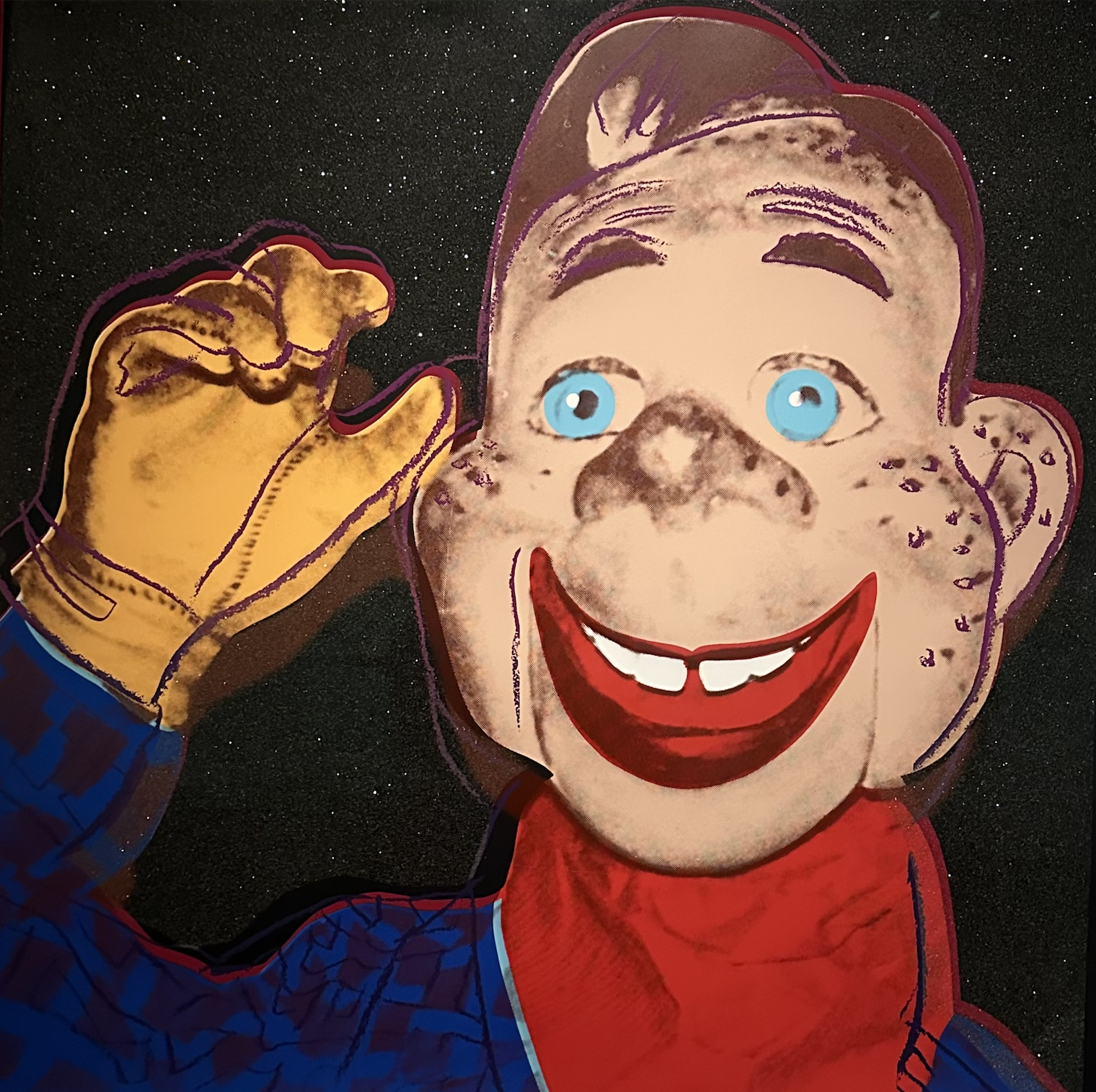
I have little interest in sports, but even I enjoyed the gallery focusing on athletic imagery. These included a classic boxing scene by urban realist George Bellows and arresting contemporary pieces by painter and Caldecott Medal-winning children’s book illustrator and author Kadir Nelson. Not surprisingly, the museum features an excellent assortment of original art for science fiction film posters, pulp novels, and magazines. There’s even a gallery full of comic strip art from the beginnings of the form through its 20th century development. The Yellow Kid, Krazy Kat, Pogo, Peanuts, Calvin and Hobbes, The Far Side, and R. Crumb are among the many strips and characters displayed.
The museum also multiple iconic costumes worn by Star Wars characters, and a costume for the Cowardly Lion from The Wizard of Oz (1939) with a a rather uncannily realistic face. You’ll even find an imposing metal robot costume from Earth Versus the Flying Saucers (1956)
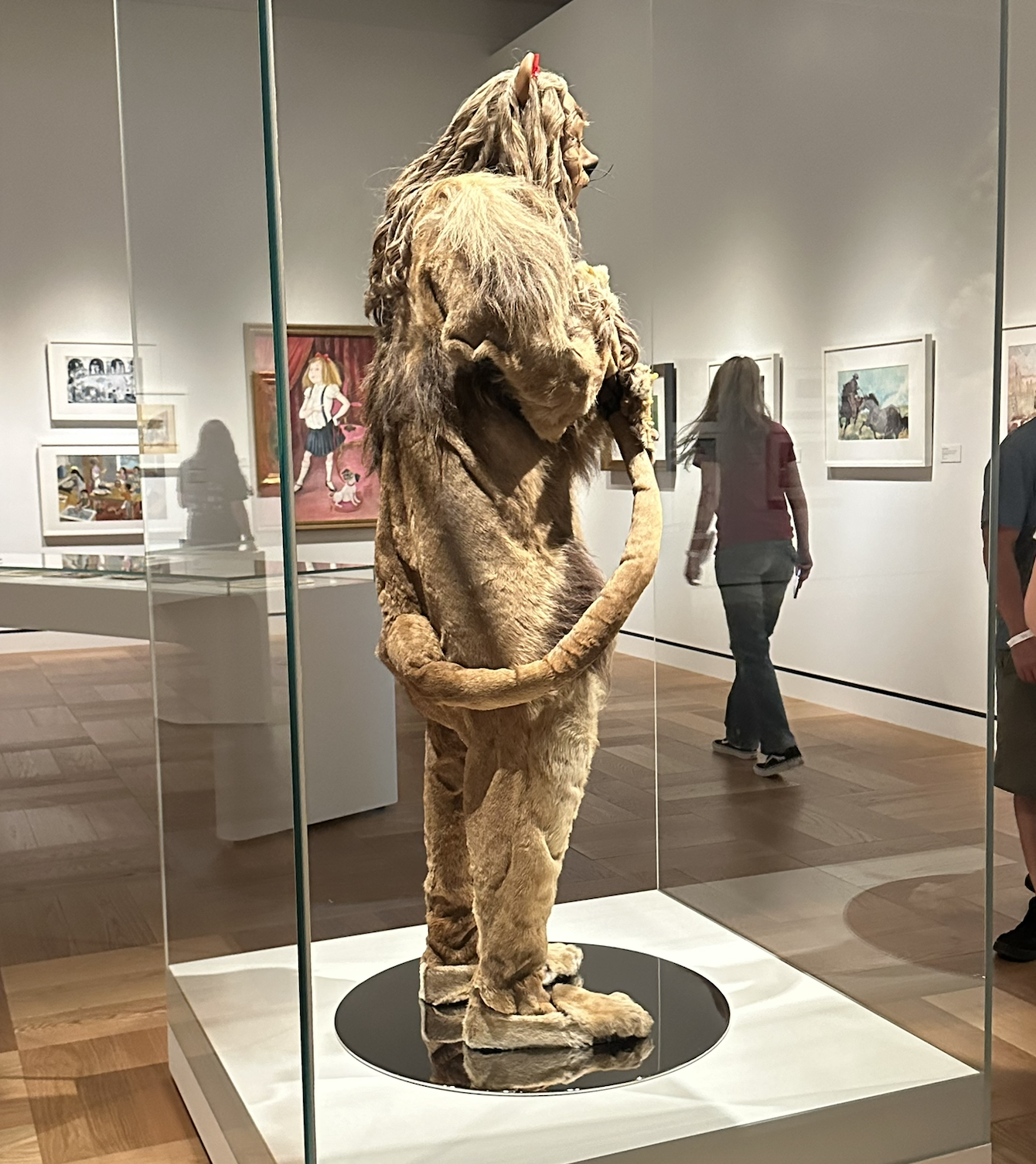
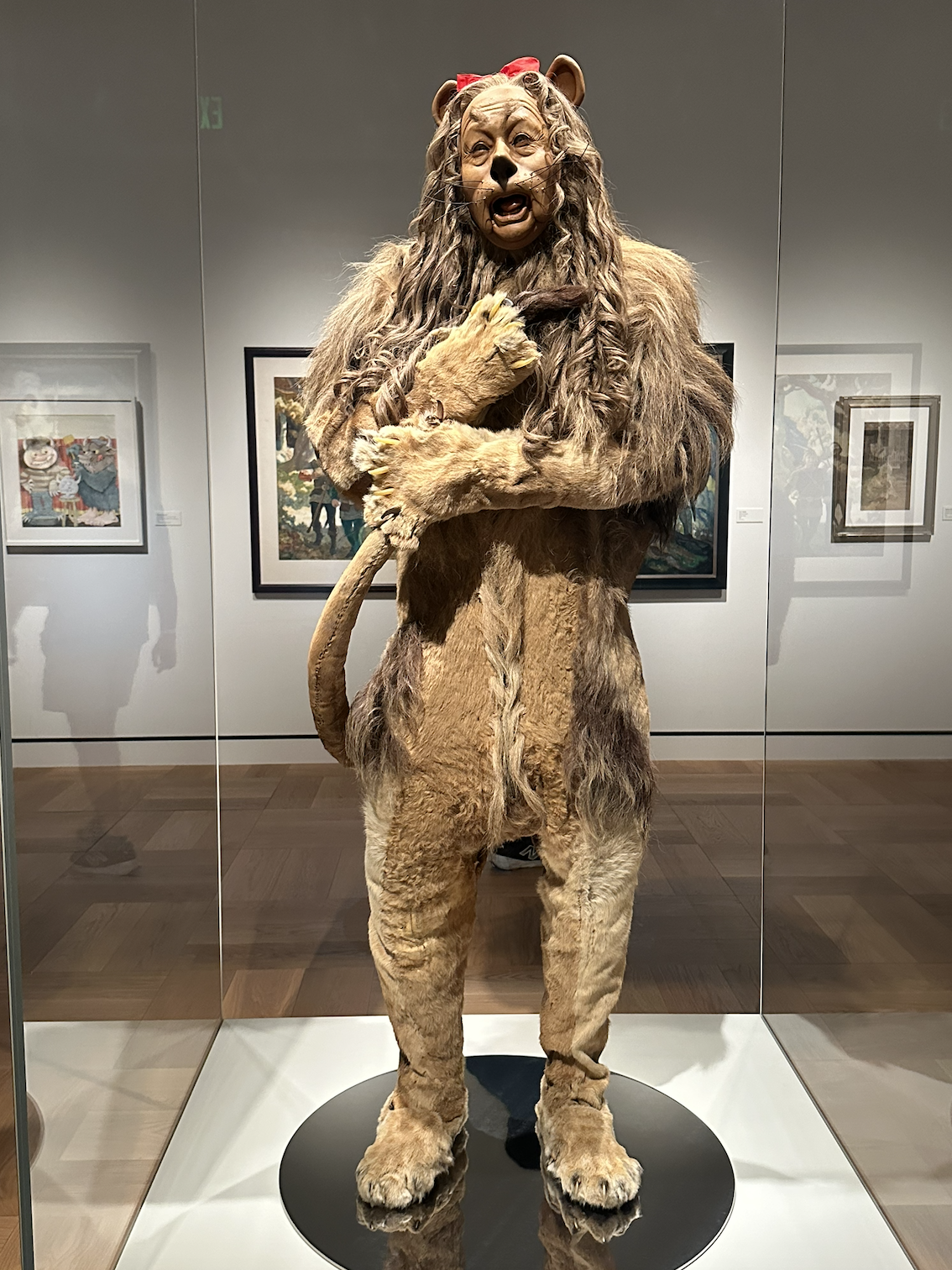
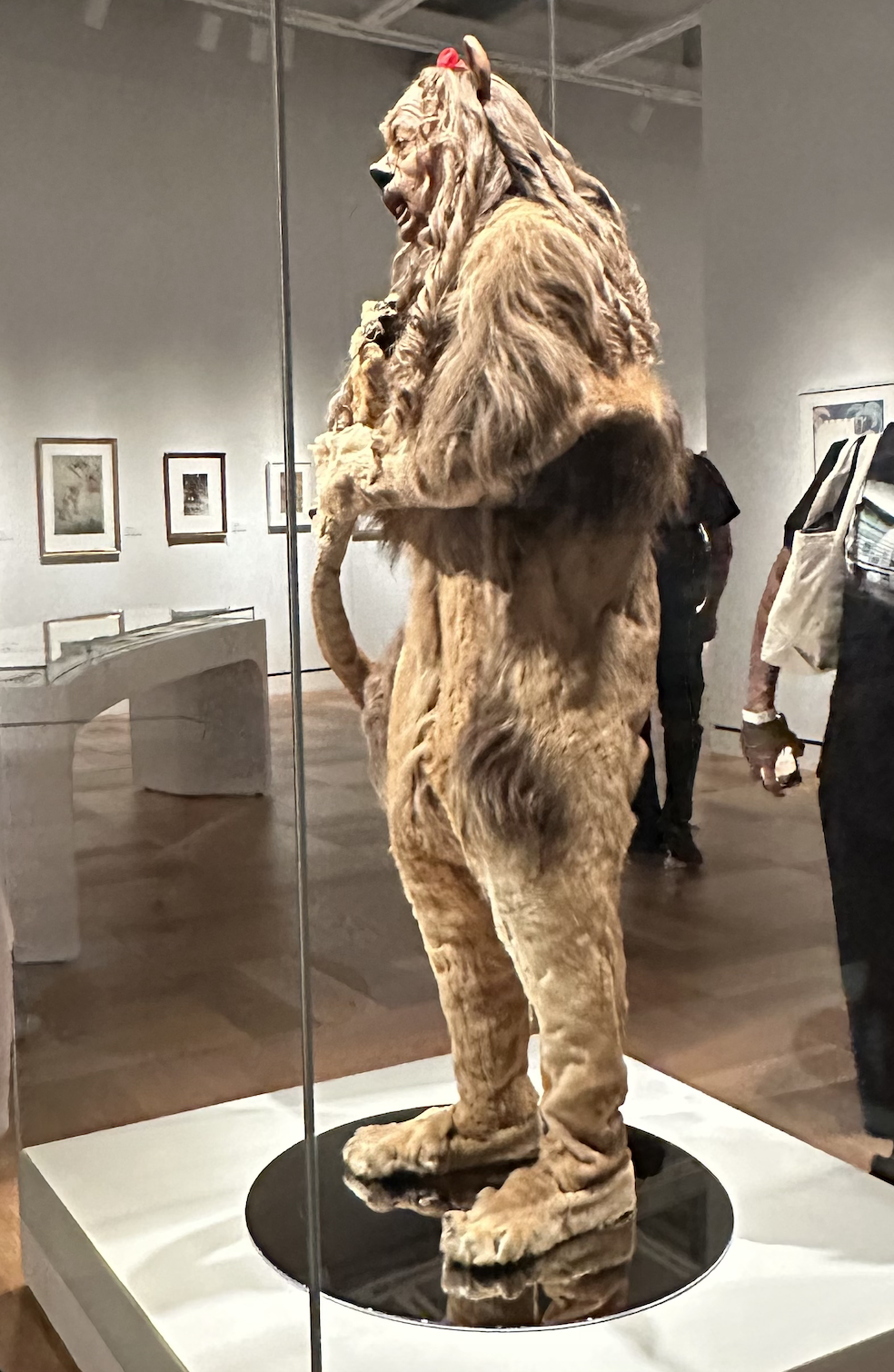
The Cowardly Lion costume worn by Bert Lahr in the beloved 1939 movie classic The Wizard of Oz
The first floor of the museum has two small (299-seat) theaters that screen films and visual storytelling programs continuously. Naturally, Lucas and Hobson fitted them with state-of-the-art technology.
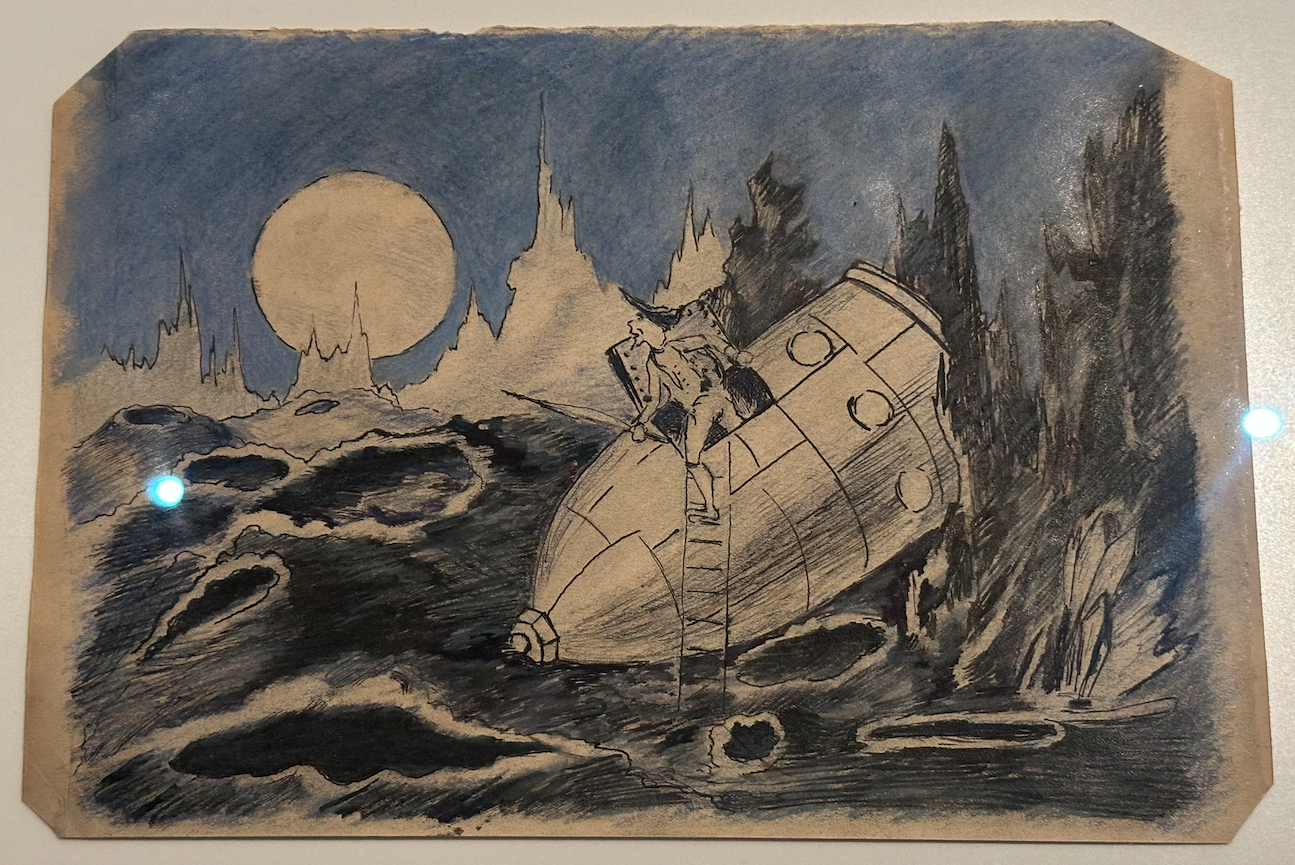
The museum has a strong focus on American narrative art, which isn’t surprising. Lucas’s films have incorporated actors and film locations in Europe as well as the U.S., but his inspirations largely spring from U.S. youth culture and science fiction stories of the mid-20th century. Like the work of his friend and collaborator Stephen Spielberg, Lucas often focuses on American themes. (I recently rewatched the excellent early Lucas film, American Graffiti—truly a love song to early 1960s Californian youth culture.) However, the Lucas Museum doesn’t have a jingoistic, “America is the greatest” vibe, and it includes a gallery celebrating Japanese manga and its influence on contemporary arts.
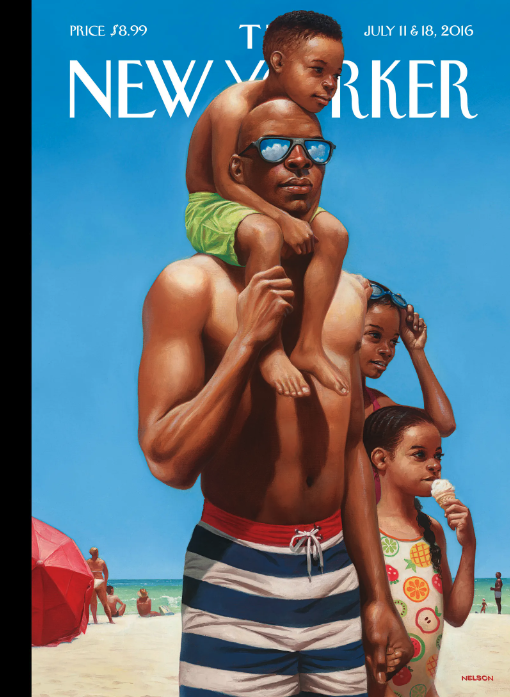
I was pleased to see many paintings by Black artists on display throughout the museum, including works by Jacob Lawrence, Ernie Barnes, and Charles White, as well as paintings by contemporary artist Kadir Nelson, whose work includes many arresting covers for The New Yorker. His paintings at the Lucas Museum have an exciting vibrance and power that really makes them stand out.
Some of the museum’s surroundings are still under construction. Signs to and within the parking areas and directing visitors to the museum entrance are confusing or missing. Visitors were wandering the parking structure and surrounding streets asking strangers for directions when I was there. Even employees were confused; I twice saw them provide incorrect directions. The museum interior also has a few navigational glitches, and what looks confusingly like ample bench seating in a large viewpoint area overlooking the museum’s surroundings; it is not actually to be sat upon, according to friendly staff members. On the ground floor, staff have to direct traffic to the banks of elevators up to the main gallery floor to avoid overcrowding them; this creates a bottleneck. But these are minor problems for an otherwise beautiful, architecturally impressive space full of exciting works of art.
The Lucas Museum, like many major art museums, requires timed entry reservations to avoid overcrowding and make for a more pleasant visit. Admission is $25 per adult, $21 per senior. Children 17 and under enter for free, but they still require timed-entry tickets. Time slots fill quickly, so book ahead if you can. There’s covered underground parking nearby, about a ten-minute walk from the entrance; note where you exit the garage so you can find your way back. (Finding the parking entrances can be confusing.) If you want to dine while there, the museum has a full-service rooftop restaurant, the Skywalker Grill, which has an outdoor terrace and is open during and after museum hours. Reservations are recommended. For casual dining during museum hours, there’s also a café on the first floor.
At top:
“Romance” (detail) by Maxfield Parrish, 1922, used as endpapers for the book The Knave of Hearts