
Nihilism and Nightlights

little-man

The Little Man movie rating system has been used by the San Francisco Chronicle since 1942. The excited Little Man above signifies a critic’s greatest satisfaction and is equivalent to a four-star rating.

• • • • • • •

The following is one of a series of six film review parodies I wrote for the Sunday Punch section of the San Francisco Chronicle some years ago. In each piece I wrote about nonexistent foreign films and reviewed them in the voice of a dry and humorless film critic. This was the second parody of the six.

• • • • • • •

Among the new foreign film releases this season are two films by female directors: Bebe Francobolli’s ode to Dada, Ciao Chow Chow, and Christiane de Geronimo’s children’s thriller, Nightlight.

Francobolli is the daughter of the Suprematist painter Mazlow Molotov (“The Black Russian”) and Constructivist painter Kiri de Kulpe Kloonig (a former courtesan known as “The Dutch Treat”). Bebe’s parents met in Rome at an international stamp-collecting convention and became Italian citizens before their only child was born.

Named Bebe Francobolli (literally Baby Postage Stamps) after her parents’ avocation, she refused to become a philatelist and rejected the art of her ancestors. She turned to Dada, the nihilistic movement that created “non-art,” laughed at overly serious artists and spawned Surrealism.

These influences can be seen clearly in Ciao Chow Chow, in which Bebe herself stars. Translated from Italian into English, and then back into Italian again, with no subtitles, the film begins and ends with Bebe waving goodbye to her beloved Chow dog, Antipasto, symbol of her lost youth and of her ridiculous early films.

Ciao is a parody of a self-parody, masterful in its simplicity and in its bold statement that life is to be laughed at, and that nothing is serious or sacred.

Basically nihilistic, with Dadaist subject matter and camera angles, this film is convoluted and uneven, personalized and stylized, and will make no sense to anyone who has not seen Bebe’s early travelogue films. Yet, Bebe promises that it will be her last film work, and that alone has prompted critical acclaim.

Avant-garde director Christiane de Geronimo’s Nightlight tells the terrifying story of the night the Mickey Mouse nightlight burned out in the Turner household. Little Bobby Turner is forced to face The Clown Puppet, The Vicious Animal Slippers and The Dreaded Man from Under the Bed.

Filmed in black and white, Nightlight captures the shadowy horror of every child’s bedroom, and forces even the adult viewer to come to grips with The Thing in the Closet. Not for the squeamish.

De Geronimo’s earlier attempts at children’s thrillers include The Teddy Bear with No Face, Scream, Barbie, Scream and Revenge of the Katzenjammer Kids, in which comic-strip characters from the past are set loose on an unwitting Nebraska farm town.

Nightlight, the third of her bedtime stories series, features the late French film star Estella de Lumiere in her final role before the dreadful accident on the set of Murder on the Trampoline.

Next month, two recent remakes: Canadian filmmaker and ice-hockey champion Pete Steed’s sport-oriented version of A Midsummer Night’s Dream; Fujiko Shiatsu’s sumo wrestling remake of The Music Man.

The Joyful Legacy of Rob Reiner

In 1987, I was a young film reviewer for the San Jose Metro (now Metro Silicon Valley), the South Bay Area’s popular weekly newspaper.  By October of that year, I’d reviewed about fifty movies for the paper, most of them cheaply made and awful teen movies with one-word titles, or lo-fi sci-fi from off-brand movie studios like Cannon Films. The paper’s senior reviewers wouldn’t waste time on such garbage, but I was the newest kid on the team, the “dog patrol” reviewer assigned to the worst dreck and drivel being shown at Silicon Valley’s cinemas. And I loved it. 

Most of the time, my job was to describe a bad film in 150 words. The trick was to warn people away from the worst flicks, and use humor to entice them to return next week for more funny zingers about upcoming films. In return for two hours with a bad movie, and an hour crafting and shaping a clever review that night, I earned two free movie tickets, $7.50, and my name in print. The Metro was the most popular paper among my colleagues at Apple, where I had a day job as a software test engineer, so everyone I knew was reading my work. That’s a heady experience for someone barely out of college. And it was a fun weekly Sunday afternoon gig for a kid in her twenties to share with a friend.

Very occasionally (maybe one time in ten), I was asked to write the week’s featured review. Each was 300 words and paid about $15. I sometimes reviewed an art house film; I occasionally saw a (not very good) foreign movie. But in October 1987, I was assigned a real winner. Based on one of my favorite novels by William Goldman, that week’s movie was the classic Rob Reiner comedy The Princess Bride. When I got the assignment, I felt joyful, but a little anxious, too—Reiner’s movies This Is Spinal Tap and Stand by Me (based on Stephen King’s novella The Body) had each come out not long before, and they were wonderful. I’d loved them, as nearly everyone did. But Goldman’s story was special to me. It needed just the right touch of silliness, madness, romance, adventure, and heart to work the way it should. Could Reiner pull it off? 

You know the rest. The film was glorious. I was rapturous. I gushed about the movie in my 300-word featured review, and urged all my friends to see it. The performances and so many of the best lines (written by William Goldman himself, who adapted the screenplay from his novel) have become indelible parts of the film canon: 

“Inconceivable!” 

“You keep using that word. I do not think it means what you think it means.” 

“Hello. My name is Inigo Montoya. You killed my father. Prepare to die.” 

“Death cannot stop true love. All it can do is delay it for a while.”

“Have fun storming the castle!” 

“As you wish.” 

Of the 65 or so films I reviewed over two years at the Metro, none came close to entertaining me as much as Rob Reiner’s magical movie. Reiner had that rare gift of helping his audiences connect emotionally and immediately with his characters, whether through laughter, fear, love, or tears. As we’ve all heard and read many times by now, he also had that rare talent of connecting deeply and honestly with the people behind those characters. He made them feel trusted, cared for, and safe enough to give us brave, silly, beautiful, or heartbreaking performances. Their work hit us hard and stuck with us because it felt so human. 
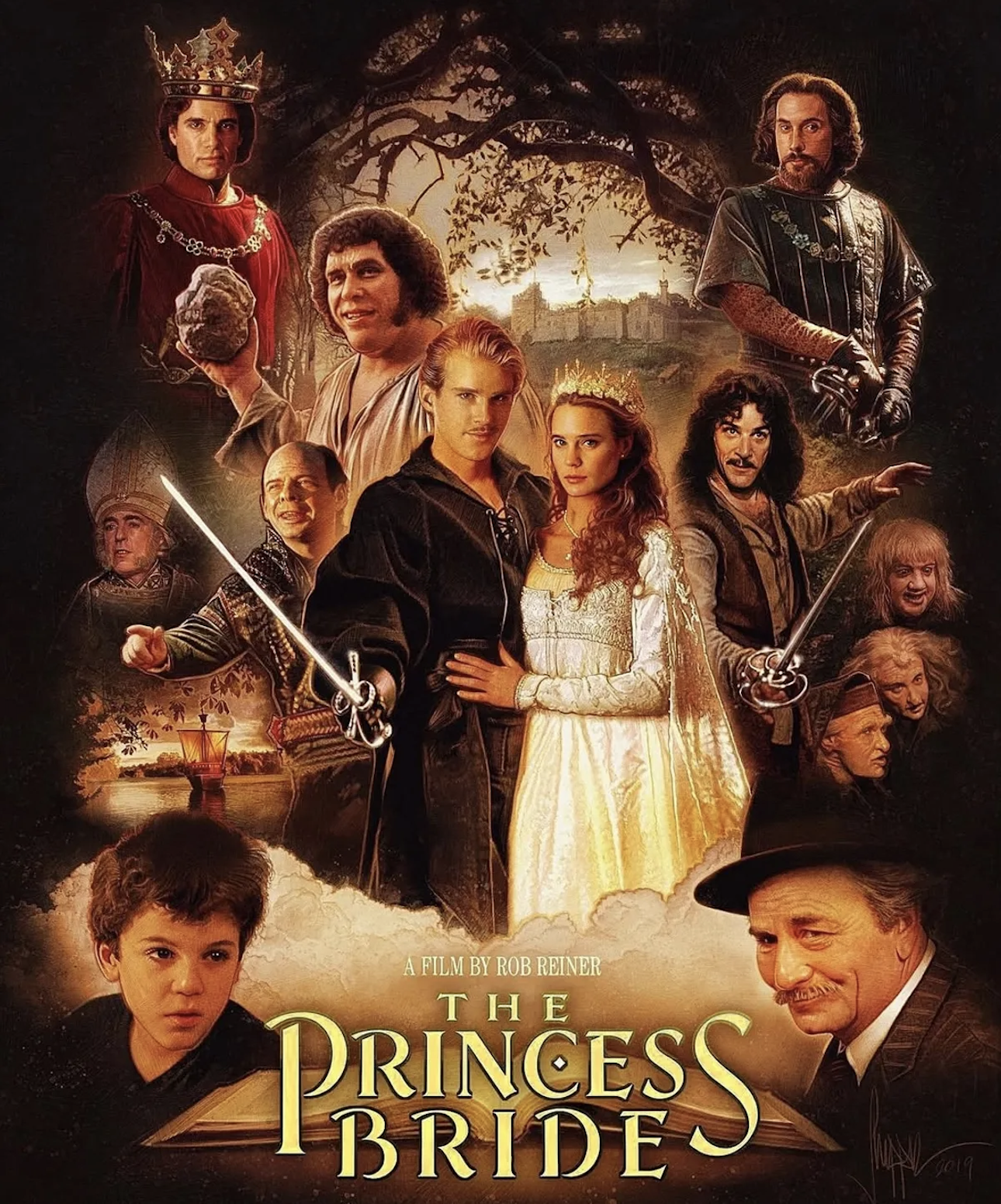
Poster for the movie The Princess Bride—the image is a collage showing all of the film's main characters
The cast of Rob Reiner’s The Princess Bride (1987)

By all accounts, Reiner was a man who felt things deeply, and who loved collaboration. His sets, casts, and crews were famously collegial. In his work, he most enjoyed urging people upward and onward through kindness, decency, and humor. And when he wasn’t writing or directing award-winning films, he was helping to make connections among people who could effect lasting social change. He and his wife, the talented producer and photographer Michele Singer Reiner, were ardent and generous campaigners for equal rights for the LGBTQ+ community. They spent millions of their own dollars and countless hours successfully advocating for marriage equality. They also fought hard for early childhood education and healthy child development.

Rob Reiner was ardently and outspokenly liberal, and passionately critical of conservative Republicanism and Donald Trump. However, he also found friendship with people of different political persuasions, including former California Governor Arnold Schwarzenegger. Reiner spoke admiringly and kindly about Erica Kirk’s gracious words of inclusion after the murder of her husband, far right commentator Charlie Kirk, whose political beliefs were diametrically opposed to Reiner’s. The director sought to help people with opposing views to coexist and find common ground. He was a man of strong convictions, but also of great heart.

We’ve all heard many stories of people in the movie business who are good at playing heroes, but are less than gracious or kind behind the scenes. It’s always refreshing and moving to learn about titans of the entertainment industry who use their immense talent and influence for good. We’ll miss Rob Reiner’s continuing creativity and positive life force. But thank goodness we’ll always have his films to remind us of the importance of art, heart, compassion, and humor.
Charles Dickens: “Mankind Was My Business”

Christmas Carol Cover

[Originally published in 2020.]

“Oh! captive, bound, and double-ironed,” cried the phantom, “not to know … that any … spirit working kindly in its little sphere, whatever it may be, will find its mortal life too short for its vast means of usefulness. Not to know that no space of regret can make amends for one life’s opportunities misused! Yet such was I! Oh! such was I!”

“But you were always a good man of business, Jacob,” faltered Scrooge, who now began to apply this to himself.

“Business!” cried the Ghost, wringing its hands again. “Mankind was my business. The common welfare was my business; charity, mercy, forbearance, and benevolence, were, all, my business. The dealings of my trade were but a drop of water in the comprehensive ocean of my business!”

—A Christmas Carol

In my family, A Christmas Carol is almost a sacred text. My grandmother quoted from it each Christmastime, and she, my mother (a teacher of English literature) and I watched each film and television version of it, cocoa and Kleenex in hand. We recited along with Marley’s Ghost, the Ghost of Christmas Present, Ebenezer Scrooge and Tiny Tim, weeping and hugging and loving every moment of the story.  Each viewing or reading of A Christmas Carol left us renewed in our commitments to each other and ourselves to hold Christmas in our hearts all through the coming year, and to remember Jacob Marley’s exhortation that looking after each other and lifting up those around us was our true reason for living. A Christmas Carol reminded us that humankind was our business, that “charity, mercy, forbearance, and benevolence” were our collective responsibility to each other, and the source of humanity’s greatest joys as well.

When my own daughter was old enough, I began reading Dickens stories aloud to her, and of course A Christmas Carol was among them. I read the whole of it to her in one evening, stopping occasionally to compose myself. She and I went to see a beautiful theatrical production of it in Seattle when she was a girl, just as my mother and I had seen multiple wonderful versions of it at the American Conservatory Theater in San Francisco during my childhood. Seeing A Christmas Carol has always meant far more to me than attending any production of The Nutcracker ever could.

This masterful work, so perfectly composed, so moving, so excitingly paced, was written in just six weeks when Charles Dickens’s fortunes were flagging, his coffers low and his popularity waning. But it was not worry about his purse or his reputation that inspired Dickens; it was his childhood spent in a debtor’s prison with his family that made him speak out so powerfully on behalf of the poor. While still a young boy, Dickens was forced to leave school to work in a boot blacking factory. There he spent his days pasting labels on bottles in hopes of making enough money to bail his father out of his debts. It was only through the efforts of children that Dickens’s father could pay off his debts and at last leave the Marshalsea Prison. Though Dickens later grew prosperous and world-renowned, he never forgot his time spent among the poor, the sick, the fearful and the abandoned.

In early 1843, Britain’s Parliament published a report on the damaging effects of the Industrial Revolution on poor children. The Second Report of the Children’s Employment Commission moved Dickens deeply, and he planned to write and publish an inexpensive political pamphlet to encourage commissioners and other lawmakers to do more on behalf of the poor.

Dickens gave a fundraising speech in October of that year at the Manchester Athenæum, urging workers and employers to come together to combat ignorance with educational reform. It was during that visit to Manchester that he realized his greatest ability to influence and inform was not through political tracts and speeches but through his works of fiction. In those early days of October 1843, he devised the plot of A Christmas Carol. When he returned to his home in London, he worked in a fury to complete the story in time for Christmas publication, and just made it: it was published on December 19, 1843.

The Wham of Sam: My Sammy Davis Jr. Ephiphany

In honor of Sammy Davis Jr.’s 100th birthday today, I’m sharing this piece I originally wrote about him back in 2006. Thanks again, Sammy.

A few months ago, I was doing a difficult job that lasted six weeks instead of the two I thought I’d signed on for. I was commuting about 10 hours a week (and I hate driving), and the job required intense focus on thousands of important details. I learned a lot, the people were kind and helpful, and the work they did was important, but I felt out of place, frustrated, and blue.

I tried reminding myself of all the things going right with the job: I was employed, working with good folks at an institution that improves people’s lives, making enough so that I didn’t have to work two jobs, and setting a good example for my daughter by showing that sometimes we do things we don’t enjoy in order to pay our dues, fulfill our obligations, be helpful, and earn a living.

Of course, while my brain understood all this, my heart felt cranky and sad. I was frustrated that the talents I feel are the most valuable and worthy ones I have to offer weren’t being used to the extent I’d like to use them. And then I had my Sammy Davis Jr. epiphany.

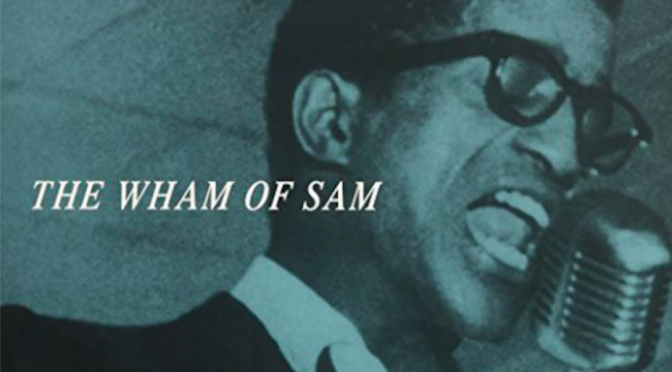
To try to make the hours in stop-and-go traffic feel less gruesome, I realized I needed to find fresh and uplifting tunes. I love NPR (which recently featured an interview with Sammy’s daughter, Tracey, who discussed her new memoir of her father), but sometimes focusing on the latest events in Fallujah while stuck on a bridge for 30 minutes just feels too nasty and I need music. I rummaged through my CDs and found one I’d bought a few months back but hadn’t listened to much yet. It was a CD of songs performed by a man I must now admit I used to think of as one of the poster children of Vegas kitsch: Sammy Davis Jr. But the best part is the name of the album: “The Wham of Sam.

I must digress at this point. Are you already asking yourself, why would Laura buy Sammy CDs in the first place? Well, because I heard one of his songs in a store somewhere and was reminded what a fine voice and a great sense of expression, style, and warmth he had at his best moments. The many TV appearances he made during the 1960s and 1970s were so filled with Vegas schlock and corny stylization that he was almost a self-parody by the time I started listening to music in earnest. He was doing campy, obvious, cool cat riffs during his showy performances with Merv Griffin and Mike Douglas and on The Tonight Show, and I couldn’t be bothered. I knew I’d loved his portrayal of Sportin’ Life in the film Porgy and Bess when I’d seen it on TV as a tiny kid, but I don’t think it’s been on TV since about 1970 so my memory is now faint, and I loved his performance as the Cheshire Cat singing “What’s a Nice Kid Like You Doing in a Place Like This?” in a strange 1966 animated parody variation of Alice in Wonderland.

His turn as groovy evangelist Big Daddy in Sweet Charity is a classic sixties moment that featured Sammy’s charismatic rendition of the song “The Rhythm of Life,” but somehow I forgot about that. The big hits he had when I was a kid, like “The Candy Man,” felt too cutesy and pat to me, and I dismissed him, with his goofy hipster patois and giant diamond rings, his membership in the Rat Pack, and his public support of Nixon was too bizarre. (I still shudder when I remember the much-publicized photo of Sammy’s adoring, awkward, full-body hug of Nixon.)

But when I heard him singing over the speakers at some chain store I thought, damn, no wonder this man was so popular. Listen to the feeling he puts into that line! What clear, clean enunciation! What sophisticated, tasty phrasing! So I swallowed my pride and hung out at a CD store listening station for a half hour, listening to selections from a number of his albums. I bought two, one of ballads and one of swingier songs. What a good move that was. But then I got distracted and hardly listened to them.

Anyway, back to my commute-hour epiphany. I popped “The Wham of Sam” into my CD player, and right there, boom, I was hooked with the first song, the star of the album, “Lot of Livin’ to Do.” The horns grabbed me immediately, and the energy, which starts out high, somehow continues to build with every measure of the song. The band arrangement by Marty Paich is fabulous, swingy in the style of Sinatra’s terrific “Ring-A-Ding-Ding” album (one of my favorite albums of all time, by anyone—it was arranged by the legendary Nelson Riddle).

“Lot of Livin’ to Do” is big and brassy and has something new going on at every turn, but the band never outshines Sammy, whose phrasing is exact and elegant. His syncopation is so sure and it builds right up to the payoff moments. He knows when to pull back a little and when to let it rip. The intonation and enunciation are beautiful, but beyond his technical chops, he works the lyrics just right. He’s thinking about what he’s saying, he means what he’s singing, and I believe every word. He was sizzling and I was thrilled, sitting in a traffic jam on a bridge near Seattle at 8:30 a.m., bouncing up and down in my seat.

I must have listened to that song six times in a row on the way into work. The words crept into my brain and Boom! I had a revelation. The words aren’t Shakespeare; they’re standard upbeat lyrics, and the song was originally written for the musical Bye Bye, Birdie, which is fun but not Sondheim. But somehow, sung with that bravado and joy and excitement and underscored by that hot band, the lyrics spoke to me:

“… [T]here’s wine all ready for tasting / And there’s Cadillacs all shiny and new / Gotta move ’cause time is a-wastin’ / There’s such a lot of livin’ to do. / There’s music to play, places to go and people to see / Everything for you and me / Life’s a ball if only you know it / And it’s all waiting for you / You’re alive, so come on and show it / There’s such a lot of living to do.”

I heard it, and I believed it. I figured, hey, this slight man had a four-pack-a-day cigarette habit, a glass eye, grew up without his mom, had to deal with relentless racism from day one, and performed in hotels that he was barred from sleeping in because of the color of his skin (until he became a big name and helped break the color barrier in show business). And man, did he love life. He ate it up and went over the top, drinking and smoking and skirt-chasing, and hanging out with some unsavory folks, yes—but he also took a song like “Lush Life” and sang it like he’d lived it. He sang every song as if he lived it. And he meant every word.

He brought fun and swing and life into everything he sang. Sometimes the hipster kitsch of it was too much for me, and sometimes the low-brow, I’m-gonna-please-everybody style of his later years felt like he’d dumbed-down his act, especially considering what sophistication he was capable of. His desire to please everybody and be up, up, up all the time cheapened his rep in the eyes of many of us, but the joy he brought to life, the beauty he found in it and made for others.

That devotion to wringing every drop from it reminded me how lucky I was and how many wonderful things are around for me to enjoy. I thought it seemed a sin to waste another day in disappointment that I’m not doing more exciting work, and I vowed I’d make good things happen, find them, make sure they’re a part of every day of mine, and every one of my daughter’s days, too. I figured if Sammy, who had so much trash to contend with, could take his talent and shoot it off like fireworks, why can’t I take whatever gifts I have and make something fine and exciting of them, too? I may not be the dynamo Sammy was, but I don’t have his struggles either. And one doesn’t have to be a superstar to find something splendid in each day, or to make fine things happen.

So from that day forward I’ve reaffirmed my dedication to finding and doing good work, to making beauty, to learning something good and doing something kind each day, to being grateful for the opportunities to enjoy life more and to worry less about my dwindling savings (and how long it takes to find good jobs), and to writing regularly and with purpose. In a roundabout way, I have Sammy to thank for inspiring me to start this site. The wham of Sam, indeed.

Why We Still Need World AIDS Day

Today is the 37th annual World AIDS Day. Each December 1 we commemorate the lives of millions of people who’ve suffered and died from HIV/AIDS around the world. On this day each year, we’re reminded of the millions who continue to suffer from the effects of the illness, the trauma caused by it, and the impact that losing loved ones to AIDS has had.

2025 White House World AIDS Commemoration Canceled

The photo here shows the World AIDS Day event at the White House in 2024, when Joe Biden was president. Note that the lawn was covered in AIDS memorial quilts that honor the memories of people killed by AIDS. These quilts have been international signs of commemoration and activism against the deadly disease for four decades now. But for the first time in 37 years, the White House under Trump has canceled all 2025 World AIDS Day events, and refuses to continue the tradition of annual remembrances of those lost to the disease. Trump has also ended former President George W. Bush’s phenomenal PEPFAR program, a U.S. government initiative which saved untold numbers of lives around the world since it was launched in 2003. The President’s Emergency Plan for AIDS Relief was the largest commitment by any nation to a single disease. It focused on saving lives, preventing new infections, providing treatment and care, and strengthening health systems in over 50 countries. It provided antiretroviral treatment, pre-exposure prophylaxis (PrEP), and care for orphans and vulnerable children, among other essential services. But now it’s gone.

HIV/AIDS is still a major health threat around the world. Despite Trump’s decision not to mark or mention World AIDS Day at the White House any longer, it is still an important day to commemorate the people we’ve lost, the battles we’ve won, the research that continues to improve treatment options, and the terrible inaccessibility of necessary HIV/AIDS treatments for millions of people who desperately need it.

But Isn’t the HIV/AIDS Epidemic Over?

No; it’s a continuing worldwide health threat. AIDS was first identified in 1981, and the link from AIDS to HIV was made in 1983. As of 2024, over 44 million people had died of AIDS worldwide. HIV continues to spread and kill massive amounts of people annually. An estimated 630,000 people died of it just last year.

It’s true that antiretroviral medications have saved untold millions from suffering and death caused by HIV/AIDS. But millions more with HIV still don’t have access to such drugs, and many people can’t tolerate them. About 1.2 million people in the U.S. have HIV today, and an estimated 13% of them don’t know they have it. Without treatment, they could become very ill, unknowingly pass the illness on to others, or even die.

Early Years of HIV/AIDS Awareness & Research

AIDS was an epidemic first identified in gay men, and prominent gay men were the first public faces of the disease. Entertainers like Rock Hudson attracted attention and scorn for being outed as both being gay and having AIDS in a highly homophobic era. But they had inspiring and powerful friends, like Oscar-winning actress Elizabeth Taylor, who’d been a close friend to Rock Hudson for decades. She co-founded amfAR, the Foundation for AIDS Research, one of the nation’s most influential and important AIDS-related organizations. The UK’s wildly popular Princess Diana also made expanding awareness of and compassion for people with HIV/AIDS one of her biggest goals. Ms. Taylor and Princess Diana normalized treating people with HIV/AIDS with warmth and compassion, visiting them, hugging them, and holding their hands and laughing or crying with them, instead of treating them like pariahs.

In 1980s America, President Reagan refused to even say the word AIDS publicly for several years, while it ran rampant, eviscerating the gay community—including many of his personal friends, among whom were many closeted gay actors. But during that time, the spread of AIDS galvanized activists, who established powerful awareness groups like ACT UP. Public health giants like Dr. Anthony Fauci researched the causes of AIDS and its spread, and provided essential public health services and advice.

Fauci’s initial experiences with anti-AIDS activists were contentious. Many activists verbally attacked him for not taking their greatest concerns seriously enough. To his credit, he recognized that he was not working effectively with the people most hard hit by the AIDS epidemic. He met with them, listened, and apologized for his previous arrogance. Dr. Fauci turned leading AIDS activist Larry Kramer from an adversary to a friend by learning how to better work with communities impacted by disease through mutual respect and dialog. Over time, Fauci learned not to bristle when the famously (and necessarily) outspoken and irascible Kramer gave him hell.

AIDS Treatment in 2025

In 1992, after the death of many friends—including the 1991 death of Freddie Mercury—from AIDS, Elton John established the Elton John AIDS Foundation, which is still going strong. The foundation has raised over $650 million to support more than 3,100 projects in 102 countries to end the stigma, discrimination, and neglect associated with HIV/AIDS. Since the organization was established, the world has seen huge forward movement in the prevention and treatment of HIV.

As a result of the successes of hospitals, researchers, activists, and community health initiatives, and the excellent HIV/AIDS meds now available, it’s no longer the uncontrollable public health menace it once was. Indeed, many assume that getting HIV today isn’t that big a deal, since you can take PrEP drugs to prevent it, or antiretroviral drugs to treat it. However, about one in ten people with HIV develop intolerance to treatment, or they become drug resistant. Many more people have a lack of consistent access to healthcare or insurance, and can’t afford meds. So the need for awareness, healthcare access, affordable (or free) medications, and counseling for those affected by HIV/AIDS is still great, and the services are vital.

How You Can Help Stop HIV/AIDS

World AIDS Day is a great time to find a way to support AIDS prevention, treatment, or counseling organizations. To find reputable and successful organizations that rely on public donations in the U.S., check out Charity Navigator, which vets organizations and lets you know which ones are most reputable, reliable, and spend their money most wisely. You’ll find a link to Charity Navigator’s best AIDS charities in the comments below.