
Tag Archives: Gay Rights

The Joyful Legacy of Rob Reiner

In 1987, I was a young film reviewer for the San Jose Metro (now Metro Silicon Valley), the South Bay Area’s popular weekly newspaper.  By October of that year, I’d reviewed about fifty movies for the paper, most of them cheaply made and awful teen movies with one-word titles, or lo-fi sci-fi from off-brand movie studios like Cannon Films. The paper’s senior reviewers wouldn’t waste time on such garbage, but I was the newest kid on the team, the “dog patrol” reviewer assigned to the worst dreck and drivel being shown at Silicon Valley’s cinemas. And I loved it. 

Most of the time, my job was to describe a bad film in 150 words. The trick was to warn people away from the worst flicks, and use humor to entice them to return next week for more funny zingers about upcoming films. In return for two hours with a bad movie, and an hour crafting and shaping a clever review that night, I earned two free movie tickets, $7.50, and my name in print. The Metro was the most popular paper among my colleagues at Apple, where I had a day job as a software test engineer, so everyone I knew was reading my work. That’s a heady experience for someone barely out of college. And it was a fun weekly Sunday afternoon gig for a kid in her twenties to share with a friend.

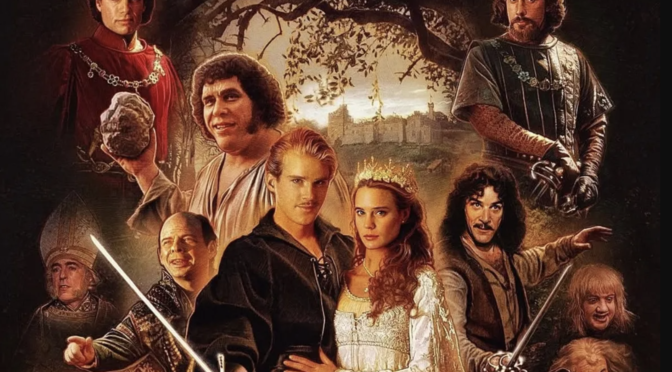
Very occasionally (maybe one time in ten), I was asked to write the week’s featured review. Each was 300 words and paid about $15. I sometimes reviewed an art house film; I occasionally saw a (not very good) foreign movie. But in October 1987, I was assigned a real winner. Based on one of my favorite novels by William Goldman, that week’s movie was the classic Rob Reiner comedy The Princess Bride. When I got the assignment, I felt joyful, but a little anxious, too—Reiner’s movies This Is Spinal Tap and Stand by Me (based on Stephen King’s novella The Body) had each come out not long before, and they were wonderful. I’d loved them, as nearly everyone did. But Goldman’s story was special to me. It needed just the right touch of silliness, madness, romance, adventure, and heart to work the way it should. Could Reiner pull it off? 

You know the rest. The film was glorious. I was rapturous. I gushed about the movie in my 300-word featured review, and urged all my friends to see it. The performances and so many of the best lines (written by William Goldman himself, who adapted the screenplay from his novel) have become indelible parts of the film canon: 

“Inconceivable!” 

“You keep using that word. I do not think it means what you think it means.” 

“Hello. My name is Inigo Montoya. You killed my father. Prepare to die.” 

“Death cannot stop true love. All it can do is delay it for a while.”

“Have fun storming the castle!” 

“As you wish.” 

Of the 65 or so films I reviewed over two years at the Metro, none came close to entertaining me as much as Rob Reiner’s magical movie. Reiner had that rare gift of helping his audiences connect emotionally and immediately with his characters, whether through laughter, fear, love, or tears. As we’ve all heard and read many times by now, he also had that rare talent of connecting deeply and honestly with the people behind those characters. He made them feel trusted, cared for, and safe enough to give us brave, silly, beautiful, or heartbreaking performances. Their work hit us hard and stuck with us because it felt so human. 
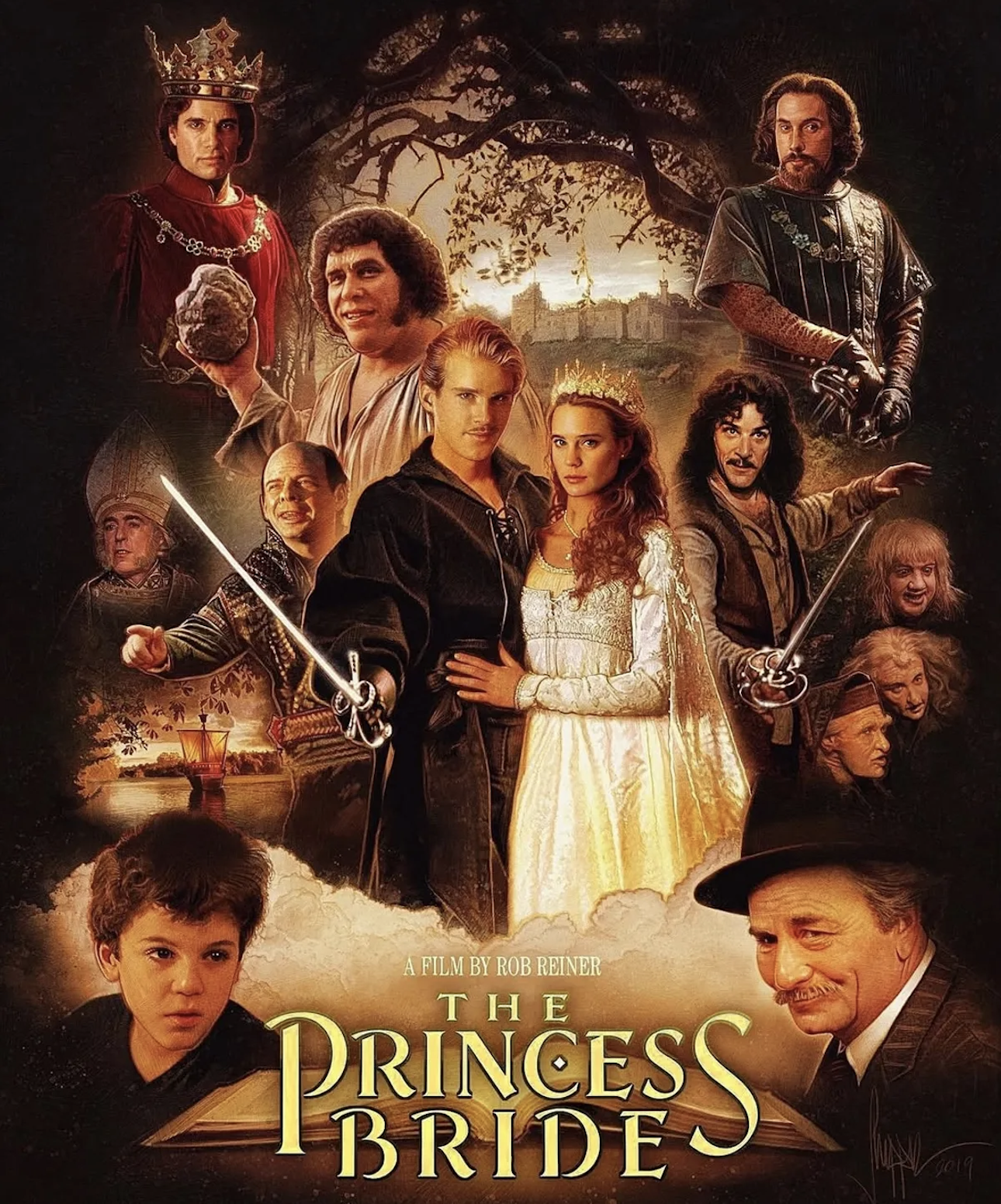
Poster for the movie The Princess Bride—the image is a collage showing all of the film's main characters
The cast of Rob Reiner’s The Princess Bride (1987)

By all accounts, Reiner was a man who felt things deeply, and who loved collaboration. His sets, casts, and crews were famously collegial. In his work, he most enjoyed urging people upward and onward through kindness, decency, and humor. And when he wasn’t writing or directing award-winning films, he was helping to make connections among people who could effect lasting social change. He and his wife, the talented producer and photographer Michele Singer Reiner, were ardent and generous campaigners for equal rights for the LGBTQ+ community. They spent millions of their own dollars and countless hours successfully advocating for marriage equality. They also fought hard for early childhood education and healthy child development.

Rob Reiner was ardently and outspokenly liberal, and passionately critical of conservative Republicanism and Donald Trump. However, he also found friendship with people of different political persuasions, including former California Governor Arnold Schwarzenegger. Reiner spoke admiringly and kindly about Erica Kirk’s gracious words of inclusion after the murder of her husband, far right commentator Charlie Kirk, whose political beliefs were diametrically opposed to Reiner’s. The director sought to help people with opposing views to coexist and find common ground. He was a man of strong convictions, but also of great heart.

We’ve all heard many stories of people in the movie business who are good at playing heroes, but are less than gracious or kind behind the scenes. It’s always refreshing and moving to learn about titans of the entertainment industry who use their immense talent and influence for good. We’ll miss Rob Reiner’s continuing creativity and positive life force. But thank goodness we’ll always have his films to remind us of the importance of art, heart, compassion, and humor.
The Times of Harvey Milk

milk

[Revised from an article originally published on Laura Grey’s Little Hopping Bird blog.]

In 1978, San Francisco mayor George Moscone and San Francisco’s first openly gay city supervisor, Harvey Milk, were assassinated by Dan White, another San Francisco supervisor. Dianne Feinstein, now a U.S. Senator from California, was president of the board of supervisors; she witnessed the aftermath and announced the tragedy to the press, and rose to the position of mayor of San Francisco as a result of the assassination.

I remember the time vividly. When I was a young girl, I had met George Moscone, then a California state senator, at a Democratic party rally I attended with my mother, and I was starstruck to meet someone whose face I had seen smiling on our television during nightly newscasts. Beyond the fact of his familiarity was his personal charm; Moscone was energetic, charismatic and bigger than life. The assassination was shocking, happening as it did at the hands of a coworker of both of the victims, an attractive and clean-cut fellow whose blind rage inspired a dramatic and highly publicized trial in which killer Dan White was convicted of manslaughter, the lightest possible charge against him, based in part on the fact that his attorneys said he’d gone temporarily mad because of the large quantity of junk food he’d consumed prior to the crimes. This “Twinkie defense” outraged people across the country and inspired a change to California criminal law.

The murder also inspired the creation of an odd and controversial work of art by one of my favorite Bay Area artists, sculptor Robert Arneson (who received his Master of Fine Arts degree from my alma mater, Mills College). In 1980 Arneson was commissioned to create a work to memorialize Moscone in San Francisco’s new Moscone Convention Center. It is a mystery to me why the Arts Commission would ask a sculptor as famously irreverent and outrageous as Arneson, who had made a name for himself sculpting wild and ridiculous ceramic self-portraits, to commemorate someone who was best remembered for the brutal and horrible circumstances of his death. The bust of Moscone was done in Arneson’s usual style, which is to say it was bold, disturbing and unflattering, and, most shocking of all, it was placed on a large pedestal which commemorated the circumstances of Moscone’s murder. Arneson was asked to change the work and refused, nor would he consent to have the sculpture displayed with the pedestal art hidden. He returned the commission he had been paid for the piece and resold the sculpture. It is powerful and arresting, singularly disturbing and unlike any official commemorative sculpture I have ever seen.

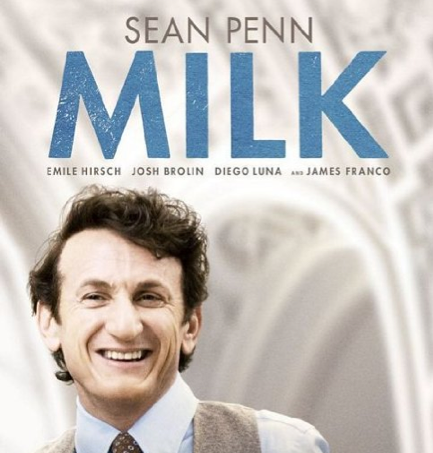
At the time of the murders, the greatest attention was given to the killing of the mayor; I was aware that another supervisor who was openly gay had also been murdered, but in the general news of the time my memory is that most Bay Area news media treated that as a decidedly secondary part of the story. Since then, however, little has been said or written about George Moscone that most people, even in the Bay Area, would know much about; few would remember much about him beyond his having been murdered and having had a San Francisco convention center named for him, while Harvey Milk has inspired a very successful, Academy Award–winning documentary, “The Times of Harvey Milk” and is the subject of “Milk,” a moving and important biopic by director Gus Van Sant starring Sean Penn as gay rights pioneer and civic reformer Harvey Milk, which won Penn his second Academy Award for the Best Performance by An Actor in a Leading Role. What makes Milk worth such attention and even adulation is of course not the nature of his death but the powerful story of his life and what he did with it during his 48 short years.

The quality of biographical films is often limited by the fact that they are usually conceived of as propaganda of some sort and are meant to elicit certain strong feelings from the audience. Biopics like “Ray” or the disappointingly inaccurate film “A Beautiful Mind” are crafted to make heroes of those they lionize and as a result their realism and subtlety are compromised and the truth is often completely distorted. The best among them may feel stilted or fake at times but may still provide opportunities for actors to make a deep impact on us by presenting audience-manipulating lines of emotionally fraught dialog and fake scenarios built on half-truths with a candor, vulnerability and freshness that transcends the stale, set-up quality of the stories that comprise the film. “Milk” is one of the better biopics, but it still suffers from a prefabricated, lionizing, misty-eyed mindset. However, Sean Penn’s performance as Milk is so heartbreakingly lovely, naturalistic and moving that I can highly recommend the film despite the weaknesses in the script and direction. It is worth seeing in order to learn the remarkable story of the man, who was so incredibly brave, and to see how, in the hands of a truly masterful actor, even a flawed script can be burnished until it breathes and glows.

Harvey Milk spent only a few short years in San Francisco, but during that time he proved himself to be a masterful manipulator of the media and an inspirational force against anti-gay bigotry. A remarkably effective community organizer, he helped the budding gay rights movement to solidify and strengthen not only in San Francisco but throughout California, which galvanized gay activists across the country and coaxed gay and lesbian people nationwide to come out, stand up for their civil rights and prove to the world in general, to people both gay and straight, that honest, openly gay people could live fulfilling, successful lives. Milk said, “If a bullet should enter my brain, let that bullet also destroy every closet door in the country.” As a tireless, charming and articulate man with an understanding of the concerns and needs of the more conservative elements of society (he had, after all, been a closeted insurance salesman and upstanding member of the establishment for many years in New York), he was particularly well-suited to the role of cross-over politician, making friends among Teamsters and drag queens alike.

While the documentary “The Times of Harvey Milk” is perhaps the better picture in showing a more accurate portrayal of the man, “Milk” will be seen by many more people and will leave a vivid impression on the world in a way that a carefully made but less popular documentary could never do, and for this I’m grateful to Gus Van Sant and Sean Penn for giving life to such an important figure in the history of civil rights in the United States.

city hall

Sean Penn (right) at San Francisco City Hall in a scene from “Milk”

Throughout “Milk” are many scenes of the beautiful San Francisco City Hall, the gorgeous beaux-arts building that is an elegant centerpiece and a virtual wedding cake of a civic building, but also the scene of the horrific murders of Moscone and Milk. I was married in San Francisco City Hall in 1990 (as Marilyn Monroe and Joe DiMaggio were in 1954—I figured if it was glamorous and gorgeous enough for them, it was good enough for me), and several of my favorite photos from my wedding day were taken on the same steps and in front of the same doors that appear repeatedly in the film. I was married on the first day of summer, and the week of the summer solstice has been designated Gay Pride Week in big cities across the country ever since world-changing riots were held by angry gay citizens in protest after the arrest of gay patrons of the Stonewall Inn in New York City on June 28, 1969. (When in Manhattan, it’s worth a detour to stop by the Stonewall on Christopher Street in Greenwich Village, as my daughter and I have. It’s not often one can stand at an epicenter of seismic social change.)

It is in part due to the efforts of Harvey Milk and his supporters that such celebrations and artworks were socially acceptable in a San Francisco civic building twelve years after Milk’s death. Another proof of his continuing influence was the presence of an ACT UP (AIDS Coalition to Unleash Power) rally which took place just outside the building on my wedding day. We in the wedding party stood behind the line of police officers who were all dressed in riot gear (all except police chief Frank Jordan, later the mayor of San Francisco, who wore his standard uniform), each of them looking grimly beyond his shield and baton at the loud but peaceful protesters outside. We who stood behind them felt we were on the wrong side of the law, so to speak. I would have preferred to be standing in my purple wedding suit outside the building alongside the green-haired protester wearing the Butthole Surfers T-shirt, but we had to wait our turn inside the building to be called to marry.

There was great pleasure in feeling solidarity with our LGBT sisters and brothers on a day when my then-husband and I celebrated our heterosexual union. Since then, laws in nearly 20 states have changed to allow the legal marriage of homosexual couples, and every time another state takes a big step forward toward marriage equality, I think of Harvey Milk and the important place he had in the early days of the struggle that has brought us so much closer to true equality for people of all sexual orientations. I think also of the fact that, over thirty years after his death, so many virulently bigoted people still feel free to spew their nonsensical hatred toward our gay brothers and sisters and to vote to keep them down. We must act up and speak up for each other, even if we are lucky enough not to have to fight this fight personally every day. As Harvey said, “Hope will never be silent.” We must never let it be.