
Tag Archives: 1980s

The Joyful Legacy of Rob Reiner

In 1987, I was a young film reviewer for the San Jose Metro (now Metro Silicon Valley), the South Bay Area’s popular weekly newspaper.  By October of that year, I’d reviewed about fifty movies for the paper, most of them cheaply made and awful teen movies with one-word titles, or lo-fi sci-fi from off-brand movie studios like Cannon Films. The paper’s senior reviewers wouldn’t waste time on such garbage, but I was the newest kid on the team, the “dog patrol” reviewer assigned to the worst dreck and drivel being shown at Silicon Valley’s cinemas. And I loved it. 

Most of the time, my job was to describe a bad film in 150 words. The trick was to warn people away from the worst flicks, and use humor to entice them to return next week for more funny zingers about upcoming films. In return for two hours with a bad movie, and an hour crafting and shaping a clever review that night, I earned two free movie tickets, $7.50, and my name in print. The Metro was the most popular paper among my colleagues at Apple, where I had a day job as a software test engineer, so everyone I knew was reading my work. That’s a heady experience for someone barely out of college. And it was a fun weekly Sunday afternoon gig for a kid in her twenties to share with a friend.

Very occasionally (maybe one time in ten), I was asked to write the week’s featured review. Each was 300 words and paid about $15. I sometimes reviewed an art house film; I occasionally saw a (not very good) foreign movie. But in October 1987, I was assigned a real winner. Based on one of my favorite novels by William Goldman, that week’s movie was the classic Rob Reiner comedy The Princess Bride. When I got the assignment, I felt joyful, but a little anxious, too—Reiner’s movies This Is Spinal Tap and Stand by Me (based on Stephen King’s novella The Body) had each come out not long before, and they were wonderful. I’d loved them, as nearly everyone did. But Goldman’s story was special to me. It needed just the right touch of silliness, madness, romance, adventure, and heart to work the way it should. Could Reiner pull it off? 

You know the rest. The film was glorious. I was rapturous. I gushed about the movie in my 300-word featured review, and urged all my friends to see it. The performances and so many of the best lines (written by William Goldman himself, who adapted the screenplay from his novel) have become indelible parts of the film canon: 

“Inconceivable!” 

“You keep using that word. I do not think it means what you think it means.” 

“Hello. My name is Inigo Montoya. You killed my father. Prepare to die.” 

“Death cannot stop true love. All it can do is delay it for a while.”

“Have fun storming the castle!” 

“As you wish.” 

Of the 65 or so films I reviewed over two years at the Metro, none came close to entertaining me as much as Rob Reiner’s magical movie. Reiner had that rare gift of helping his audiences connect emotionally and immediately with his characters, whether through laughter, fear, love, or tears. As we’ve all heard and read many times by now, he also had that rare talent of connecting deeply and honestly with the people behind those characters. He made them feel trusted, cared for, and safe enough to give us brave, silly, beautiful, or heartbreaking performances. Their work hit us hard and stuck with us because it felt so human. 
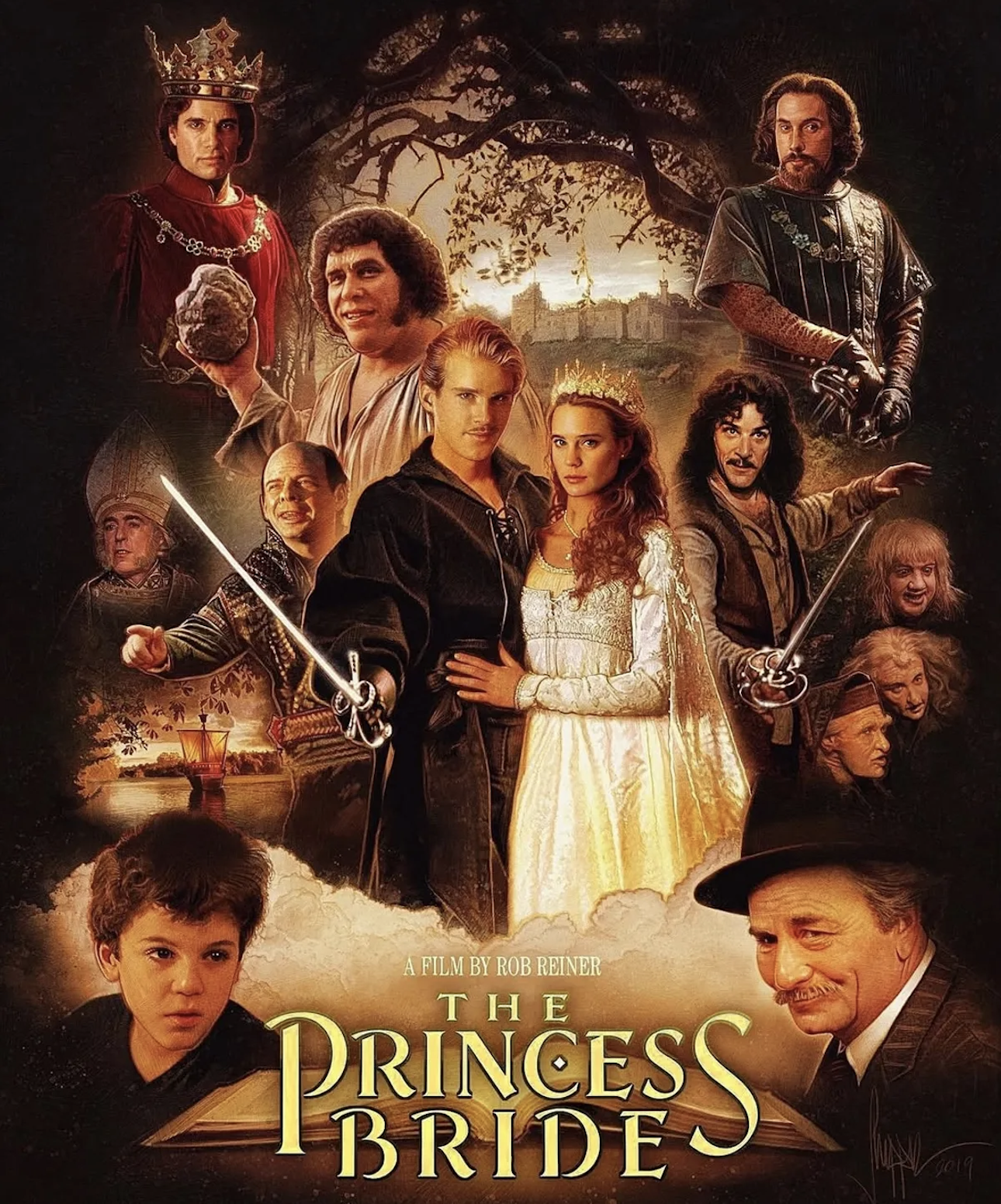
Poster for the movie The Princess Bride—the image is a collage showing all of the film's main characters
The cast of Rob Reiner’s The Princess Bride (1987)

By all accounts, Reiner was a man who felt things deeply, and who loved collaboration. His sets, casts, and crews were famously collegial. In his work, he most enjoyed urging people upward and onward through kindness, decency, and humor. And when he wasn’t writing or directing award-winning films, he was helping to make connections among people who could effect lasting social change. He and his wife, the talented producer and photographer Michele Singer Reiner, were ardent and generous campaigners for equal rights for the LGBTQ+ community. They spent millions of their own dollars and countless hours successfully advocating for marriage equality. They also fought hard for early childhood education and healthy child development.

Rob Reiner was ardently and outspokenly liberal, and passionately critical of conservative Republicanism and Donald Trump. However, he also found friendship with people of different political persuasions, including former California Governor Arnold Schwarzenegger. Reiner spoke admiringly and kindly about Erica Kirk’s gracious words of inclusion after the murder of her husband, far right commentator Charlie Kirk, whose political beliefs were diametrically opposed to Reiner’s. The director sought to help people with opposing views to coexist and find common ground. He was a man of strong convictions, but also of great heart.

We’ve all heard many stories of people in the movie business who are good at playing heroes, but are less than gracious or kind behind the scenes. It’s always refreshing and moving to learn about titans of the entertainment industry who use their immense talent and influence for good. We’ll miss Rob Reiner’s continuing creativity and positive life force. But thank goodness we’ll always have his films to remind us of the importance of art, heart, compassion, and humor.

Why We Still Need World AIDS Day

Today is the 37th annual World AIDS Day. Each December 1 we commemorate the lives of millions of people who’ve suffered and died from HIV/AIDS around the world. On this day each year, we’re reminded of the millions who continue to suffer from the effects of the illness, the trauma caused by it, and the impact that losing loved ones to AIDS has had.

2025 White House World AIDS Commemoration Canceled

The photo here shows the World AIDS Day event at the White House in 2024, when Joe Biden was president. Note that the lawn was covered in AIDS memorial quilts that honor the memories of people killed by AIDS. These quilts have been international signs of commemoration and activism against the deadly disease for four decades now. But for the first time in 37 years, the White House under Trump has canceled all 2025 World AIDS Day events, and refuses to continue the tradition of annual remembrances of those lost to the disease. Trump has also ended former President George W. Bush’s phenomenal PEPFAR program, a U.S. government initiative which saved untold numbers of lives around the world since it was launched in 2003. The President’s Emergency Plan for AIDS Relief was the largest commitment by any nation to a single disease. It focused on saving lives, preventing new infections, providing treatment and care, and strengthening health systems in over 50 countries. It provided antiretroviral treatment, pre-exposure prophylaxis (PrEP), and care for orphans and vulnerable children, among other essential services. But now it’s gone.

HIV/AIDS is still a major health threat around the world. Despite Trump’s decision not to mark or mention World AIDS Day at the White House any longer, it is still an important day to commemorate the people we’ve lost, the battles we’ve won, the research that continues to improve treatment options, and the terrible inaccessibility of necessary HIV/AIDS treatments for millions of people who desperately need it.

But Isn’t the HIV/AIDS Epidemic Over?

No; it’s a continuing worldwide health threat. AIDS was first identified in 1981, and the link from AIDS to HIV was made in 1983. As of 2024, over 44 million people had died of AIDS worldwide. HIV continues to spread and kill massive amounts of people annually. An estimated 630,000 people died of it just last year.

It’s true that antiretroviral medications have saved untold millions from suffering and death caused by HIV/AIDS. But millions more with HIV still don’t have access to such drugs, and many people can’t tolerate them. About 1.2 million people in the U.S. have HIV today, and an estimated 13% of them don’t know they have it. Without treatment, they could become very ill, unknowingly pass the illness on to others, or even die.

Early Years of HIV/AIDS Awareness & Research

AIDS was an epidemic first identified in gay men, and prominent gay men were the first public faces of the disease. Entertainers like Rock Hudson attracted attention and scorn for being outed as both being gay and having AIDS in a highly homophobic era. But they had inspiring and powerful friends, like Oscar-winning actress Elizabeth Taylor, who’d been a close friend to Rock Hudson for decades. She co-founded amfAR, the Foundation for AIDS Research, one of the nation’s most influential and important AIDS-related organizations. The UK’s wildly popular Princess Diana also made expanding awareness of and compassion for people with HIV/AIDS one of her biggest goals. Ms. Taylor and Princess Diana normalized treating people with HIV/AIDS with warmth and compassion, visiting them, hugging them, and holding their hands and laughing or crying with them, instead of treating them like pariahs.

In 1980s America, President Reagan refused to even say the word AIDS publicly for several years, while it ran rampant, eviscerating the gay community—including many of his personal friends, among whom were many closeted gay actors. But during that time, the spread of AIDS galvanized activists, who established powerful awareness groups like ACT UP. Public health giants like Dr. Anthony Fauci researched the causes of AIDS and its spread, and provided essential public health services and advice.

Fauci’s initial experiences with anti-AIDS activists were contentious. Many activists verbally attacked him for not taking their greatest concerns seriously enough. To his credit, he recognized that he was not working effectively with the people most hard hit by the AIDS epidemic. He met with them, listened, and apologized for his previous arrogance. Dr. Fauci turned leading AIDS activist Larry Kramer from an adversary to a friend by learning how to better work with communities impacted by disease through mutual respect and dialog. Over time, Fauci learned not to bristle when the famously (and necessarily) outspoken and irascible Kramer gave him hell.

AIDS Treatment in 2025

In 1992, after the death of many friends—including the 1991 death of Freddie Mercury—from AIDS, Elton John established the Elton John AIDS Foundation, which is still going strong. The foundation has raised over $650 million to support more than 3,100 projects in 102 countries to end the stigma, discrimination, and neglect associated with HIV/AIDS. Since the organization was established, the world has seen huge forward movement in the prevention and treatment of HIV.

As a result of the successes of hospitals, researchers, activists, and community health initiatives, and the excellent HIV/AIDS meds now available, it’s no longer the uncontrollable public health menace it once was. Indeed, many assume that getting HIV today isn’t that big a deal, since you can take PrEP drugs to prevent it, or antiretroviral drugs to treat it. However, about one in ten people with HIV develop intolerance to treatment, or they become drug resistant. Many more people have a lack of consistent access to healthcare or insurance, and can’t afford meds. So the need for awareness, healthcare access, affordable (or free) medications, and counseling for those affected by HIV/AIDS is still great, and the services are vital.

How You Can Help Stop HIV/AIDS

World AIDS Day is a great time to find a way to support AIDS prevention, treatment, or counseling organizations. To find reputable and successful organizations that rely on public donations in the U.S., check out Charity Navigator, which vets organizations and lets you know which ones are most reputable, reliable, and spend their money most wisely. You’ll find a link to Charity Navigator’s best AIDS charities in the comments below.