Category Archives: Art

Suburbia

bill

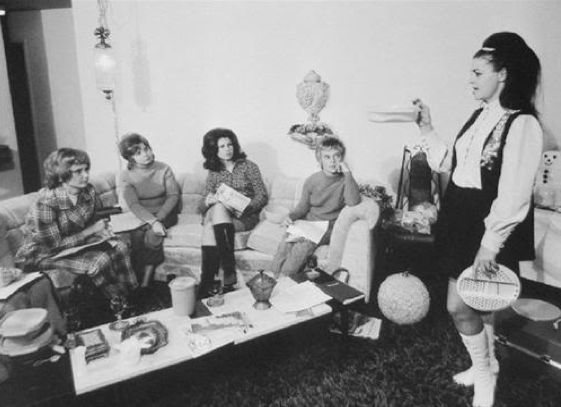
Photo of a Tupperware party by Bill Owens from his book Suburbia

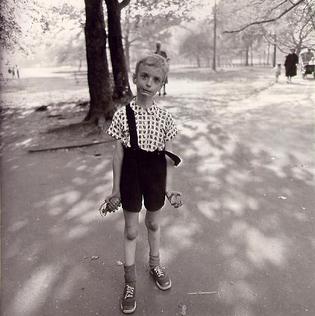
When I was a child growing up in the San Francisco suburb of Livermore, the publication of photographer Bill Owens‘s exploration of Bay Area suburban life, Suburbia, was a big deal in my home town. His book of photojournalism, published in 1973, garnered significant media attention; it was even written up in Time magazine. The book was of particular interest in Livermore because its stars were our town’s own citizens. The Tupperware ladies, toy-gun-toting little boys, Barbie-collecting girls and block party barbecuers whose black-and-white portraits  filled the book lived in the Livermore-Amador Valley. Several of my mother’s friends and our own family doctor appeared in its pages.

Even now, historians, postcard manufacturers and bloggers republish photos from the book. Art galleries, major museums and other institutions around the world include Owens’s photos in exhibitions. Gallerists and pop culture historians point to his work when they want to expose the supposedly tacky superficiality of American suburban life during that awkward period between the clean-cut, rule-following fifties and the shaggy, sexy, if-it-feels-good-do-it seventies.

Richie

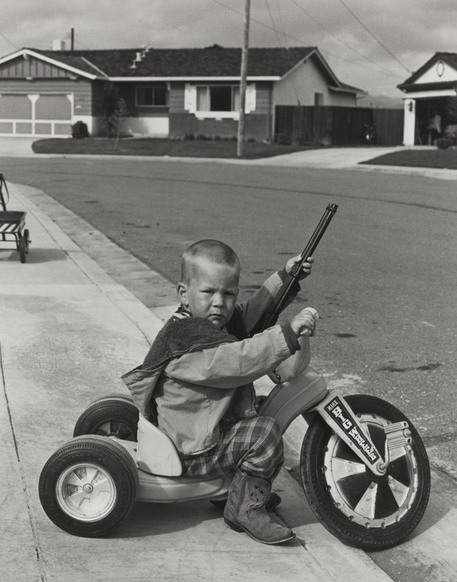
Photo of six-year-old Richie Ferguson by Bill Owens from Suburbia

Bill Owens took these now-iconic photos when he was a staff photographer at the Livermore Independent News starting in 1968. My mother’s boyfriend at the time was himself a reporter at the Independent who worked alongside Owens, so I met the photographer at a party shortly after the publication of his book. He had the no-nonsense confidence of a man who is used to sizing up a situation quickly, figuring out the most visually compelling elements, and getting in and out of an event in a hurry, before his subjects have a chance to become too self-conscious or studied in their poses. News photography has always required such skills, but in the days of film photography, there was a pressing need to be able to edit one’s work on the fly and be quick about it. Film was costly, and all photos needed to be developed and cropped by the photographer on short deadlines if they were to make it into the next day’s paper. Taking too many shots or too much time was a luxury that local papers and their staff photographers could ill afford.

In the seventies, there were few television channels or news radio stations, and of course there was no Internet with which individuals could share news directly, so the local newspaper was the primary source of in-depth information on all things regional. Newspapers had to report on crime, business, sports, laws, fashion, civic and social events, so photographers like Bill Owens had to get in and out of multiple places and events daily. But while Owens came from that journalistic tradition, in his photoessays he took the time to focus not only on what people did, but also on how they felt about their lives and suburban surroundings. He let his subjects express their pride, ambivalence and concerns about living in a growing, post-war, middle-class community. It was a time of prosperity and expanding social and sexual openness, but also a time of war, increasing crime and political unrest. Our town was largely insulated from the drama and violence that was shaking bigger cities at the time, but middle-class angst and drama were plentiful.

In his photographs and in the commentary his subjects provided, Owens caught suburbanites in private moments. They questioned whether they were capable parents, or took pride in living what they considered to be the good life. Some admitted that while they’d found the money to buy a house, they couldn’t afford to furnish it. People opened up to him, agonized over whether they were setting good examples for their kids, beamed as they showed off their prosperity, or sat half-naked on the edge of a bed daring the world to judge them for being comfortable with themselves.

Ozzie Davis

Photo of Livermore’s Ozzie Davis Toyota dealership by Bill Owens from his book Suburbia

The world was used to urban photographers like Diane Arbus or Gordon Parks taking awkwardly intimate photos of people looking embarrassingly real in big, gritty cities like New York. Time and Life magazines brought images of war and rioting into our homes each week in full-color photo spreads. In comparison to large-scale photojournalistic  works about the Great Events of Our Time, a photoessay treating the inhabitants of a middle-class enclave near San Francisco as if they were significant enough to be worthy of their own project was a fresh and intriguing idea. It was exciting to be in the spotlight after always feeling like we had been on the edges of things.

Livermore is less than an hour from San Francisco, which was the hippie movement’s Ground Zero during the 1960s. Though only a half-hour from Berkeley, scene of some of the nation’s most bitter and frequent anti-war protests during the years when these photos were taken, Livermore had for many years been a bastion of traditional conservative values.

A wine-growing community dotted with ranches, Livermore was known as little more than a cow town until the early 1950s. My high school’s mascot was a cowboy, and the street behind the main school building is still called Cowboy Alley. But while the community had long been based on rancho culture, by the 1960s and 1970s Livermore’s biggest employer was what was known as the “Rad Lab,” rad being short for radiation: Livermore was and is the site of one of the nation’s largest national nuclear weapons laboratories. What is now known as the Lawrence Livermore National Laboratory opened its doors in 1952, and by the time Bill Owens’s book was published two decades later, the laboratory directly employed about 10% of the city’s population.

For six decades, Livermore has had one of the largest concentrations of top nuclear physicists in the world, meaning that my town was home to a huge number of highly educated, fact-loving scientists, their well-educated spouses, and their smart and skeptical kids. Most of those who worked at the lab were strong believers in the theory that the specter of “mutually assured destruction” by the Soviet and U.S. superpowers in case of a nuclear war would keep either side from initiating war as long as both sides kept designing, building and stockpiling more and more threatening, long-range and expensive weaponry.

The Cold War-era belief that spending billions on the development and creation of weapons of mass destruction was necessary to keep us safe from communists (who were building their own gigantic nuclear arsenal on the other side of the world) sounds like a conservative stance to us today, but there were plenty of political moderates and even liberals working at the lab. Democrats like Presidents Kennedy and Johnson were staunch anticommunists who had instigated and escalated our involvement in wars meant to stop the spread of communism. Fear of communist expansion and take-over was by no means a solely Republican fear. Engineers and physicists who prized rational thinking above all were often open-minded and modern in their thinking in many fields and they came in many political flavors, not just conservative ones.

By the time that Bill Owens set about photographing our city’s denizens, formerly rural Livermore’s population included many erudite, cultured people of all political persuasions who were curious about the world in general. Many of the problem-solvers who had descended on Livermore from around the globe brought with them great worldliness and interest in culture and erudition. Though Livermore had once been thought of as a quiet farming community out in the boonies, by the 1960s it was surprisingly full of eclectic amateur theatrical events, excellent public schools with award-winning musical ensembles and a community symphony. An ambitious annual cultural arts festival takes over much of the downtown corridor during early October every year to this day.

However, because of the popularity of Bill Owens’s book, the place where I grew up became famous for people who represented everything superficial and embarrassing about suburban American culture. The real Livermore was a lively mixture of experts in fields from agriculture and livestock to nuclear weaponry to the arts. The book that both celebrated and embarrassed us was on the coffee table of every hip and educated family in town, and we felt both pride and chagrin over the images shown within its pages. There was delight over the fame the book brought us, and recognition of ourselves in the photographs and stories told in the book, but also a bit of shame over the parts of the book that made us look like overconsuming, self-absorbed buffoons.

Another understandable but misleading aspect of the book was the fact that the long agricultural history and natural beauty of the place got lost in the focus on the tract housing developments and accoutrements of post-war Northern Californian living, so the richness of the culture and the long history of people living close to the land in Livermore and the surrounding valley all but disappeared.

Big cities like New York can handle having people think a large proportion of their citizenry is odd or tacky, but Livermore has suffered unfairly over the years by having people choose the least flattering photos and stories from our signature photoessay to represent our whole populace. Although those of us who lived in the Bay Area in the early seventies grew used to hearing that our region was rife with proto-New Age philosophies, encounter groups, redwood hot tubs, free love experimentation and all varieties of omphaloskeptic behavior, for many people (like my self-righteous hippie father) Bay Area suburbs like Livermore came to represent not the cool, sexy, mind-expanding elements of the Age of Aquarius but the shallow, consumerist, un-self-aware aspects of modern living.

In the decades since I left Livermore, the city has nearly doubled in size thanks to its proximity to the tech boom in San Francisco and Silicon Valley. My home town has long been one of the more affordable corners of an outrageously overpriced region. It is still home to one of the nation’s top nuclear weapons laboratories, as well as to Sandia National Laboratories, which develops, engineers and tests the non-nuclear components of nuclear weapons. But its economy and culture are no longer quite so closely tied to the nuclear research culture as they were when I lived there. Yet echoes of that culture reverberate in modern literature and film: the writer of the popular science fiction novel The Martian, Andy Weir, grew up in Livermore. He went to my high school, worked at Livermore’s Sandia Labs, and he is himself the son of a particle physicist who worked at Lawrence Livermore National Laboratory. It’s likely he had a literature or composition class with my mother at some point; I like to fantasize that she may have encouraged his considerable writing talent in some small way. Though Weir wasn’t even born when the first of the photos in Suburbia was taken, the influence of Livermore’s science-friendly, intellectual, problem-solving culture helped to nurture his curiosity and imagination, just as it did my own.

Bless All Dogs

Bless

My daughter, Lily Rodseth, is a graphic designer who creates infographics, typefaces, typographic art, bookcovers (this one won the Bookbuilders of Boston Student Competition at the  New England Book Show) and beautiful art prints. Her latest design, “Bless All Dogs,”  is now available for sale in her online shop on Society6.com. There you can order art prints, T-shirts, mugs, tote bags, pillows, phone cases, even shower curtains featuring her charming canine design and have them shipped directly to you by Society6. Click here, or look up Lily’s handle, Glossy Starship, on Society6.com to see her new design in all its darling. dog-filled detail.

Nordic Splendor: The Baldishol Tapestry

Baldy

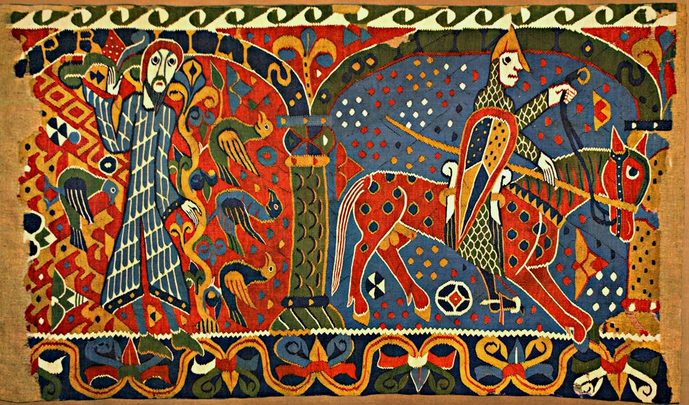
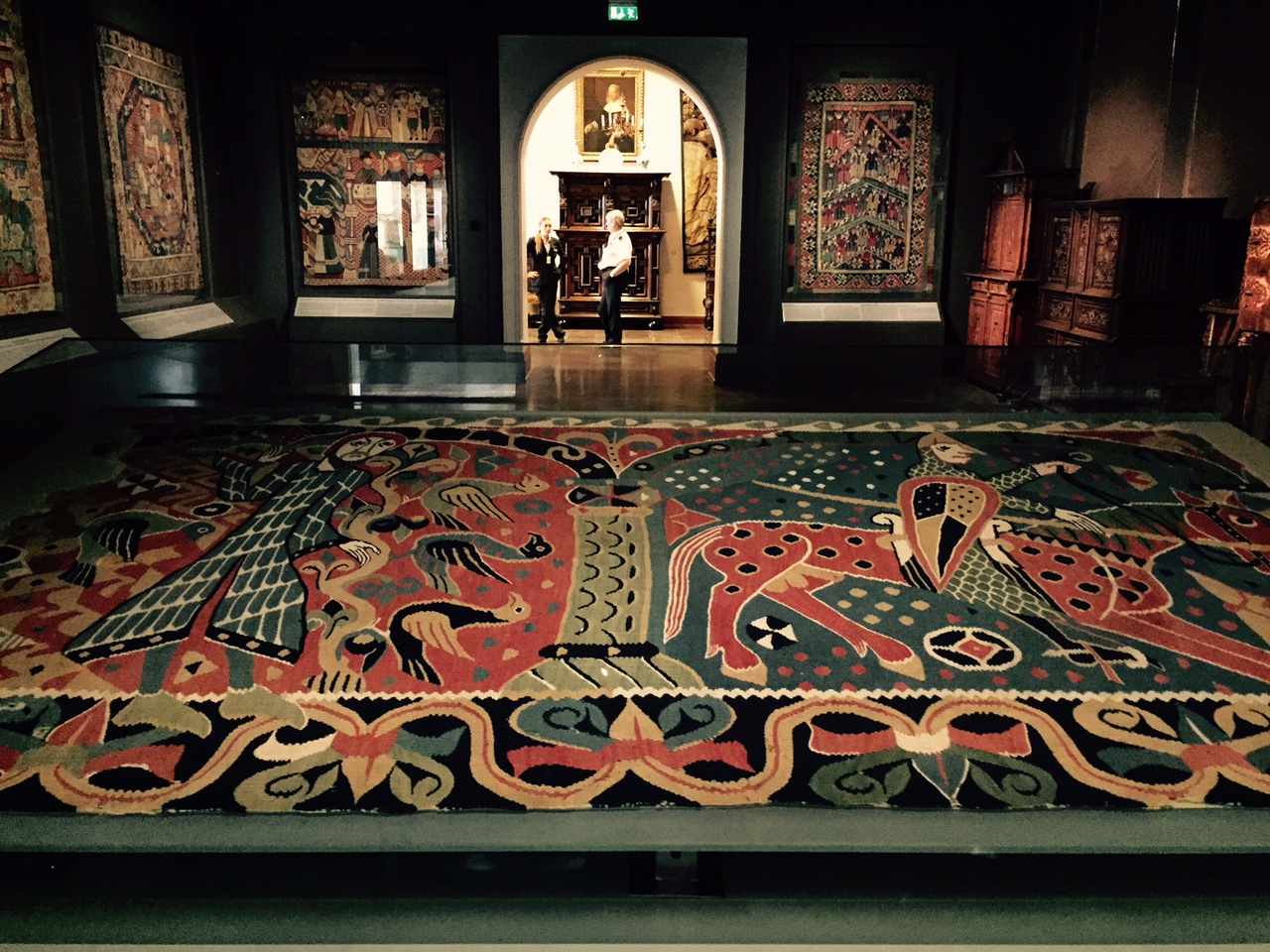
I’m currently traveling in Scandinavia feasting my eyes on Nordic art and design, both ancient and modern. One of the highlights so far was the Baldishol Tapestry, a Medieval masterpiece dating between 1040 and 1190 AD. The tapestry was rescued from the Baldishol Church in Hedmark, Norway, when it came to light after the demolition of the church in the late 1870s. By then it looked like tattered old rags and was covered in dirt acquired from its previous use: protecting the feet of the church sexton from drafts. (Click on the photo below to see a more detailed image of the tapestry in its current setting.)

Baldeshol Tapestry

Now that it’s clean and displayed in a dark room under climate control, this brilliantly colorful tapestry (which is contemporary with the world’s most famous Medieval tapestry work, The Bayeux Tapestry, depicting the Norman Conquest of 1066) is in remarkable condition. This wall decoration, once of of a series meant to encircle a room, symbolizes the months of April and May, and is the only surviving early medieval tapestry believed to be of Nordic origin. It is on display in the National Museum of Art, Architecture and Design in Oslo.

Art History and Destiny Join Forces

Miller

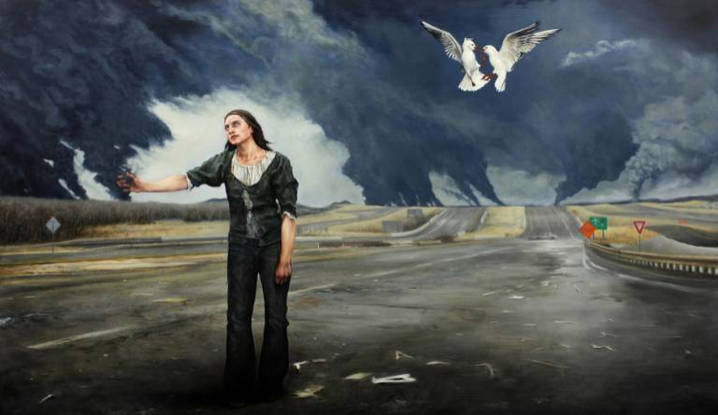
“Manifest Destiny” by Michael Paul Miller

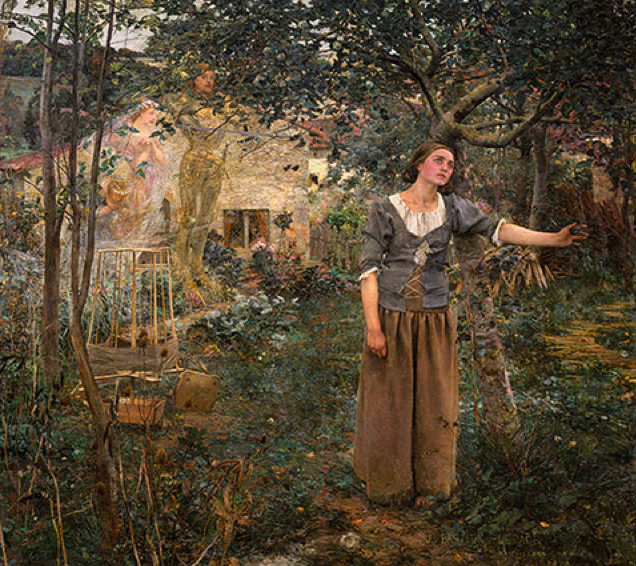
On the first Thursday of every month, Seattle’s Pioneer Square art galleries throw open their doors from 6 to 8 p.m. and hordes of art lovers rush in to admire (and often to buy) fresh works of art. Most galleries time their new exhibitions to open during these First Thursday Art Walks. Last night at the Linda Hodges Gallery I saw Michael Paul Miller‘s post-apocalyptic painting titled “Manifest Destiny” and was excited to recognize his inspiration right away. Take a look at Jules Bastien-Lepage‘s portrait of Joan of Arc:

Joan of Arc, Jules Bastien-Lepage, 1879, collection of the Metropolitan Museum of Art.

Painted in 1879, it hangs in New York’s Metropolitan Museum of Art, and it has always been a favorite of mine for Joan’s pale-eyed, thousand-yard visionary’s stare  and the barely visible images of saints in full armor floating above the ground and delivering their messages from behind her in the trees.

Michael Paul Miller’s “Manifest Destiny” clearly reverses this same visionary woman and shows her having a powerful experience that we can’t fathom, but it seems her destiny has become manifest before her. She grasps at a plume of smoke that originates far behind her but miraculously also appears to extend to the spot upon which she stands, seeming to indicate that she has an ability to reach into other dimensions, perhaps the future, perhaps the past, and to literally grasp things that others cannot. The destiny the title refers to is not the land of endless opportunity that 19th century expansionists envisioned when they coined the term “manifest destiny” and used it to justify their push westward across North American, smug in their belief that they were entitled to dominion over all the land’s riches. Instead, this seer stands amid the destruction and desolation left in the wake of those who “advance” by using their technology and greed to seize and destroy rather than to build, refusing to work within existing systems or integrate into the world around them.

I admire both the painting, difficult as it is, and the clever visual quotation within in it. Just as jazz (and classical) musicians often quote other compositions in their tunes, playing a quick riff that adds to the overall complexity of the piece and provides a fun in-joke to those in the know, artists often make reference to other artists’ works both in homage and to tease new meaning out of old tropes. It is this sort of technical skill and richness of symbolism that makes a study of art history so profoundly moving and rewarding.

My understanding of the history of art has enriched my life daily since I studied history and art history at Mills College decades ago. That is why I become upset when I hear people being so quick to dismiss art history degrees and castigate those of us who believe in the power and importance of exploring and understanding the creation of visual art. Even President Obama derided the attainment of an art history degree in a speech recently, joining in with many who seem to believe that any non-STEM (science, technology, engineering and math) or business-related major which does not lead directly to a $100,000+ annual salary in a technical field is  inferior and unnecessary to our culture and economy. Some colleges are even considering dropping their art history classes because students feel that anything that doesn’t lead to a likely increase in their earning potential does not seem important. (And who can blame them when a private undergraduate college education can cost $60,000 per year, and most students need to find remunerative jobs ASAP upon graduation to pay back their crushing student loans?)

The facts that such artistic studies enrich their hearts and souls, help them to better understand other times and cultures and allow them to make connections among disparate subjects and styles mean nothing to arts denigrators, even though studies show that people with a well-rounded liberal arts education not only benefit from their STEM studies but also benefit from their studies of the arts, since those studies make them better writers, researchers and synthesizers of information, all of which are skills in great demand in more technical fields. Many articles on this topic are popping up in popular media recently, including this one from the Washington Post.

How shortsighted and indeed stupid it is to assume that arts are mere fillers meant only for bourgeois, time-wasting rich people! The same people who disdain art historians often pay thousands of dollars per year to buy video game consoles and new games to play on them, and they download films and go to action movies that they enjoy specifically because the visuals are arresting and meaningful. They spend hours online each week looking at animal videos or comedy sketches, hungry for quick impulses of emotion that come from enjoying endearing visuals that provide instant sensory gratification. Because visuals matter. The arts in general matter deeply to people even if they don’t always recognize this. People listen to three-minute long songs at work or in the car or while running because they know that the power of acoustic arts gives them a rush, inspires a feeling, changes their attitudes and makes them feel more connected to the world or to their feelings. These are all arts created by sensitive people who believe in the importance of following their aesthetic dreams whether or not that leads to monetary riches, and we are all better for it.

If you are tempted to denigrate artists or those who seek to better understand them (such as teachers of poetry or professors of ancient Indian statuary),  remember that all of these arts and the appreciation of them are signs of mental and emotional advancement. They are the signs of a sophisticated civilization. They are the underpinnings of new thought, forms of expression and connections between people, times and cultures. These arts are what ancient civilizations (and the founders of the United States, incidentally) saw as signs of a great society. These are the fields of study that they believed proved that their cultures were truly great and not just concerned with how to put food on the table but also with how to see, feel and think with greater precision and insight. A world without art is one I would not want to live in, and a culture that does not honor its artists is at risk of losing its soul.

Squirrelly Silhouette

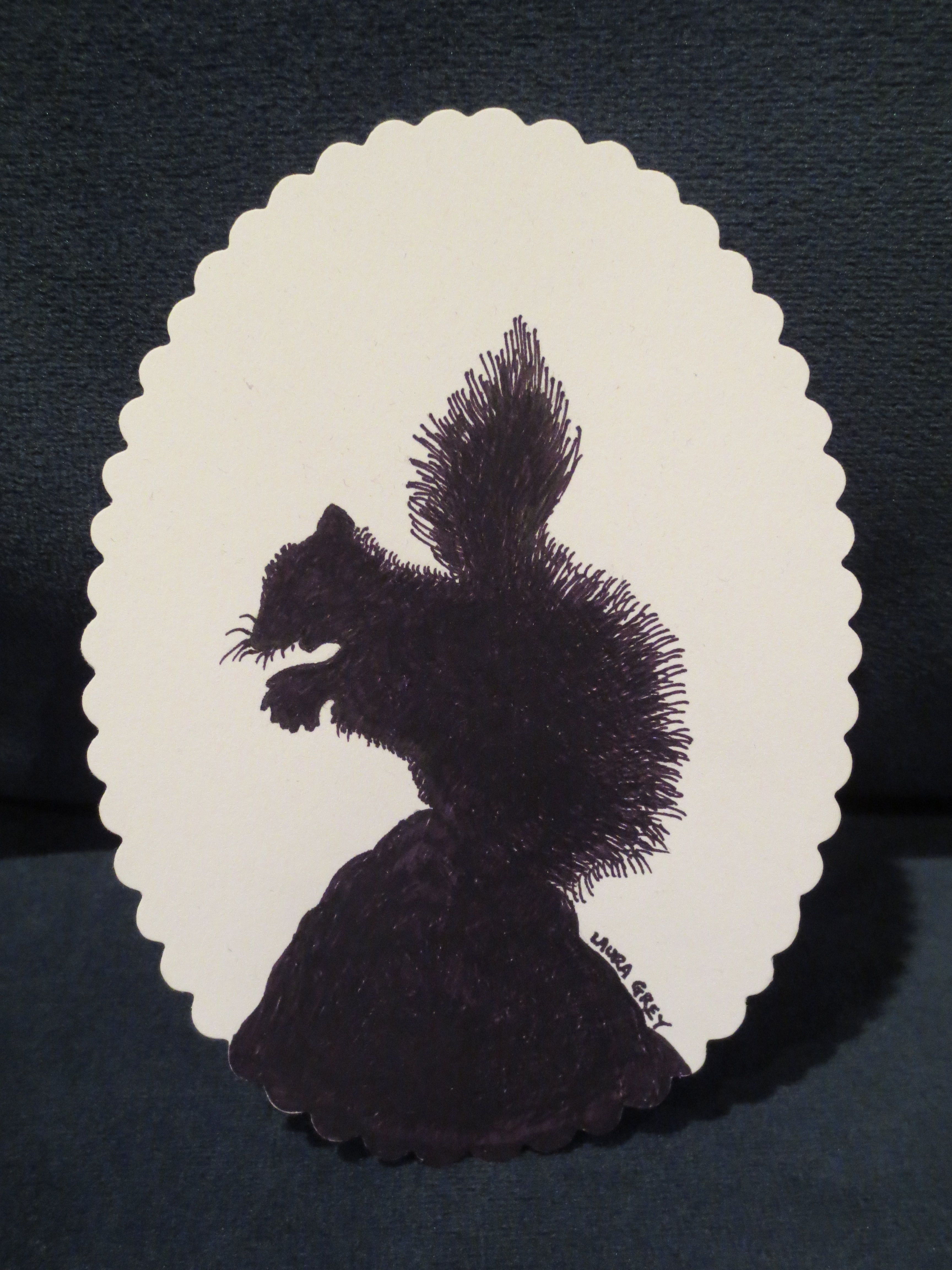
Pen and ink drawing on paper by Laura Grey

Here’s another recent pen-and-ink drawing which was inspired by my visit to Malahide Castle just outside of Dublin, Ireland, a few years ago. Malahide has a room filled with marvelous Victorian silhouettes of all sorts: individuals, families, animals, you name it. The castle was a highlight of my family’s short visit to the Dublin area, and its silhouette room always stands out in my mind when I think of our adventure.

Baaaaah, Humbug!

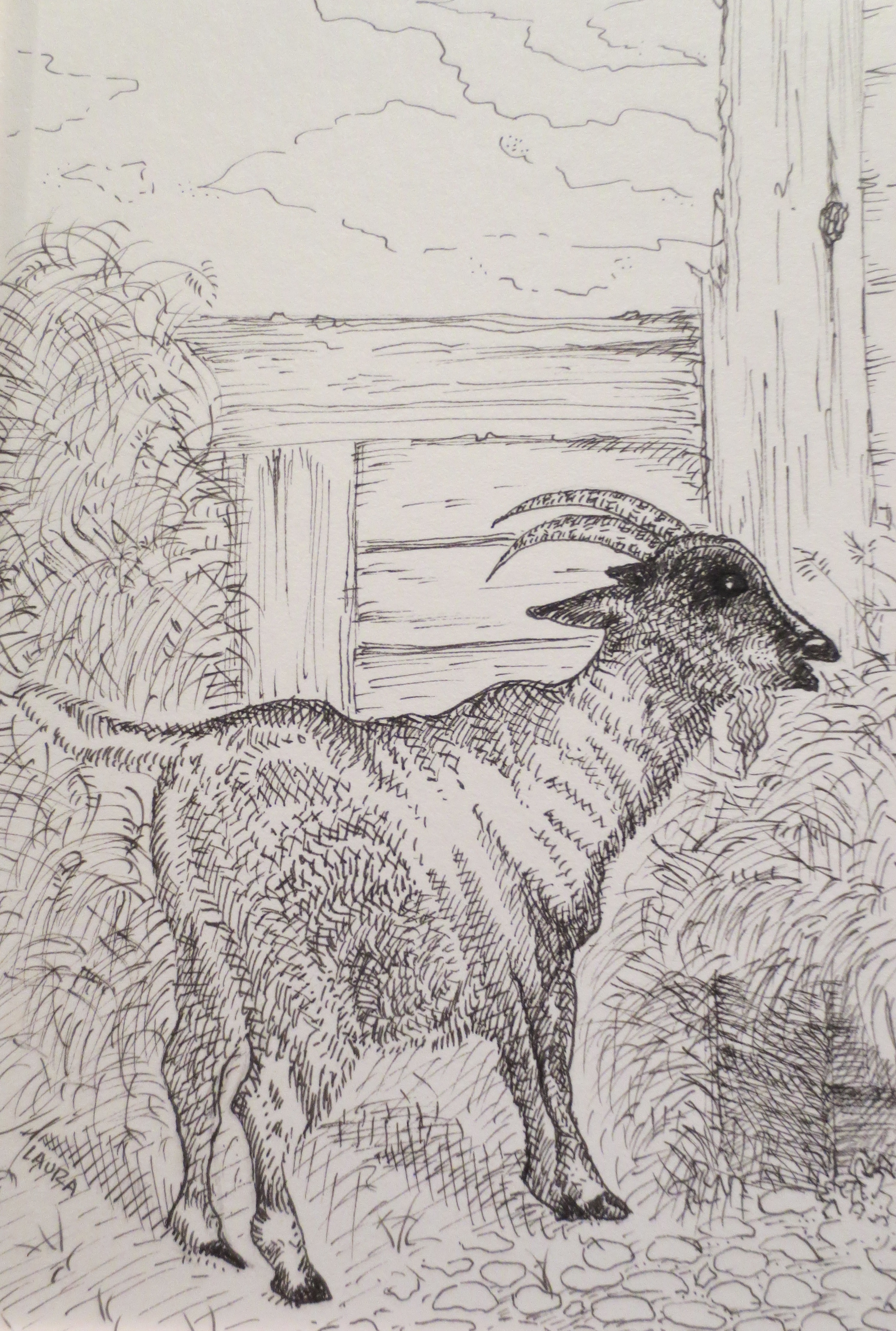
Ink on paper drawing by Laura Grey

Though this little goat is quoting Ebenezer Scrooge, he actually wishes you a very happy holiday season. I’ve added this pen-and-ink friend to my gallery of drawings—click on the image to zoom in on the details. I love working with Micron pens; I drew this fellow with a size 005 Pigma Micron with a .2 mm line width. What animal should I draw next?

The Odd and Intriguing St. Vincent

Digital witnesses, what’s the point of even sleeping?
If I can’t show it, if you can’t see me
What’s the point of doing anything?
What’s the point of even sleeping?

—from “Digital Witness” by St. Vincent

Annie Clark, who goes by the stage name St. Vincent, is an art rock musician who, like her sometime collaborator David Byrne, former front man of Talking Heads, is strange but appealing, disconcerting yet compelling. Clark is known for lacing her lyrics with multiple meanings. She says, “I like when things come out of nowhere and blindside you a little bit. I think any person who gets panic attacks or has an anxiety disorder can understand how things can all of a sudden turn very quickly. I think I’m sublimating that into the music.”

Clark grew up in Texas and still maintains a home there as well as in New York City. As a teen she was a roadie, then the tour manager and finally the opening act for her uncle, jazz guitarist Tuck Andress, and his wife, jazz singer Patti Cathcart, whom those in the Bay Area know as the popular duo Tuck and Patti. Clark’s stage name comes from the Nick Cave song, “There She Goes, My Beautiful World,” which refers to the hospital in which poet Dylan Thomas died, and it’s also a nod to her great-grandmother, whose middle name was St. Vincent. She occasionally appears on the television show “Portlandia,” and her music has often been compared to that of British art-music stars Kate Bush and David Bowie.

In an interview in The Quietus, St. Vincent explained the thoughts behind “Digital Witness,” saying “Anything that knows it is being watched changes its behavior. We are now so accustomed to documenting ourselves and so aware that we are being watched and I think psychologically that takes a strange toll, which is going to show itself more and more as we progress. In some cases, we have this total connectivity via the internet but if we are not careful it can actually disconnect us more than we know. I’m curious as to what that is going to lead to.”

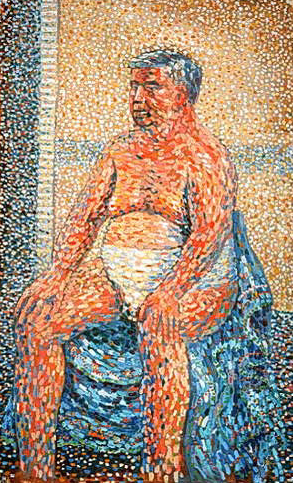
Sunday on the Pot with George

Sunday on the Pot with George

[Originally published on Laura Grey’s Little Hopping Bird blog .]

We’ve all seen ghastly paintings and prints at garage sales and thrift shops—sad clowns, unflattering portraits, homely florals and trite landscapes—and wondered not only why someone could have considered hanging them in the first place, but also who in the world could have wasted time making such things?

Most bad art is regrettable but forgettable, something we look past rather than at. But some masterpieces of bad art are so remarkably awful, so tasteless, awkward or outlandish that they deserve to be displayed in all their horrific glory. Pieces that bad deserve to hang in a museum of bad art. Happily, there is such a place, just outside of Boston.

The Museum of Bad Art is an actual physical place and is also a wonderful virtual space with its own highly entertaining website. Established in a Boston basement in 1993, MOBA moved to Dedham, Massachusetts, and has expanded and grown into one of the most entertaining sites on the Web. Their collection runs the gamut from shockingly bad portraits to awkward landscapes to disturbing animal pictures. MOBA’s website states, “The pieces in the MOBA collection range from the work of talented artists that have gone awry to works of exuberant, although crude, execution by artists barely in control of the brush. What they all have in common is a special quality that sets them apart in one way or another from the merely incompetent.”

Oh, they’re special all right. An early acquisition and one of two masterworks in the collection is “Lucy in the Field with Flowers,” a vivid and stirring portrait of an elderly woman whose head looks uncomfortably like Norman Mailer’s. Lucy prances through a field of flowers, her legs arrayed as if seated but her body clearly in motion. Her breasts sway in opposite directions under her bright blue dress, which appears to be floating off to one side for no apparent reason.

The Athlete” features a discus thrower described by MOBA’s curatorial staff as “A startling work, and one of the largest crayon on canvas pieces that most people can ever hope to see. The bulging leg muscles, the black shoes, the white socks, the pink toga, all help to make this one of the most popular pieces in the MOBA collection.” I’m also quite fond of “Peter the Kitty,” a painting found in a Salvation Army store, which is, I agree, “Stirring in its portayal of feline angst. Is Peter hungry or contemplating his place in a hungry world? The artist has evoked both hopelessness and glee with his irrational use of negative space.”

Of all the pieces in the collection, my favorite has always been a pointillist tour-de-force done in homage to the genius of George Seurat, whose “A Sunday Afternoon on the Island of La Grande Jatte” was the inspiration for the beautiful Stephen Sondheim musical “Sunday in the Park with George.” MOBA’s “Sunday on the Pot with George” features an rotund older gentleman wearing naught but Y-front underwear sitting on top of what is either a chair swathed in thick blue folds of fabric, or perhaps a melting blue toilet. George’s sagging flesh drips slowly toward his nonexistent feet in cascading red and peach colored blobs of paint, the canvas sizzling and jittering before our eyes. The painting has a lively, psychotic quality. I love it so that I’ve enjoyed it in book, calendar and notecard form—items from the MOBA online store make excellent holiday gifts!

Much as I love the images, the oh-so-serious “interpretations” of the pieces are equally enjoyable. Here’s the caption from a pastel and acrylic piece titled “Inspiration“: “The organ master stares, transfixed by twin mysterious visions: the Neanderthal saint in the setting sun and the Gothic monk proceeding out from the cathedral’s sanctum, each framed by a halo of organ pipes, reminiscent of #2 pencils.”

MOBA truly lives up to its tag line: “Art too bad to be ignored.”

The Robin Hood of the Art World

poster

[This article originally appeared on Laura Grey’s Little Hopping Bird blog.]
Is graffiti art? And if it is, is the defacement of others’ property ever justifiable in the service of art? When is graffiti (or “guerilla art,” or “street art”) okay? When it says something meaningful? When it’s well done? When it’s pretty? When famous people say it’s art?

Let’s suggest for a moment that it’s always wrong to deface others’ property. After a graffiti attack, once a property has already been defaced, is there ever a justification in leaving the defacement/art in place? What if it’s really great-looking, astonishingly intricate, brilliant in its message: would those circumstances justify the illegal (and some would say unethical) action that created it?

These are important questions to consider when discussing or viewing graffiti art or “street art,” and a documentary that addresses them would be fascinating. However, Exit Through the Gift Shop, the excellent new documentary on street art, doesn’t address any of them. And it doesn’t need to. Subtitled “The world’s first Street Art disaster movie,” it’s a fascinating film on its own merits, even though it leaves the ethics of all the principal characters in the film essentially unexplored. The film itself may be at least in part an elaborate hoax. If it is, it’s still worth seeing.

The most famous graffiti artist in the world, and certainly one of the most talented, is a Briton who goes by the pseudonym Banksy. Banksy is a wily and elusive character who has been creating graffiti art, first in England and then internationally, since the early 1990s. He began as a common tagger but after too many run-ins with the law, he decided he needed to develop a new style that would allow him to prep a public outdoor space, create his art as quickly as possible, then disappear before cops could show up and arrest him. He developed a system in which he created a series of stencils, then smuggled them to various spots around Britain and used one or more of them to build up intricate and often sophisticated images, sometimes adding freehand strokes to the stenciled areas. His pieces often feature wry comments spray-painted next to or within the images. Subjects have ranged from small single-color rats (a frequent motif) to huge murals of policemen in riot gear dancing with daisies. He’s often created life-sized people or animals, including policemen kissing each other and children in surprising situations. His messages are usually usually anti-war, anti-capitalist or anti-establishment.

Over time, Banksy’s wit, talent and cleverness at hiding his identity made him a cult figure, and his art became so desired and in such great demand that people began removing his works from walls, cutting chunks out of tagged buildings and selling them at auction, even on eBay. He has created a number of pieces on canvas as well, and they now sell for grand sums at no less august an institution than Sotheby’s.

Banksy often paints works that mimic the style and subject matter of old masters but which show clever twists, such as a 17th century village scene in which the buildings are covered in modern graffiti. He has repeatedly smuggled his paintings into major art galleries such as the Tate in London and New York’s Museum of Modern Art and Metropolitan Museum, then hung each piece, complete with fancy frame and descriptive placard, among famous masterpieces. Sometimes museums have taken weeks to discover the subterfuge before removing his works. In 2005 his version of a primitive Lascaux-style cave painting depicting a human figure hunting wildlife while pushing a shopping cart was hung in the British Museum. When it was discovered, the British Museum, home to such important pieces as the Rosetta Stone and the Parthenon’s Elgin Marbles, wisely added Banksy’s painting to the permanent collection.

Despite his remarkably varied artistic talent, Banksy fits well into the graffiti artist or “street artist” genre because of his guerilla-style illegal forays into public places, which he then vandalizes, albeit wittily and with great skill, leaving evidence of his cunning alongside artistic talent. Many street artists have more swagger than technical skill, and the “Screw you, society!” anarchic message their graffiti announces to the world is usually more compelling than the actual art they produce. Banksy is not unusual among graffitists in his desire to remain anonymous and avoid arrest for his illegal activities, but he does show particular skill, subtlety and cleverness.

Some of his ruses, such as cutting a red British telephone box in half, reassembling it and welding it so looks as if it’s been hacked in two and bent, and then burying a hatchet in it, take not just daring and skill but some major resources to create, transport and maneuver into place. For fun several years ago, he counterfeited a million pounds worth of British currency with the face of Princess Diana taking the place of Queen Elizabeth II, but the results were so believable that attempts to spend the faux currency were all too successful, and he ended up with boxes of funny-money that he didn’t dare distribute for fear of being prosecuted for a federal crime.

Banksy’s story is perhaps the most compelling one in the world of graffiti art, but it takes an unexpected back seat to the story of his videographer in the Banksy-made film Exit Through the Gift Shop. The documentary made a splash at the Sundance Film Festival in January and is packing arthouse cinemas around the world just a few months after its debut. The gist of the story is this: In the 1990s, Thierry Guetta, a French-born entrepreneur, ran a successful LA clothing boutique which sold vintage rock-and-roller and punky clothes which he bought for almost nothing in scrap bundles and sold for obscenely high prices. On the side, he began obsessively videotaping everything, including the illegal activities of his cousin, a French graffiti artist who made small mosaics based on bit-mapped Space Invaders videogame characters. His cousin, who called himself Space Invader, allowed Guetta to film him gluing his guerilla-art mosaics around Europe and America, and Guetta’s videotaping obsession finally had a focus. He started documenting almost all the top players in the street art movement to the exclusion of doing almost anything else throughout the 1990s and most of the 2000s.

One artist who allowed Guetta constant access was Shepard Fairey, first famous for spreading over a million images of Andre the Giant‘s face on stickers and posters around the world, all atop the word OBEY, as if he were the ubiquitous Big Brother of Orwell’s distopian classic 1984. Later Fairey became famous for the red and blue poster of Barack Obama above the word HOPE that becames an official image of Obama’s campaign and has since been endlessly parodied. Fairey is now being sued by the Associated Press because he didn’t have permission to use the AP photo he based the poster on. A likeable guy who gets around, Fairey had become friendly with Banksy. Fairey was impressed after seeing Guetta’s obsessive compulsion to document graffitists and Guetta’s willingness to put himself in harm’s way and spend his own money and time helping Fairey and other street artists create and hang their work. According to the documentary, he felt Guetta could be trusted to meet and even videotape Banksy when Banksy came to Los Angeles. Guetta proved himself an extremely willing, friendly and helpful assistant, driving Banksy around, showing him the best public walls on which to ply his craft, and making his life and his art easier. Banksy soon allowed Guetta to film him at work, trusting that Guetta would keep his identity safe, which he did.

Here’s where the questions of who is an artist and what is art get confused. If you want to keep the upshot of the documentary a mystery, you might want to skip the next three paragraphs.

Eventually, Banksy felt it was time for Thierry Guetta to edit his huge collection of Banksy videos into a documentary, something Guetta had said he would eventually do but for which he had no training or experience. According to Banksy, after six months Guetta had cobbled together a headache-inducing, chopped-and-diced fiasco of a film without any narrative at all, a barrage of undifferentiated random images from his thousands of uncataloged videotapes of Banksy and other graffiti artists. Upon seeing this mess, Banksy suggested that Thierry give over access to all the videos and Banksy himself would create a movie out of them. To distract Guetta, Banksy suggested that Guetta should go off for six months and create art of his own and then have a little show. This made some sort of sense; the videographer had started doing some stencils of himself around LA and signing them MBW, which he said stood for Mr. Brainwash. Banksy thought Guetta would have a small vanity show someplace and the distraction would get him out of Banksy’s hair while Banksy put together a reasonable documentary out of Guetta’s frightening mishmash of videotape.

However, Guetta, now consumed with the idea that he was an artiste who could make a fortune and have a giant, splashy, expensive solo show that would wow the world, mortaged his house, hired a cadre of actual artists, prop designers and contractors, and rented a huge, expensive space in downtown LA. He told other artists to make largely unattractive knock-offs of Andy Warhol-style pop art pieces and spray painted silkscreen images of pop culture icons, claimed and signed them all as his own work, and relentlessly hyped himself around LA as the next big thing. Seven thousand people lined up to see Mr. Brainwash’s opening and his hundreds of derivative paintings, many of them created by others with almost no or no input from Guetta at all.

LA loved him. He sold a million dollars worth of “art” in two weeks. So many people flooded the gallery that what had been expected to be a two-week show stayed up for two months. Madonna asked him to create a Warholesque image of her for her latest greatest hits album. Mr. Brainwash has his first New York show this spring. And the joke was on Banksy. Or was it? While it illustrates the phoniness of the art world that he’s always reviled and parodied, a significant contingent of art world critics and followers believe they recognize the clever guiding hand of Banksy himself behind this cynical, clever and amusing film; they believe he put up the money for Guetta’s show and is using Guetta as a frontman for his ruse.

Whether this is a clever con or simply a wild situation that spun out of control while Banksy was distracted by the editing down of Guetta’s archive of tapes, it is a perfect illustration of the sort of art world nonsense Banksy has always opposed. Banksy has staged it as the story of an authentic (if anarchistic) hermitic artist who hides out among us and goes by a pseudonym vs. the faux-artist con-man entrepreneur with little if any talent for art and no insight into what makes it good, important or inspiring. Even when Banksy has created art meant to be sold to the throngs angling to pay real money to own a genuine Banksy, he has happily bitten the hands that feed him.

In 2007, Sotheby’s auction house auctioned off three of his pieces for a total of over £170,000; to coincide with the second day of auctions, Banksy updated his website with a new image of an auction house scene showing people bidding on a picture that said, “I Can’t Believe You Morons Actually Buy This Shit.” In his quest to meet and videotape all the bright lights of the street art movement, Guetta, on the other hand, became so hungry to be seen as a creator and star rather than part of the supporting cast of the art world that he created a huge show out of nothing but borrowed money and chutzpah, and, horribly, pulled it off.

The question of whether what guerilla street artists do (trespassing and defacing property that is not theirs) is ethical or justifiable is never addressed in this film. That’s understandable; Banksy is an outlaw hero who probably sees himself as akin to Butch Cassidy or Robin Hood, someone who points out the flaws in the system in an outrageously public way while remaining essentially invisible, only popping out often enough to build his legend and prove his existence. There’s no reason why such a person would want to draw attention to the dark side of what he does, especially when he doesn’t appear to recognize any darkness in it.

A film this cleverly and entertainingly made adds to his allure and stature while presenting his actions in the best possible light. Without ever explaining or justifying himself, he wangles his way into the audience’s affections and makes the story unfold in a way that builds sympathy for the characters, all of whom are literal outlaws. We find ourselves rooting for them to get away with their trespasses without ever feeling like we’re being manipulated or spoonfed with obvious and unnecessary explanations or justifications. Banksy really knows how to tell and sell a story, and, like a sleight-of-hand master, how to distract us from many of the important issues without our stopping to think, hey, what about the elephant in the room?

Speaking of which, there’s a great scene in which Banksy places an actual live elephant in the middle of a gallery show in order to prove a point. Of course, the point is lost on the media; they report that PETA (and LA Animal Services) didn’t like him painting an elephant with children’s facepaints and putting it on display, which is indeed newsworthy, but they seemed to have no concern with what the point of his painting the elephant was. This example of his disdain for people who don’t think about the meaning or point of art is astute, but it also shows his arrogance in thinking that, because others don’t share his sophisticated ideas and opinions on art, their own tastes, questions and concerns about what he does and how he does it are not just debatable but abominable proof of their philistinism. While I share his disappointment that people are so happy to accept pop culture simplifications of art rather than develop opinions of their own, I find his open contempt for people who don’t share his worldview distressingly self-absorbed and arrogant.

Banksy shows himself to be a witty and articulate man, both via his art and in the speeches he makes to the camera in this documentary. He speaks and gesticulates while wearing a dark hoody that obscures his face and and has his voice altered digitally. He could have been interviewed off camera and had the documentary’s narrator Rhys Ifans, the dryly entertaining Welsh actor, repeat his words to ensure that nobody could recognize his speech patterns or accent, but Banksy clearly enjoys scooting out of the shadows just a bit, providing blurry-faced proof of his escapades to the world via Guetta’s videos, letting people hear his accent, albeit in altered form. He is playing with his anonymity here, heightening the drama yet again, just as he does in his art, working the darkness and spray cans and stencils until he’s constructed a shadowy version of himself that he can carefully control access to.

Banksy appears to have a strong system of values (often fine ones, like looking out for the little guy and avoiding governmental tyranny), but seems to have little respect for the rights of others whose values differ (such as those who own property which he would like to cover in examples of his self-expression). This places him squarely alongside other heroes of the anarchistic British punk movement who have determined that destruction and defacement of things that they don’t value is justification enough for ignoring laws which seek to respect property and and which respect the needs of a society based on the rule of law.

In an attempt to focus attention on exploitative flaws in the capitalist system, socialists or, even further to the left on the political spectrum, anarchists like Banksy sometimes feel justified in ignoring property rights entirely, saying they are an artificial and damaging construct which enslaves the poor and empowers the rich, thus denying basic human rights and dignity. If you believe that an entire system is wrong, it can be tempting to determine that you will no longer acknowledge its rules or its power over you and decide to do things your own way. But just as unfettered capitalism can lead to great selfishness and a lack of awareness or concern for the needs of others, unfettered socialism can lead to societies which refuse to give incentives or rewards for exceptional efforts or remarkable talents, and which can be perverted into unhealthy organisms which stamp out originality or innovation. Fortunately, hybrid societies with capitalistic bases and strong (though imperfect) social safety nets exist in several nations around the world. They show that a respect for the innate worth of every individual and the responsibility of society to look after its weakest members can be balanced with respect and recompense for exceptional talent and effort. They also show that respecting a person’s property rights is an important component in respecting the person herself. No nation balances these opposing needs perfectly, but it is encouraging that millions around the world still strive to perfect their systems.

A healthy and safe hybrid society runs on respect for all the people in it, as well as for their legally-obtained possessions. And while Banksy has often shown himself to have a certain integrity, pointing out flaws in the art world and questioning the values of modern society, he has also shown a willingness to profit (sometimes enormously) by engaging in the same art world he mocks. To have true integrity, one could argue that he would have to turn down chances to make money off his art, but by selling works directly through Sotheby’s, even as he mocks the process, he has become a part of the system he claims to disdain. On the one hand, I want to see someone so talented and original, someone of his wit and insight and great skill, benefit from his ability and be able to make a good living as an artist. On the other hand, it saddens me to see him revel in becoming rich off the sale of his own private possessions while feeling no compunction about messing with the possessions of others and mocking the owners in the process. He then makes those whose property he has vandalized look bad when they seek to remove his art, even though, if they leave it in place, they give a message to all graffiti artists and other vandals that if you’re famous and clever or do a good enough job at it, the rules of respecting other’s space and property no longer apply.

A society which makes exceptions for disrespect of property and laws of trespass invites evisceration of the social compact. Sad as I am to see some of Banksy’s work disappear, I cannot blame the owners of the defaced spaces for showing their resolve not to let themselves become victims of vandalism, even clever or attractive vandalism, without a fight. Furthermore, Banksy knows that much of his work will be defaced or destroyed; he has chosen his medium and locations for precisely this reason. The impermanence makes seeing it as quickly as possible imperative, and that makes him an extra hot commodity and burnishes his oppressed outlaw image. It makes him a romantic figure of brash mystery.

Banksy can act as cynical about the superficialities of the art world as he wants, but he’s making huge sums of money off that very world nowadays, so he’s benefiting from the system he finds so corrupt. His hands aren’t clean, either.

“Don’t think about making art, just get it done. Let everyone else decide if it’s good or bad, whether they love it or hate it. While they are deciding, make even more art.” —Andy Warhol