
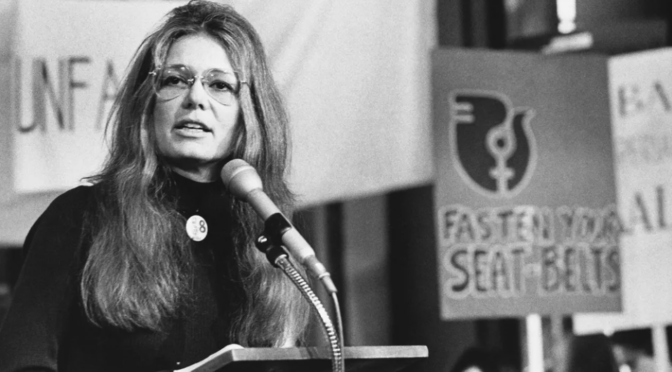
Yesterday, journalist, feminist, and activist Gloria Steinem died at her home in New York City at the age of 92. As a profoundly honest, articulate, well-reasoned, tireless, and infinitely patient avatar and explainer of the need for gender equality and women’s rights, particularly during the 1970s and 1980s, Ms. Steinem was a powerful and influential voice. As founding editor of Ms. magazine, Gloria Steinem had a profound and positive impact on U.S. culture.
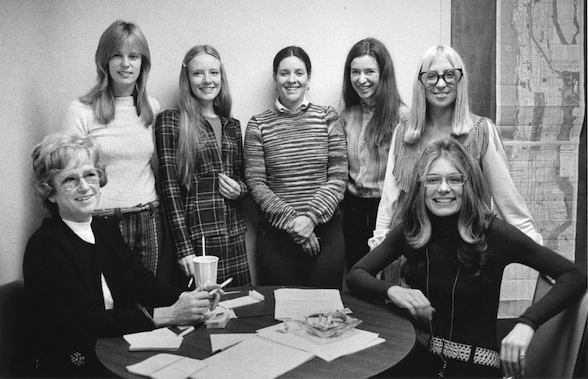
Last year’s HBO documentary about Ms. magazine, Dear Ms.: A Revolution in Print, explored the history and importance of Steinem and the magazine. Like Ms. Steinem herself, the documentary honestly addressed some of the magazine’s (and mainstream U.S. second-wave feminism’s) shortcomings, particularly the white, straight, middle-class focus of the magazine and the movement in its early days. Steinem and other Ms. founding mothers recognized and acknowledged that they needed to have a broader, more inclusive view of women and feminism, and relinquish some of their own personal vision in order to make room for the views of others under the wide umbrella of feminist thought.
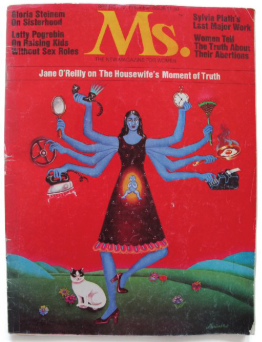
My mother was a charter subscriber to Ms. magazine, the groundbreaking feminist publication that premiered in Spring 1972. As a kid, I read every single copy the minute it arrived every month. I remember when that first issue arrived in the same mail delivery as Women’s Day, Family Circle, and McCall’s, three of the most popular women’s magazines of the day. The difference between those standard, established, housewife-oriented magazines—with their emphasis on homemaking, child rearing, cooking, cleaning, and husband-pleasing—and the empowering, infuriating, and exciting articles in Ms. was as clear as the difference between midday and midnight.
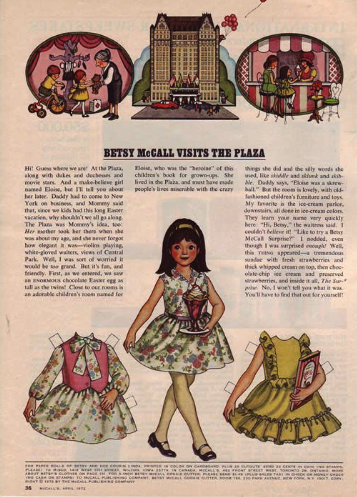
I was a latchkey kid back then, and a precocious one. My serious adult interests made me popular with teachers, but deeply unpopular with my peers. I spent a lot of time by myself at home, reading all manner of things, from literary novels and magazines to the naughty books Mom hid (not very effectively) under her bed. My young, divorced, single mom—a high school English teacher—arrived home about an hour after I did every day from the time I was six years old onward. As the first person home, I was always the one to get the mail, and that gave me first crack at Mom’s magazines. Much as I loved flipping through TIME and LIFE magazines, and searching the back pages of McCall’s to find and cut out the Betsy McCall paper dolls every month (I was, after all, still a little girl), Ms. was the first magazine I read every month. That habit continued from the initial Spring 1972 issue until I gave up on it when it was sold and changed its focus in the 1987.
For fifteen years, I flipped to the back of the magazine before reading another word so I could begin with the “No Comment” page. It consisted of photos of sexist, misogynistic, woman-dominating, infantilizing or pedophilic, insulting, even brutal imagery and messaging from TV, magazines, billboards, corporate PR documents, and other popular media. Seeing evidence of the relentless and ubiquitous yet socially acceptable advertising offensive against women was always shocking and enraging. The images were infuriating, and sent powerful messages about how pervasive sexism was (and still is).

Thus primed to recognize how baked into the system sexism was, I’d start over, returning to the beginning of the issue and reading through every article. There were features on sisterhood, nonsexist child rearing, abortion rights (remember, abortion wasn’t legal across the U.S. until 1973, nearly a year after Ms. first appeared on newsstands), opposing positions on pornography, cultural stereotypes of women, and gender inequality. I’d also read the interviews with feminist writers of different bents, from Andrea Dworkin to Betty Friedan to Angela Davis. I compared my nascent feminist opinions with theirs, often evolving over time as I grew up and saw the world and experienced sexual harassment directly and repeatedly in school, on the job, and simply walking down the street. Ms. helped me see that there were many different flavors, types, and branches of feminism, sometimes in opposition to each other. The magazine took the general position that opinions could, should, and did differ among people of goodwill about what feminism could and should address.
In the early era of Ms. magazine, two topics in particular were raised repeatedly. One was the definition of feminism, since so many people had negative associations with the word but didn’t understand its actual definition. The other was the proposed ratification of the Equal Rights Amendment (ERA.)
In those days, and even today, many people have refused to call themselves feminists, associating the term with loud, rude, anti-male opinions. However, the textbook definition of feminism is anything but outlandish or offensive to most of us. Feminism is simply the belief in and advocacy of social, political, and economic equality not based on gender. That’s really the whole shebang.
The proposed Equal Rights Amendment would have amended the U.S. Constitution to guarantee equal legal rights for all citizens regardless of gender. Often misrepresented as an effort by man-hating loonies to give women “special rights” or unfair advantages over men, here’s what the ERA actually said, in its entirety:
Section 1. Equality of rights under the law shall not be denied or abridged by the United States or by any State on account of sex.
Section 2. The Congress shall have the power to enforce, by appropriate legislation, the provisions of this article.
Section 3. This amendment shall take effect two years after the date of ratification.
That’s it. The ERA was a simple request for nothing more than legal equality regardless of gender or sex.
First drafted by women’s rights leaders Alice Paul and Crystal Eastman, and first introduced in Congress in December 1923, the proposed ERA went through decades of discussion and debate. In 1971, it was at last approved by the U.S. House of Representatives. After the U.S. Senate approved it the following year, in 1972, it was submitted to U.S. state legislatures for ratification, as required by the U.S. Constitution. Congress required ratification by at least 38 states within seven years. It would seem a foregone conclusion that ratification of such a simple, obviously fair, true, and just statement would have been accomplished well before that deadline. However, Congress had to extend the deadline from 1979 to 1982. And even after ten years of public debate, both deadlines passed and the ERA was still three votes short of the necessary 38 states in 1982. As of 2026, the ERA has still not been ratified, and the Constitution still does not guarantee equality to all without regard to gender.
Gloria Steinem was certainly not the only well-spoken feminist of note to emerge as a thought leader and influencer (to use annoying contemporary terms) in the 1960s and 1970s. However, Ms. Steinem had great charisma, impressive composure and gravitas, and an uncanny ability to receive and deflect even the most egregiously offensive, condescending, insulting, infantilizing, and sexist attacks—many of them quite personal—in any setting. As the most prominent U.S. proponent of feminism in that era, she was seemingly everywhere, always responding with reason, wit, and specificity that left those who sought to degrade and wound her sputtering, red-faced, and laughable. They couldn’t hold a candle to her factual, well-reasoned, dignified message or delivery.
Ms. Steinem was conventionally beautiful enough to have passed as a Playboy bunny while undercover to write an expose about Hugh Hefner’s Playboy empire in the 1960s. But her physical attractiveness and beautifully modulated voice were actually stealth weapons against her detractors. Combined with her preternaturally calm demeanor and her skill with debate, her skills and attributes attracted positive attention, first to her, then to the subject of women’s rights and gender equality. They also gave the lie to the sexist stereotypes of feminists as being shrieking, irrational, and unattractive. It was always a joy to watch her surprise her ignorant antagonists by skillfully defending feminism in debates with everyone from sputtering attack columnists to sexist public intellectuals like Norman Mailer and William F. Buckley.
Today’s U.S. feminist discourse is more balanced, varied, and integrated across racial, cultural, and gender lines, and is more inclusive of all sexualities and multiple types of opinion than it was during Gloria Steinem’s most public era. But her life’s work continues to have a deep and lasting positive influence on feminist discourse. Ms. Steinem expanded and expressed her understanding of different feminist viewpoints, lifted up others who support the goals of feminism, and educated, inspired, and built a more egalitarian and respectful world for us all provide us all. What a powerful and lasting legacy.
At top:
Gloria Steinem addresses a feminist rally, early 1970s