Suburbia

bill

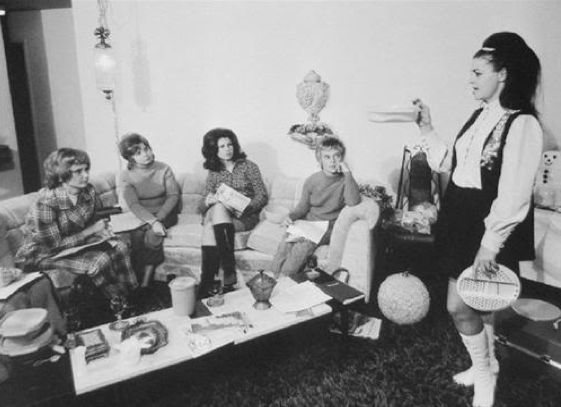
Photo of a Tupperware party by Bill Owens from his book Suburbia

When I was a child growing up in the San Francisco suburb of Livermore, the publication of photographer Bill Owens‘s exploration of Bay Area suburban life, Suburbia, was a big deal in my home town. His book of photojournalism, published in 1973, garnered significant media attention; it was even written up in Time magazine. The book was of particular interest in Livermore because its stars were our town’s own citizens. The Tupperware ladies, toy-gun-toting little boys, Barbie-collecting girls and block party barbecuers whose black-and-white portraits  filled the book lived in the Livermore-Amador Valley. Several of my mother’s friends and our own family doctor appeared in its pages.

Even now, historians, postcard manufacturers and bloggers republish photos from the book. Art galleries, major museums and other institutions around the world include Owens’s photos in exhibitions. Gallerists and pop culture historians point to his work when they want to expose the supposedly tacky superficiality of American suburban life during that awkward period between the clean-cut, rule-following fifties and the shaggy, sexy, if-it-feels-good-do-it seventies.

Richie

Photo of six-year-old Richie Ferguson by Bill Owens from Suburbia

Bill Owens took these now-iconic photos when he was a staff photographer at the Livermore Independent News starting in 1968. My mother’s boyfriend at the time was himself a reporter at the Independent who worked alongside Owens, so I met the photographer at a party shortly after the publication of his book. He had the no-nonsense confidence of a man who is used to sizing up a situation quickly, figuring out the most visually compelling elements, and getting in and out of an event in a hurry, before his subjects have a chance to become too self-conscious or studied in their poses. News photography has always required such skills, but in the days of film photography, there was a pressing need to be able to edit one’s work on the fly and be quick about it. Film was costly, and all photos needed to be developed and cropped by the photographer on short deadlines if they were to make it into the next day’s paper. Taking too many shots or too much time was a luxury that local papers and their staff photographers could ill afford.

In the seventies, there were few television channels or news radio stations, and of course there was no Internet with which individuals could share news directly, so the local newspaper was the primary source of in-depth information on all things regional. Newspapers had to report on crime, business, sports, laws, fashion, civic and social events, so photographers like Bill Owens had to get in and out of multiple places and events daily. But while Owens came from that journalistic tradition, in his photoessays he took the time to focus not only on what people did, but also on how they felt about their lives and suburban surroundings. He let his subjects express their pride, ambivalence and concerns about living in a growing, post-war, middle-class community. It was a time of prosperity and expanding social and sexual openness, but also a time of war, increasing crime and political unrest. Our town was largely insulated from the drama and violence that was shaking bigger cities at the time, but middle-class angst and drama were plentiful.

In his photographs and in the commentary his subjects provided, Owens caught suburbanites in private moments. They questioned whether they were capable parents, or took pride in living what they considered to be the good life. Some admitted that while they’d found the money to buy a house, they couldn’t afford to furnish it. People opened up to him, agonized over whether they were setting good examples for their kids, beamed as they showed off their prosperity, or sat half-naked on the edge of a bed daring the world to judge them for being comfortable with themselves.
Ozzie Davis

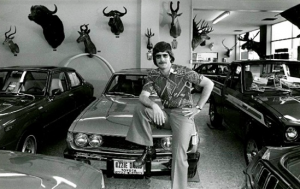
Photo of Livermore’s Ozzie Davis Toyota dealership by Bill Owens from his book Suburbia

The world was used to urban photographers like Diane Arbus or Gordon Parks taking awkwardly intimate photos of people looking embarrassingly real in big, gritty cities like New York. Time and Life magazines brought images of war and rioting into our homes each week in full-color photo spreads. In comparison to large-scale photojournalistic  works about the Great Events of Our Time, a photoessay treating the inhabitants of a middle-class enclave near San Francisco as if they were significant enough to be worthy of their own project was a fresh and intriguing idea. It was exciting to be in the spotlight after always feeling like we had been on the edges of things.

Livermore is less than an hour from San Francisco, which was the hippie movement’s Ground Zero during the 1960s. Though only a half-hour from Berkeley, scene of some of the nation’s most bitter and frequent anti-war protests during the years when these photos were taken, Livermore had for many years been a bastion of traditional conservative values.

A wine-growing community dotted with ranches, Livermore was known as little more than a cow town until the early 1950s. My high school’s mascot was a cowboy, and the street behind the main school building is still called Cowboy Alley. But while the community had long been based on rancho culture, by the 1960s and 1970s Livermore’s biggest employer was what was known as the “Rad Lab,” rad being short for radiation: Livermore was and is the site of one of the nation’s largest national nuclear weapons laboratories. What is now known as the Lawrence Livermore National Laboratory opened its doors in 1952, and by the time Bill Owens’s book was published two decades later, the laboratory directly employed about 10% of the city’s population.

For six decades, Livermore has had one of the largest concentrations of top nuclear physicists in the world, meaning that my town was home to a huge number of highly educated, fact-loving scientists, their well-educated spouses, and their smart and skeptical kids. Most of those who worked at the lab were strong believers in the theory that the specter of “mutually assured destruction” by the Soviet and U.S. superpowers in case of a nuclear war would keep either side from initiating war as long as both sides kept designing, building and stockpiling more and more threatening, long-range and expensive weaponry.

The Cold War-era belief that spending billions on the development and creation of weapons of mass destruction was necessary to keep us safe from communists (who were building their own gigantic nuclear arsenal on the other side of the world) sounds like a conservative stance to us today, but there were plenty of political moderates and even liberals working at the lab. Democrats like Presidents Kennedy and Johnson were staunch anticommunists who had instigated and escalated our involvement in wars meant to stop the spread of communism. Fear of communist expansion and take-over was by no means a solely Republican fear. Engineers and physicists who prized rational thinking above all were often open-minded and modern in their thinking in many fields and they came in many political flavors, not just conservative ones.

By the time that Bill Owens set about photographing our city’s denizens, formerly rural Livermore’s population included many erudite, cultured people of all political persuasions who were curious about the world in general. Many of the problem-solvers who had descended on Livermore from around the globe brought with them great worldliness and interest in culture and erudition. Though Livermore had once been thought of as a quiet farming community out in the boonies, by the 1960s it was surprisingly full of eclectic amateur theatrical events, excellent public schools with award-winning musical ensembles and a community symphony. An ambitious annual cultural arts festival takes over much of the downtown corridor during early October every year to this day.

However, because of the popularity of Bill Owens’s book, the place where I grew up became famous for people who represented everything superficial and embarrassing about suburban American culture. The real Livermore was a lively mixture of experts in fields from agriculture and livestock to nuclear weaponry to the arts. The book that both celebrated and embarrassed us was on the coffee table of every hip and educated family in town, and we felt both pride and chagrin over the images shown within its pages. There was delight over the fame the book brought us, and recognition of ourselves in the photographs and stories told in the book, but also a bit of shame over the parts of the book that made us look like overconsuming, self-absorbed buffoons.

Another understandable but misleading aspect of the book was the fact that the long agricultural history and natural beauty of the place got lost in the focus on the tract housing developments and accoutrements of post-war Northern Californian living, so the richness of the culture and the long history of people living close to the land in Livermore and the surrounding valley all but disappeared.

Big cities like New York can handle having people think a large proportion of their citizenry is odd or tacky, but Livermore has suffered unfairly over the years by having people choose the least flattering photos and stories from our signature photoessay to represent our whole populace. Although those of us who lived in the Bay Area in the early seventies grew used to hearing that our region was rife with proto-New Age philosophies, encounter groups, redwood hot tubs, free love experimentation and all varieties of omphaloskeptic behavior, for many people (like my self-righteous hippie father) Bay Area suburbs like Livermore came to represent not the cool, sexy, mind-expanding elements of the Age of Aquarius but the shallow, consumerist, un-self-aware aspects of modern living.

In the decades since I left Livermore, the city has nearly doubled in size thanks to its proximity to the tech boom in San Francisco and Silicon Valley. My home town has long been one of the more affordable corners of an outrageously overpriced region. It is still home to one of the nation’s top nuclear weapons laboratories, as well as to Sandia National Laboratories, which develops, engineers and tests the non-nuclear components of nuclear weapons. But its economy and culture are no longer quite so closely tied to the nuclear research culture as they were when I lived there. Yet echoes of that culture reverberate in modern literature and film: the writer of the popular science fiction novel The Martian, Andy Weir, grew up in Livermore. He went to my high school, worked at Livermore’s Sandia Labs, and he is himself the son of a particle physicist who worked at Lawrence Livermore National Laboratory. It’s likely he had a literature or composition class with my mother at some point; I like to fantasize that she may have encouraged his considerable writing talent in some small way. Though Weir wasn’t even born when the first of the photos in Suburbia was taken, the influence of Livermore’s science-friendly, intellectual, problem-solving culture helped to nurture his curiosity and imagination, just as it did my own.


Child of the Sixties

Laura in GG Park, March 1969

The author in Golden Gate Park in the late 1960s

Among my childhood photo albums are pictures of me wearing daisy chains and sitting on the grass in Golden Gate Park. I have vivid memories of spending time with my father and his friends in the park and in the adjoining Haight-Ashbury district when I was a very little girl. I was tiny, but I remember San Francisco, the epicenter of the hippie movement, during 1967’s legendary Summer of Love and in the years thereafter.

Though I grew up in the suburbs, I often visited what people in the Bay Area refer to simply as The City. All my life I have felt a special pride in my connection to San Francisco. My mom gave birth to me there, in a hospital just a few blocks’ walk from the famous intersection of Haight and Ashbury Streets. My dad (whom I only lived with for the first few months of my life, and only saw occasionally from babyhood onward) brought me to various hippie happenings there during his visits with me from the time I was about three years old. He hoped to make up for what he saw as the soulless bourgeois childhood I was supposedly experiencing in the Bay Area’s eastern suburbs.

The PBS American Experience documentary on the Summer of Love shows a San Francisco very much as I remember it during that time, albeit from about three feet off the ground. As a young child, I found San Francisco’s hippies often scary and off-putting. Even as a very little girl I had a sense of the importance of personal space and a desire that things be done safely, with purpose and according to plan. I was much more of a cautious goody-goody than even my mother, a high school teacher whom my father denigrated for being too suburban. I followed rules; my father and his friends generally did not. My dad hated authority, rules and The Man, so he and his friends would take joy in challenging the establishment whether or not I was with them.

I was always the only child present on visits with my father, and was usually ignored, so I spent a lot of time in watchful anxiousness, hoping not to be put in harm’s way. I was frightened by his and his hippie friends’ lack of concern with their actions or with me; they were lackadaisical, careless, loudly vulgar and sometimes stoned, so I felt ill at ease and unprotected with them.

People often talk about how loving and peaceful hippies were, but I saw also an enormous amount of anger directed by them toward rules, history and authority. That anti-establishment anger was often channeled for good in such campaigns as the fight for full and equal rights for African-Americans, women, Native Americans and homosexuals, among other downtrodden groups. The often strident and unpleasant but necessary challenges to the entrenched establishment gave young people in particular the courage to question the wisdom of their leaders and force their government to justify its wars. They gave the populace the courage to stand against unjust laws and corrupt political practices. It was this movement that eventually gave journalists the courage and necessary establishment backing to bring down a powerful sitting president during the Watergate scandal just a few years later.

While the nation often benefited from the outspoken challenges of those who had felt stifled by government, big business and the limiting social mores left over from the 1950s, there was also an upsurge in more generalized antisocial behavior. The rise of the hippies led not only to social activism, peace and love, but also to huge numbers of (mostly) young people breaking rules just for the hell of it. Many wrapped their destructive or selfish behavior in a cloak of righteousness. Some took advantage of the new social openness to examine their psyches and motivations honestly and to try to relate to others in more direct and healthy ways; others just found this newly socially acceptable preoccupation with self an excuse for narcissistic behavior.

The ensuing decade of the 1970s was dubbed “The Me Decade” with reason. During the 1960s, modesty had lost favor while self-regard and constant awareness of one’s own needs and desires became viewed as positive things. Exuberant self-expression and in-your-face sexuality went from being shocking in the early 1960s to being surprisingly common within a decade. In the early 1970s, when I visited the high school where my mother taught (and which I would later attend), obvious bralessness was very common not only among the students but even among teachers. Some of the younger teachers wore hot pants to school. Overt sexuality was, however, considerably less evident in high school teachers’ fashions by the time I myself entered high school later in the seventies.

To be fair to those who were part of the laissez-faire San Francisco hippie culture of the 1960s, I saw plenty of self-absorption and self-aggrandizement even among more establishmentarian suburbanites during that time and in the decade that followed. Social boundaries were not well respected in general in the late 1960s; millions of people (not just hippies) were sharing their formerly private thoughts (not to mention their bodies and lots of adult-themed talk and media) with great abandon and carelessness, and we kids were often exposed to too much knowledge too soon. Those of us who appreciated having some boundaries in our lives were often ignored or denigrated by people who felt superior because of their mod, carefree sensibilities. Some, like my father, mistook the desires of others (like his young daughter) to follow laws, keep order or avoid conflict or offense as being necessarily conservative traits. They are not.

There was a middle ground in which people challenged the status quo more gently; they didn’t want social anarchy but still believed strongly in the promise of liberalism. Yes, many San Franciscans, hippies included, sought peaceful, meaningful, respectful social change and worked hard for it. But from my own perspective, as a very young person, I saw measured, realistic and inclusive social activism in the suburbs, too, even among those whom my dad and his friends found so hopelessly square.

Benedict Cumberbatch as Hamlet

Since I learned that Benedict Cumberbatch would play the title role in Britain’s National Theatre production of Hamlet this autumn, I’ve sought a way to justify another trip to London to see him on the stage. Happily, this week I was able to do the next best thing: I attended a special video presentation beamed from the Barbican Theatre in London to 1,400 sites around the world. The production wasn’t strictly live—I saw it delayed by a few hours to accommodate the time difference between London and Seattle—but it was exciting to know that it was a very fresh and special event.

The National Theatre’s staging of Shakespeare’s most popular play been a hugely successful one thanks to the justified popularity of Benedict Cumberbatch, who attained superstar status for his portrayal of Sherlock Holmes in the BBC’s exceptional Sherlock series, shown in the US as part of PBS’s Mystery series. This week’s initial showing of Hamlet in cinemas around the world drew the largest global audience for a live broadcast day of any title in National Theatre Live history;  more than 225,000 people around the world saw the production in cinemas on the first day. More showings had already been scheduled in cinemas over the coming two weeks, but the first showing was so extraordinarily popular that more cinema presentations will be added during November.

I quite enjoyed the production, which also featured the compelling, charismatic Irish actor Ciarán Hinds (Mance Rayder in HBO’s Game of Thrones; Julius Caesar in HBO’s ROME; Captain Wentworth in the splendid 1995 film version of Jane Austen’s Persuasion) as Hamlet’s uncle/step-father, Claudius. The video created and shared around the world this past week will be repeated in several Seattle cinemas over the next two weeks as well as in other locations around the world, so if you don’t mind sitting for 3-1/2 hours (including a 20-minute intermission) in a cinema, this is a beautiful production, well filmed.

There are quirks in this production that are entertaining or interesting to watch, but can be distracting in their oddness. Benedict Cumberbatch dressed like a soldier and playing at being at war in his oversized dollhouse flanked by giant toy soldiers is an unexpectedly lighthearted moment, and is fun to watch. Yet it is strange, and it feels not only out of character but like a maneuver meant to distance the audience from the action—this production has many anachronisms and bits of folderol meant to throw the audience off guard and to play up the staginess of the production instead of allowing us to enter Hamlet’s world and even his head, as productions of this play tend to do. It is the most introspective of Shakespeare’s plays, so to play it in a way that constantly underlines its very falseness and inauthenticity is at odds with the desires of the productions we are used to. But being shaken out of our complacency and surprised by theatrical antics is one of the things that live theater does best, so there is room for a production of this old chestnut that leaves us a bit confused and off-center. Hamlet is himself imbued with many awkward and uncomfortable traits, after all, so it makes some sense that his story should be similarly discomforting and confusing.

When Hamlet’s murderous step-father, Claudius, connives and justifies planning Hamlet’s destruction in Act IV, windows and doors blow in and the entire set becomes covered in what look like black flecks of decay, or leaves, or even shredded tires—who can say? There is no explanation, and the black bits overtake Hamlet’s world and remain on the stage for the rest of the play, in every setting, inside and out, with only small sections of stage swept clean at various points during the ensuing drama to create pathways or patches of light.

As the production wound down, Cumberbatch arose from the ground for his curtain call, bits of the mysterious dark schmutz still clinging to his face, neck and clothes. Did the particles symbolize doom, or Claudius’s corruption (and perhaps Hamlet’s, since he takes an innocent life and leads others toward death), or general decay? Something is indeed rotten in the state of Denmark, but what exactly it is that overtakes the land is not clear.

Of all the strange and original conceits incorporated into this production, the willful and inconsistently applied anachronisms are the most noticeable and, to me, off-putting. Shakespeare’s plays are often adapted to take place in other time periods than the Elizabethan era, and such variations can be very effective. My favorite case in point is the excellent film adaptation of Richard III starring a stunningly malevolent Ian McKellen which took place in an alternate version of 1930s Britain overseen by fascist dictatorial rulers. In that case, setting the story in a historical period which is so recent and freighted with so much fascistic horror and menace made it feel particularly vivid, real and emotionally accessible.

This version of Hamlet is the first Shakespearean production I have seen that sticks to no particular time period but instead chooses to be willfully and inconsistently anachronistic, beginning with Hamlet listening to Nat King Cole’s haunting “Nature Boy” (which was recorded in 1948) on a record player in what seems to be the late 1940s or early 1950s. Hamlet is greeted by a modern hipster version of Horatio, complete with backpack, pegged jeans and body-covering tattoos; his clothes and glasses seem like they could possibly be contemporary with the Nat King Cole music, but the backpack and tattoos take him to the modern realm. Ophelia in her slouchy sweatshirts and high-waisted pants seems to be dressing in clothes from the 1980s or 1990s, while Hamlet’s mother Gertrude and her new husband (and former brother-in-law) Claudius are clothed in garb contemporary with the song by which Hamlet is captivated (and the strains of which return repeatedly during the production, acting almost as a theme song). The acting troupe to whom Hamlet gives acting lessons are dressed in 1970s gear, and Hamlet himself is often in more timeless, neutral clothing, except for his David Bowie “Aladdin Sane” T-shirt and a handpainted punk overcoat.

The anachronisms delighted my daughter, who felt they underscored the timelessness of the story and emphasized the point that Hamlet as we have come to know him is a man out of time. I see her point, yet I found that the anachronisms often jarred me out of being able to suspend my disbelief, which is something I crave in theatrical experiences, so I found it less immersive than I would have liked. Aside from that, however, I found Cumberbatch very skilled at making me feel that he was in the moment and experiencing life as Hamlet, and the sets, direction and music were very effective.

If you enjoy Cumberbatch, Hines or Hamlet, this is a worthy and thought-provoking production.

Crazy for Willie

Nowadays, Willie Nelson is the bearded, braided, grand old man of country music. He’s not only a musician and composer but also an activist and philanthropist beloved by country music fans, farmers (he established the Farm Aid movement with Neil Young and John Mellencamp in 1985), hipsters, even hip-hop artists. When he sang a pot-themed Christmas carol with Stephen Colbert on Colbert’s delightful “A Colbert Christmas” special a few years back, he was the highlight of a highly lit show. So it’s fun to see a clean-cut, clean-shaven Willie in this film clip from 1962 in which he dons a sharp suit and uses his smooth DJ voice between songs.

Willie spent several years as an actual DJ in the 1950s, first in Texas and later in the Pacific Northwest. After getting his start on the radio in Texas, he moved west to broadcast his resonant announcer’s voice from a radio station in Vancouver, Washington, just across the state line from Portland, Oregon. There he bought his first house, had his second child and wrote several songs that became big hits for other country artists. In Texas and in Washington, Willie was famous for opening his show with his signature line: “This is your ol’ cotton pickin’, snuff dippin’, tobacco chewin’, coffee pot dodgin’, dumplin’ eatin’, frog giggin’ hillbilly from Hill County!” (I’m so glad he moved beyond frog gigging.)

Once Willie started having real success in selling his songs, he moved back to Texas to resume his DJ duties while looking for recording opportunities of his own. He DJ’ed on Texas radio stations while teaching guitar classes and writing songs on the side. He moved to Nashville in 1960 hoping to get a recording contract of his own, but all his demos were rejected. He finally got his first contract in 1961 and released his first album, …And Then I Wrote, in 1962.

Well before Willie was a household name, he was writing hit songs for other country artists. His best-known composition, “Crazy,” became Patsy Cline’s biggest hit and is the most frequently played juke box song of all time. He was paid just $50 for the rights to it, but, happily, he said in one of his very enjoyable interviews with Terry Gross on her Fresh Air National Public Radio show that he did receive royalties on it later. (For more on the story behind the song, check out this piece by NPR’s Linda Wertheimer was featured on All Things Considered in 2000.)

Though Willie is a country legend, listen closely to his phrasing and you’ll recognize the huge influence that jazz has had on his performing style. Willie is always singing and swinging just a little off the beat to add interest to every measure. Despite his strong twang and the trademark nasal quality of his voice when he sings in his upper register, a warm mellowness takes over in his lower tones. There is a spare quality to his singing and beautiful guitar playing that reminds one jazz musicianship; his takes on pop standards like “Stardust” often have a dreamy quality.

Willie has recorded with many artists, and his distinctive voice blends well with all sorts of pop, rock, folk, jazz and country voices, smooth and rough, high and low. Willie has taken on a sort of everyman persona over the years, but behind the easygoing, scraggly looking fellow in jeans and bandannas is a major philanthropist, humanitarian and advocate for animal welfare; a sophisticated musical storyteller; a legendary composer; a gifted and subtle guitarist; and, at times, a mellow crooner with a voice and a vision like no one else’s.

Fluffy Mackerel Pudding

Fluffy

[A treat from the archives: this has been revised from an article originally published on Laura Grey’s Little Hopping Bird blog.]

In the 1970s, Weight Watchers and other companies created packs of recipe cards that they gave away with hideous giant plastic recipe boxes in order to try to hook gullible Americans (and perhaps Canadians, though I hope they had the good sense not to follow their U.S. cousins) into subscribing to a series of monthly recipe packs which arrived with billing statements and hefty postage fees. The special introductory offers provided a free recipe box and the first set of recipe cards in the hopes that the person ordering them (a.k.a. the sucker) would then get (and pay for) a new set of recipe cards every month. After a year or so, the sucker would have a whole collection of supposedly mouth-watering original recipes that would allow a hungry family to eat hearty, wholesome meals that would satisfy all their nutritional needs and cravings for just pennies a serving.

Once the vast majority of Americans realized they could get a free plastic recipe card box and 24 or so cards featuring scary color photographs of unappetizing food and then cancel their “memberships” in the recipe clubs, they were all stuck with giant awkwardly sized recipe boxes into which nobody could fit any of the recipes they might actually want to keep. I know this because I ordered my own giant plastic free recipe box when I was a child, and I kept it for years figuring I would someday figure out how to store actual recipes in it, to no avail.

A few years ago, I stumbled onto a brilliant website with fabulously unappetizing (and splendidly captioned) examples of Weight Watchers recipe cards from 1974. (The photos and captions are also available in book format as The Amazing Mackerel Pudding Plan: Classic Diet Recipe Cards from the 1970s by Wendy McClure.) Whenever I return to the site in hopes of lifting my spirits, I always start my pilgrimage to Tacky Town with my personal favorite recipe: “Fluffy Mackerel Pudding,” the highlight of the “Convenience Fish” section. The name speaks volumes.

Next, I make my way through the pack to revisit other mouth-watering delights such as “Hot Wrap Ups,” which include a hot lettuce, pickle, chive, caper and celery combo, as well as “Rosy Perfection Salad,” an exciting little number featuring shredded red cabbage in molded purple gelatin. Who could say no to a brandy snifter full of “Jellied Tomato Refresher,” or a man-pleasin’ pan full of “Mackerelly“?

The “Fish Tacos,” which are completely tortilla-free, look especially  enticing with their shredded green cabbage, tomato chunks and some sort of chopped fish on a bed of . . . toast. And in the “Budget Best Bets” category, don’t forget “Frankfurter Spectacular,” a sexy little dish of hot dog halves wrapped around a pineapple core and garnished with carrot, potato and pineapple chunks. Between meals, why not fix yourself a plate of “Polynesian Snack,” featuring the excitement you can only find in a dish composed of canned bean sprouts, buttermilk, pimiento and fruit pieces. That’s snackin’ satisfaction!

For a peek at “Snappy Mackerel Casserole” or the famous tortilla-free “Marcy’s ‘Enchilada,'” you must check out the Candyboots Web site. The wicked captions on each card are the artificially colored maraschino cherry on the top of the whole delicious experience.

Want to make your very own dinner of fluffy mackerel pudding tonight? Here’s the recipe:

FLUFFY MACKEREL PUDDING

2 stalks celery
1 medium green pepper
8 ounces drained, canned mackerel, flaked
1 tablespoon dehydrated onion flakes
2 teaspoons prepared mustard
1 teaspoon salt
1/2 teaspoon cayenne pepper
1/8 teaspoon mace
Dash of ground cardamom
2 medium eggs, slightly beaten
2 medium eggs, hard-cooked, and sliced

Put celery and green pepper through a food grinder (or chop finely in blender). Combine with mackerel, onion flakes,mustard, salt, pepper, mace, and cardamom; mix well. Blend in raw eggs. Divide evenly into 4 (8 ounce) heatproof cups. Bake at 350°F (moderate oven) for 35 to 40 minutes. Garnish each with 1/2 sliced egg. Makes 4 luncheon servings.

For more off-putting recipe ideas from the 1970s, check out the Dinner is Served 1972 blog.

Tom Hardy Is Right: Celebrities Have a Right to Privacy

Photo by Fred Thornhill, Reuters

Photo by Fred Thornhill, Reuters

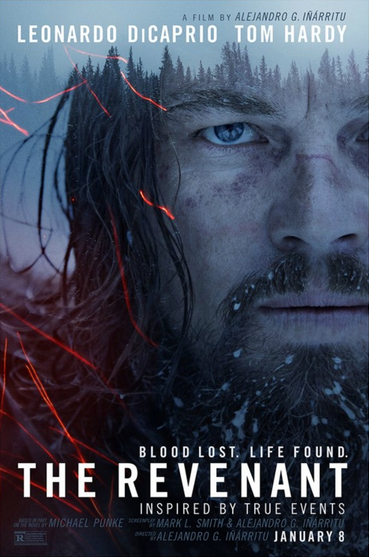
The big buzz around talented and ever-modest movie star Tom Hardy this week centers on his refusal to be bullied into talking about his private life by pushy interviewers. An excellent interview in The Daily Beast titled “Even Celebrities Have a Right to Privacy” touches on that, but it goes far beyond that contretemps.

As Hardy himself said in the Daily Beat interview, “What  [Daily Xtra reporter Graeme Coleman] had to talk about was actually interesting, but how he did it was so inelegant. And I appreciate that I could probably have more grace as a human being, but I’m just a bloke. I’m just a man. And I’m just a man doing a job. I’m not a role model for anyone, and you’re asking me something about my private life in a room full of people. I don’t want to discuss my private life with you. I don’t know you! Why would I share that with a billion people? Also, if you felt it was so important for people to feel confident to talk about their sexuality, why would you put somebody on the spot in a room full of people and decide that was the time for them to open up about their sexual ambiguity? There’s also nothing ambiguous about my sexuality, anyway. I know who I am. But what does that have to do with you? And why am I a part of something now that, however legitimate, I haven’t offered my services for? It’s not about what he and his publication stands for, none of that is offensive, and on the contrary, it’s very admirable, and an important issue. But how I was asked was incredibly inelegant, and I just thought it was disrespectful and counterproductive to what he stands for.”

Hardy is a thoughtful, articulate, well-spoken man who often plays taciturn, difficult or broken people. (See (“Mad Max: Fury Road,” “The Dark Knight Rises” and “Legend” for examples.) In the Daily Beast interview, Hardy expresses beautifully how frustrated he was to be grilled about his sexuality in what he called an “inelegant” fashion because he sees nothing wrong with people embracing who they are and sharing their truth about their sexuality in their own time and in their own way, but only if and when they wish to. Mr. Hardy felt the interviewer who pushed his own agenda undermined his own worthy cause by refusing to recognize actors’ rights to privacy. I agree with him.

The interview is full of fun tidbits, such as Hardy’s love of dogs’ sincerity and stories about going to drama school with Michael Fassbender. Hardy is a feminist and supporter of strong roles for women in film, and is also a noted animal lover and anti-poaching advocate, and the interview touches on these aspects of his personality briefly.

Despite Hardy’s huge success in film and on stage, he seems surprisingly humble when comparing himself to other actors with whom he has worked and studied. upcoming dual roles as London’s notoriously murderous twin brothers Ronnie and Reggie Kray in “Legend”  and as Elton John in a biopic about the musical icon both promise to be exciting. I look forward to watching his career continue to bloom.

Bless All Dogs

Bless

My daughter, Lily Rodseth, is a graphic designer who creates infographics, typefaces, typographic art, bookcovers (this one won the Bookbuilders of Boston Student Competition at the  New England Book Show) and beautiful art prints. Her latest design, “Bless All Dogs,”  is now available for sale in her online shop on Society6.com. There you can order art prints, T-shirts, mugs, tote bags, pillows, phone cases, even shower curtains featuring her charming canine design and have them shipped directly to you by Society6. Click here, or look up Lily’s handle, Glossy Starship, on Society6.com to see her new design in all its darling. dog-filled detail.

Fat Shaming: Socially Acceptable Bigotry

McCarthy Instagram

Fashion designer and Academy-Award-nominated actress Melissa McCarthy, second from left, shows off pieces from her new 7Seven fashion line, Summer, 2015

When gifted comic actress Melissa McCarthy was nominated for a Best Supporting Actress Academy Award, she went searching for an appropriately elegant evening gown to wear to the ceremony. “I asked five or six designers,” she told Redbook magazine. “Very high-level ones who make lots of dresses for people — and they all said no.” The designers demurred because Ms. McCarthy does not conform to the fashion world’s size-two-to-size-six ideal. Designers had no interest in having her wear their dresses, even though over 40 million people in the U.S. alone saw Ms. McCarthy on their TV screens in one night, because designers feared that being seen to create clothing for larger women would actually harm the reputations of their design houses.

It’s ironic that designers think designing for women size 14 and up degrades and debases their brands since fully two-thirds of women in the United States fall into that category. Over 90 million women in the U.S. alone wear size 14 or larger, yet they are relegated to smaller, sadder “plus-size” clothing departments. They are made to feel that they are not only unimportant but not worthy of attractive, comfortable clothing even though they purchase and wear billions of dollars worth of clothing and accessories each year. They are shut out of many stores and designer’s lines completely, and stores that cater to them often offer them less flattering products for more money. The funny but maddening WTF Plus Tumblr blog shows the range of hideous, sexless, embarrassing clothes designed for larger women that smaller women would never be expected to buy, let alone wear.

While Emmy-winning actress Melissa McCarthy is best known for being a popular comedian who is willing to bear the brunt of jokes about her large size, she actually started out as a fashion and textile design student at New York’s prestigious Fashion Institute of Technology before her career in entertainment took off. In August 2015 her new line of clothing, 7Seven, debuted a line of clothes ranging in size from 4 to 28. The line is in a relatively affordable price range that matches or meets the prices of retailers like Ann Taylor and Banana Republic. With her inaugural collection, McCarthy shows a great eye for proportion, fit, pattern and texture. Her designs are fashion-forward and very wearable.

McCarthy dislikes the term “plus-size.” “Seventy percent of women in the United States are a size 14 or above, and that’s technically ‘plus size,’ so you’re taking your biggest category of people and telling them, ‘You’re not really worthy.’ I find that very strange,” she says.

In response to the news of her fashion line’s availability, Internet trolls came out en masse on social media and news sites to denigrate McCarthy and others for “enabling” and celebrating larger women’s rights to enjoy their bodies. As always happens when women with bodies larger than a size 6 dare to show comfort or confidence in their appearance, people took to their computers to accuse McCarthy and others of glamorizing unhealthy lifestyle choices. Those self-elected arbiters of appropriate body shape and size would like all people size 8 and above to go about in sack cloth and ashes until they starve themselves down to a single-digit dress size.

Disapproval and disrespect shown toward plus-sized people doesn’t obviate their need to find clothes that fit, feel good and look attractive. Those who respond to Ms. McCarthy’s new business venture by denigrating those who are larger than themselves are essentially saying that allowing people to clothe themselves attractively, affordably and comfortably  is the wrong tack—that we should instead shame them into looking the way we want them to and tell them that having the bodies they have is a moral failing. I wonder whether these self-appointed body shamers go out of their way to shame smokers and alcoholics, too. Those who drink or smoke bring on early death from their habits in even greater numbers than overeaters do, but our society shows them more understanding. They have the option of giving up their habits and avoiding people and places that trigger their dangerous behaviors, but EVERYONE has to eat, and every metabolism is different, so larger people can’t just stop the behavior (i.e., eating) that disrespectful trolls find offensive. 

Many larger people are actually regular exercisers who are quite healthy—you can’t tell from looking who is truly unhealthy inside. Large people have higher rates of some deadly diseases, but so do coal miners, house cleaners and beauticians because they choose jobs that expose them to carcinogenic chemicals. Police officers and soldiers die in greater numbers and intentionally choose work that causes great stress that often requires taxpayer-funded medical and psychological intervention later. Do we judge them for putting their lives at risk? Do we denigrate them for their choices? 

Melissa McCarthy is a multitalented woman who designs chic, comfortable and fashion-forward clothing, much of it aimed at a market that comprises over two-thirds of the nation’s adult female population. People who want to shame those women into conforming to their personal preferences are nothing more than hateful bigots who spew venomous tirades in the self-righteous belief that their discomfort over seeing bodies larger than those featured in Vogue magazine justifies their using their supposed concern about health and setting bad examples for youth so they can clobber those with different body types and sizes over the head, shaming and shunning them and telling them that they are unlovable, undisciplined and unimportant, none of which is true.

An ever-growing body of scientific literature points toward the fact that people who are deemed overweight to obese usually have very different gut biomes (intestinal ecosystems) than thinner people do, and that the varieties and sizes of bacterial colonies in their guts have an enormous impact on the speed and effectiveness of their bodies’ metabolic rates, the intensities of their cravings for food, the ways in which they metabolize medicines, and their propensity toward depression, anxiety and other emotional and psychological disorders that may manifest in a compulsion to eat in order to find comfort.

In short, the gut biomes of larger people may send intensely powerful and frequent signals to their brains telling them what, when and how much to eat. We live in a culture in which almost everyone has taken multiple types of  antibiotics that distrupt gut biomes, sometimes with disastrous, even deadly results. We are also regularly bombarded with ads for unhealthy foods and drinks that further disrupt our gut biomes and our endocrine systems, making permanent weight loss exceptionally difficult for even the most determined people. But we are also surrounded with Photoshopped images of impossibly thin, unrealistically proportioned people on TV, in movies, in pornography and in computer games, making it easier to believe that there are actually many more “perfect” bodies in existence than actually occur on this or any other planet. So we compare ourselves to these pretend people we keep seeing, and to make ourselves feel less bad about our own imperfections, we glom onto the perceived failures of others and build ourselves up by ripping them apart and smarmily saying that we’re shaming and shunning them for their own good. How preposterous. It’s cruel, and it doesn’t help people to lose weight.

What does help? Making people feel confident and attractive enough to get up, get out and exercise and take good care of themselves. Helping them to feel less anxious or depressed about themselves by giving them access to clothes and accessories that allow them to feel more attractive, confident and appealing. Success breeds success; those who feel shame are more likely to retreat into self-defeating behaviors that compound difficult habits, while those who believe in their inherent worth and who have hope for a positive future are more likely to get up and take the actions that lead to healthier, happier lives. Shaming and shunning those who are heavy tends to push them toward habits that make them heavier still. Helping them to find attractive outfits for every occasion, including athletic and exercise wear, gives them ways to love the bodies they have and helps them to believe that their bodies are worth effort and care.

Yes, being obese is not healthy, but being slightly overweight actually leads to a longer life expectancy than being slightly underweight. Furthermore, many people who are significantly overweight exercise regularly and do not have either diabetes or high blood pressure, just as some very fit and thin women have serious diabetes from childhood onward and need daily insulin injections. You can’t tell by looking, and even if you could, others’ dietary habits are not your business.

Should we encourage healthy dietary and exercise habits throughout society? Yes! Should we work to eliminate junk food dispensaries from schools and increase the quality of school lunches and discourage teachers from using sodas and snacks as rewards for good work? Yes! But it does not follow from these societal goals that encouraging health requires disparaging and defaming those whose habits or bodies don’t conform to cultural ideals.

Rather than fat-shaming those among us with larger bodies, let us celebrate women like Melissa McCarthy who make larger women feel freer to be active, positive and comfortable in their bodies while living happy, productive, healthy and engaged lives.

I’ve a Bee in My Bonnet for Pop Sonnets

*Pop Sonnets - Eric Didricksen

If William Shakespeare were alive today and writing lyrics to pop anthems, what would they sound like? Thanks to Erik Didricksen‘s Pop Sonnets blog, we now know. Pop Sonnets (popsonnet.tumblr.com) has given the Shakespearean treatment to dozens of tunes from Queen’s “Bohemian Rhapsody” (“My fate now seal’d, ’tis plain for all to see: The wind’s direction matters not to me”) to Daft Punk and Pharrell’s “Get Lucky” (“While ladies dance away the night for sport / So shall we too, their favor sweet to court”), to the lyrical demands of the Spice Girls, whose “Wannabe,” incorporates much spice-related wordplay:

Wannabe

Hast thou a hunger to hear the plaintive wail of Steve Perry exhorting, cajoling, nay, demanding that all and sundry hold fast to hope? Then thou art most fortunate, for Pop Sonnets doth present a poetic parody of “Don’t Stop Believing” which beginneth in this fashion:

A lonely maiden from a hamlet small—
A boy within a woeful city reared:
They both at midnight left their port of call
T’ward any destination volunteered.

The Ramones’ “I Wanna Be Sedated,” Ke$ha’s “Tik Tok,” Jason Derulo’s “Talk Dirty,” and songs by Katy Perry, Beastie Boys, Sir Mix-a-Lot, Green Day, even Britney Spears can be found among the Bard of Avon’s supposed works as channelled through Didricksen. Enjoy this rapturous take on “Uptown Funk” by Mark Ronson, featuring Bruno Mars:

Uptown Funk

Pop Sonnets is available as a tumblr blog, but it will also be released in book form on October 6 in the US and Canada, October 8 in the UK. Think what a delectable gift the book would make for thy nearest and dearest!

Before you do depart, O gentle men and ladies fair,
Think not that I’ve no heart and would not leave a treasure rare.
For here before you, friends, I place a gift as bright as gold:
And once you’re read it through, you’ll cry—

“Alas, I’ve been Rickrolled!”

Never Gonna Give You Up

On Loving Lyle Lovett

If you think Lyle Lovett is just a country musician, you’re missing out on so much. He’s a dryly witty lyricist and composer; a talented guitarist and singer; his songs have been featured in movie scores from “Toy Story” to “The Crying Game”; and he leads a fantastic big band, which Lyle calls his Large Band. Together their music combines country, big band/swing, jazz, blues, gospel and bluegrass. Lyle is a generous bandleader, giving ample time to his musicians to show their prodigious singing and playing skills on instruments from slide guitar to trombone to fiddle to cello. (Yes, cello—his longtime cellist John Hagen brings a beautiful richness to the Large Band’s sound and his solos are elegant and warm—and squeaky and wild when necessary.) Lyle’s backup singer Francine Reed has a big, bold, sexy alto voice and a devoted following of her own; she returns to Seattle for another stint as Teatro Zinzanni‘s resident chanteuse this winter.

I first saw Lyle and his Large Band in concert in 1987, and most recently saw them last weekend. Their professionalism, evident pleasure in performing, and ability to produce a tight and exciting 2-1/2-hour show after all these years together made them just as thrilling to watch this week as they were when I first enjoyed them all those years ago. The video above shows Lyle and his band displaying all the amazing influences they draw from in one terrific showstopping song. Don’t stop there—check out his albums (especially “Joshua Judges Ruth,” “The Road to Ensenada,” “Lyle Lovett and His Large Band” and “Pontiac“) and you’ll see what I mean.